Search history
Clear allSearch by image
XDrag and drop an image here or upload an image
Max 5MB per image
UploadSign In | Join

Search history
Clear allSearch by image
XDrag and drop an image here or upload an image
Max 5MB per image
UploadSign In | Join
X Email Mobile
| 15*3.5*08 | ¥0.0 | 985043 piece available |
|


A new item has been added to your Shopping Cart. You now have items in your Shopping Cart.
Ningbo Jinggong Thermometer Firm 14yr.
Contacts:shixiuliChat
Mobile:86-13989433557
E-mail:3095067229@qq.com
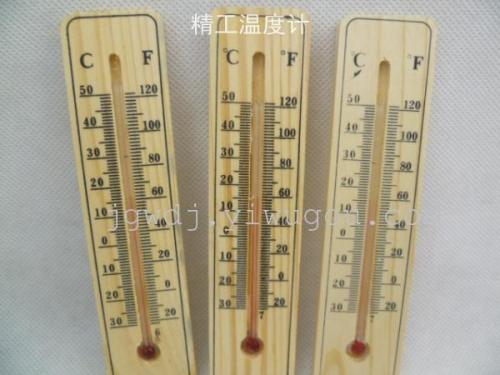
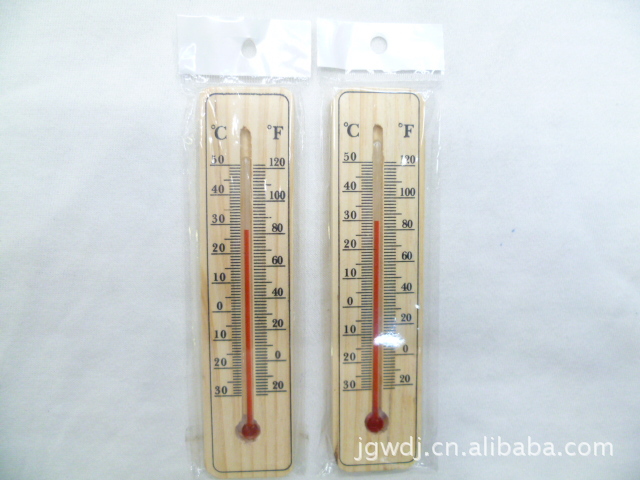
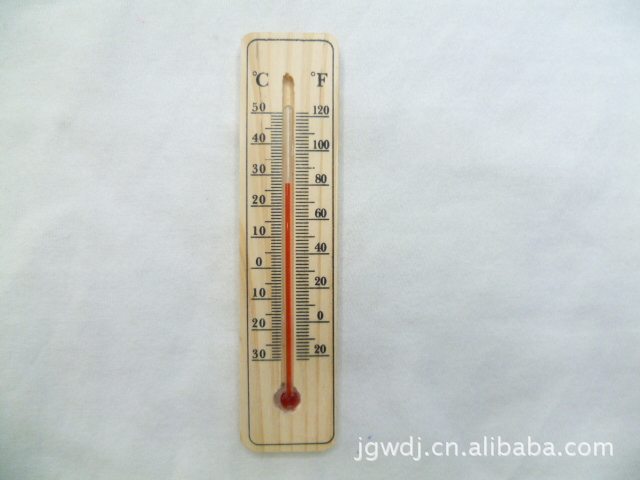
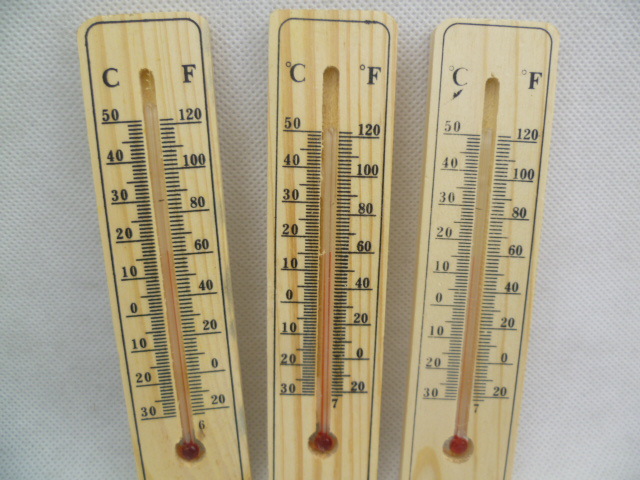
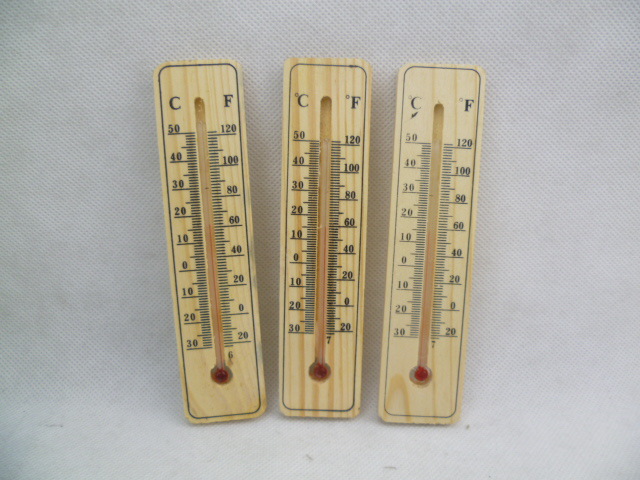
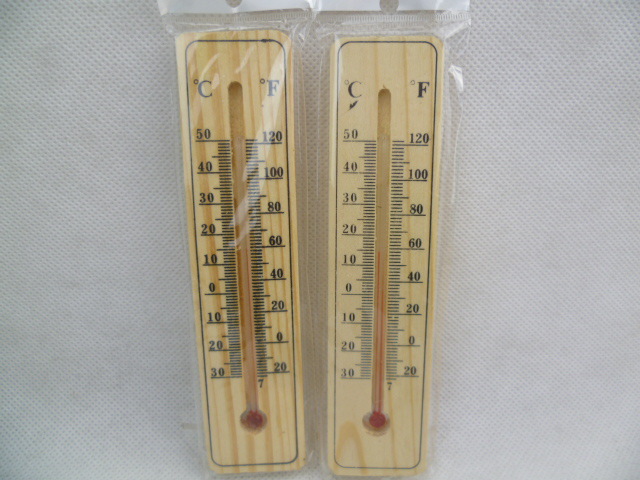
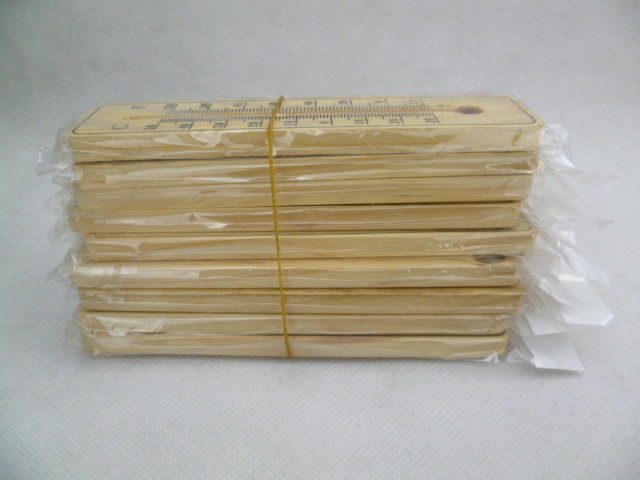
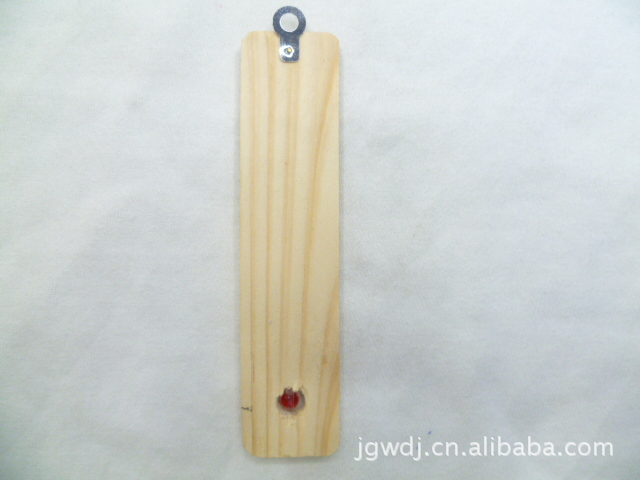
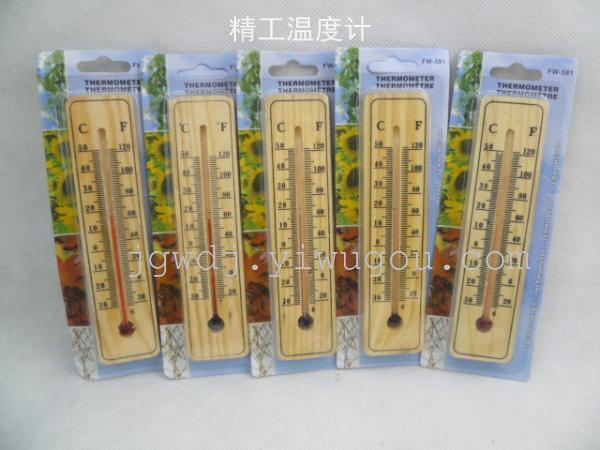
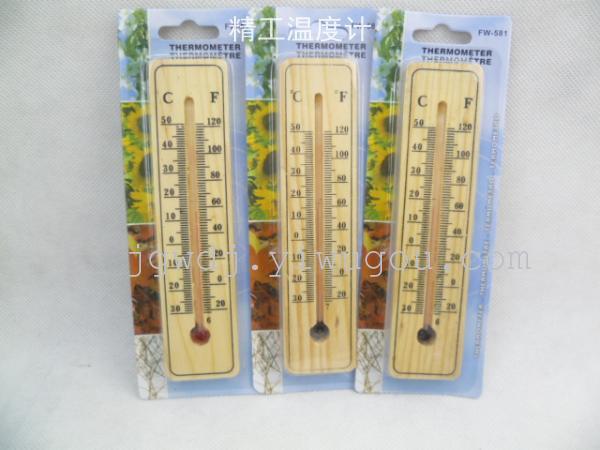
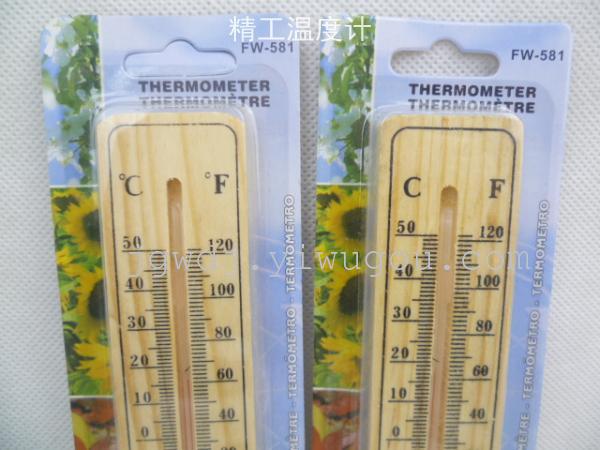
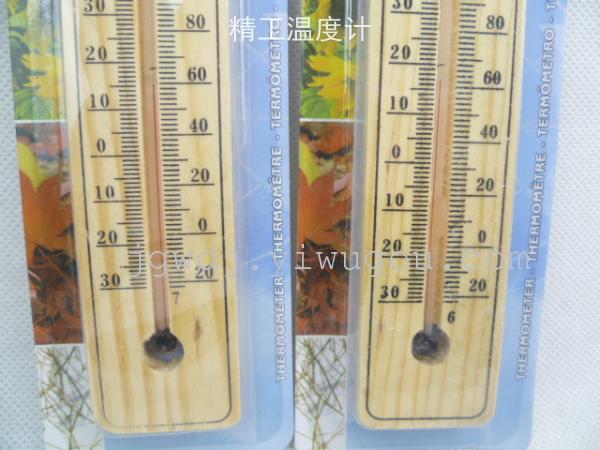
| Customized Processing: Yes | Brand: Seiko Thermometer | Model: FW-581 Small Wooden Opp Packaged |
| Type: Straight Glass Thermometer | Measurement Range: -30 to 50 degrees for wood thermometer | Structural Type: Straight Type |
| Indication Error: ±1 | Dimensions: 150*35*7 | Specification: 15*3.5*0.7 |
| Temperature Gauge Classification: Glass Thermometer |
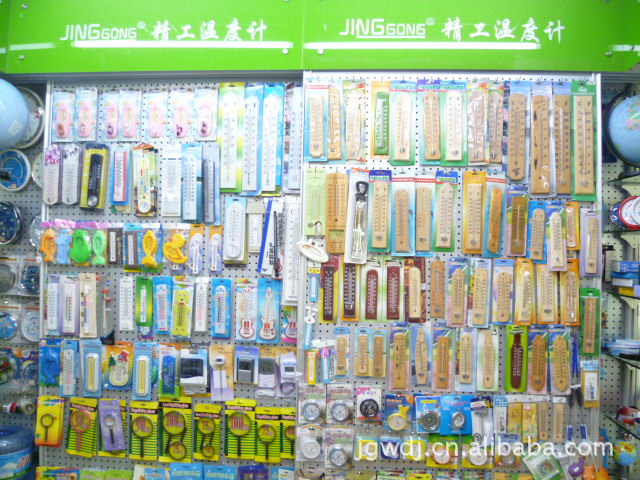
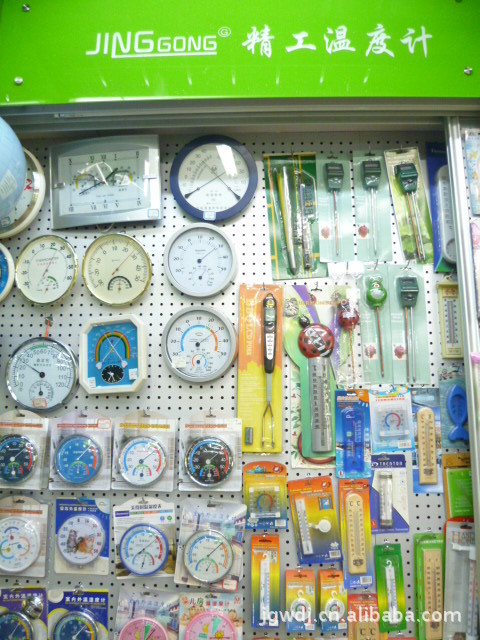
The Principle of Various Thermometers
1. Gas thermometer: It is often used to measure temperature with hydrogen or helium as the measuring substance. Because the liquefaction temperature of hydrogen and helium is very low, close to absolute zero, it has a wide range of temperature measurement. This type of thermometer is very accurate and is often used for precise measurements.
2. Resistance thermometer: It is divided into metal resistance thermometers and semiconductor resistance thermometers, both of which are made based on the change in resistance value with temperature. Metal thermometers mainly use pure metals such as platinum, gold, copper, nickel, and alloys of rhodium iron and phosphor bronze; semiconductor thermometers mainly use carbon and germanium. Resistance thermometers are convenient and reliable to use, and have been widely applied. Its measurement range is about -260°C to 600°C.
3. Thermocouple thermometer: It is a widely used temperature measurement instrument in industry. It is made by utilizing the thermocouple phenomenon. Two different metal wires are welded together to form the working end, and the other ends are connected to the measuring instrument to form a circuit. When the working end is placed at the measured temperature, a potential difference will appear when the temperature of the working end and the free end is different, thus causing a current to flow through the circuit. By measuring electrical quantities, the temperature at a known location can be determined by using the temperature at another location. It is suitable for measuring the temperature between two substances with large temperature differences, and is often used for high-temperature and low-temperature measurements. Some thermocouples can measure temperatures as high as 3000°C, while others can measure temperatures close to absolute zero.
4. High-temperature thermometer: This refers to a thermometer specifically designed to measure temperatures above 500°C, including optical thermometers, colorimetric thermometers, and radiative thermometers. The principles and construction of high-temperature thermometers are quite complex, and they are not discussed here. Their measurement range is from 500°C to over 3000°C, and they are not suitable for measuring low temperatures.
5. The needle-style thermometer: It is a thermometer shaped like a dashboard, also known as a thermometer, used to measure room temperature, which is made by using the principle of metal's expansion and contraction with temperature changes. It uses a bimetallic strip as the temperature-sensing element to control the needle. The bimetallic strip is typically riveted together with a copper sheet on the left and a iron sheet on the right. Since the expansion and contraction of copper with temperature changes is much more obvious than that of iron, when the temperature rises, the copper sheet pulls the iron sheet to the right, causing the needle to deviate to the right (pointing to high temperature) under the action of the bimetallic strip; Conversely, when the temperature drops, the needle deviates to the left (pointing to low temperature) under the action of the bimetallic strip.
6. Glass thermometer: A glass thermometer measures temperature by utilizing the principle of thermal expansion. Due to the different expansion coefficients of the measuring medium and its boiling and freezing points, the most common glass thermometers include kerosene thermometers, mercury thermometers, and red ink thermometers. The advantage of this thermometer is its simplicity in structure, convenience in use, relatively high measurement accuracy, and low cost. However, its disadvantages include being limited by the quality of the glass and the properties of the measuring medium in terms of the measurement range and accuracy. Moreover, it cannot be used for long-distance measurement and is prone to breakage.
7. Pressure-type thermometer: A pressure-type thermometer measures temperature by using the expansion or pressure change of a liquid, gas, or saturated vapor within a sealed container as a measurement signal. Its basic structure consists of a temperature sensor, a capillary, and an indicator. The advantages of a pressure-type thermometer are: it has a simple structure, high mechanical strength, and is not easily shaken. It is also inexpensive and does not require external energy. However, its disadvantages include: it has a limited temperature range, typically between -80°C and 400°C; it has a large heat loss and a slow response time.
A mercury thermometer is a type of expansion thermometer. The freezing point of mercury is -38.87°C, and the boiling point is 356.7°C. It is used to measure temperatures within the range of 0-150°C or 500°C, and it can only be used as a local supervision instrument. When measuring temperature with it, it is not only simple and intuitive, but can also avoid the errors of external remote thermometers.
Update time:


TOP