
Search history
Clear allSearch by image
XDrag and drop an image here or upload an image
Max 5MB per image
UploadSign In | Join

Search history
Clear allSearch by image
XDrag and drop an image here or upload an image
Max 5MB per image
UploadSign In | Join
X Email Mobile
Quite special auto supplies 14yr.
Contacts ChenYongMiao Chat
Mobile 86-13967427392
E-mail XZHJ008@126.COM
13967427392

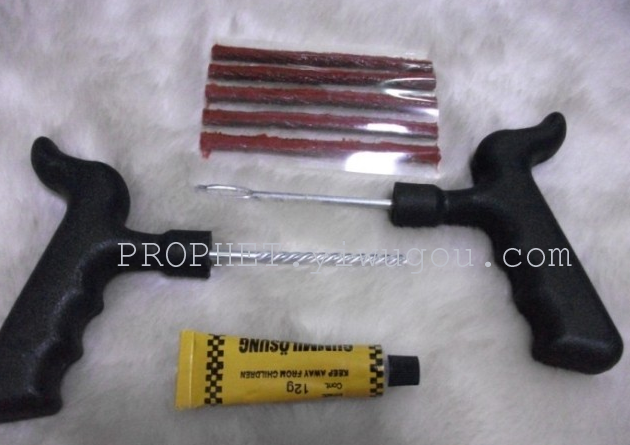
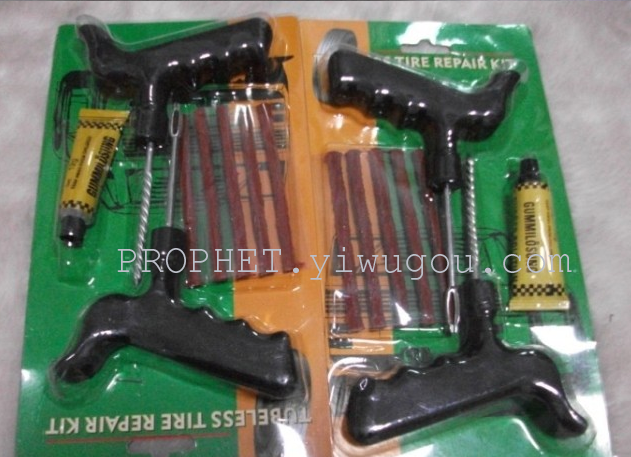
Instructions for the correct use of adhesive strips:
During tire repair, if air leakage is detected, please confirm the following points:
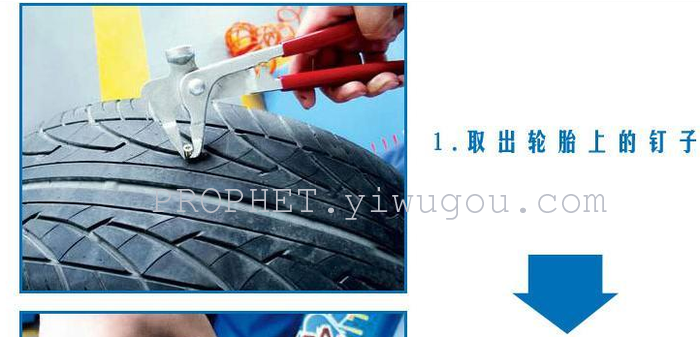
1. Mark the punctured area of the tire, and remove the puncture tool.
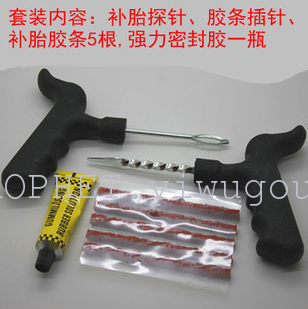
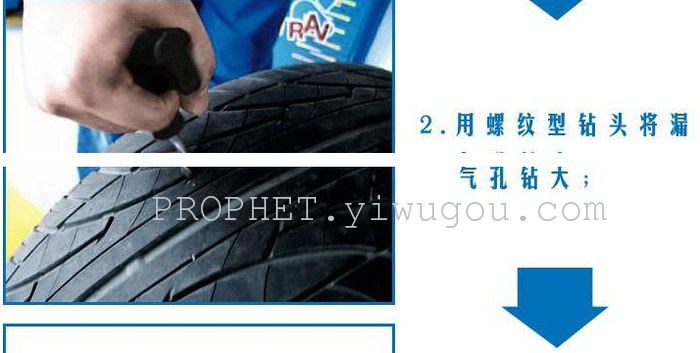
2. Use a tire repair probe to determine the direction of the hole penetration, then insert it along the hole direction to remove dust and debris inside the hole.
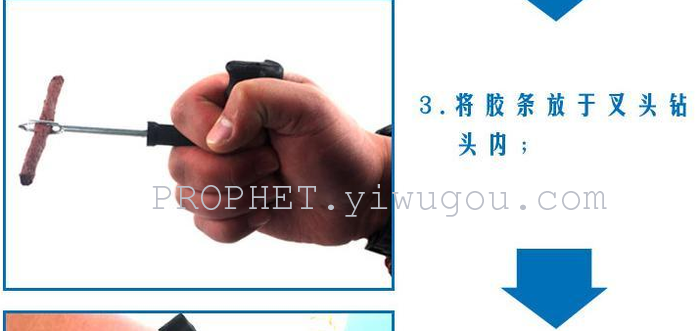
3. Cut one end of the rubber strip into an inclined shape and insert it into the hole at the front of the plug tool, ensuring the lengths of the rubber strips at both ends are roughly equal.
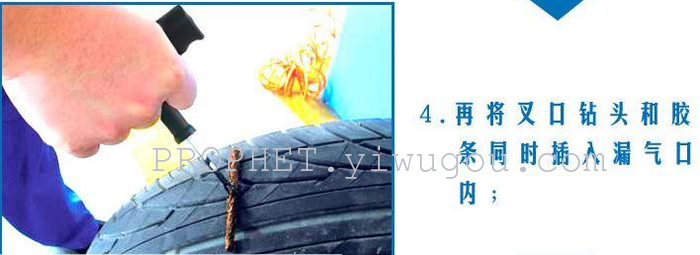
4. Insert the pin with the rubber strip into the tire along the hole, ensuring the strip is inserted to 2/3 of its length.[It is necessary to ensure that the cold patch strip penetrates through the tire body to prevent it from sliding out after inflation.],After rotating the plug needle by 360 degrees, remove it.
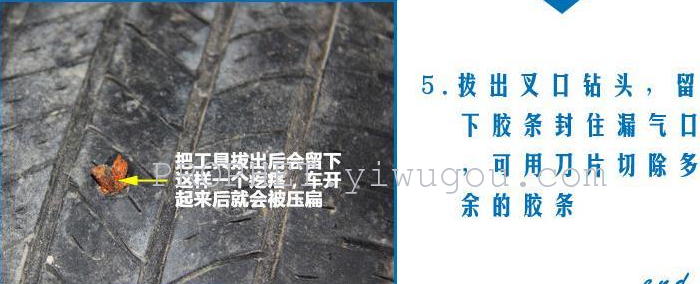
5. The spare tire patch strip remaining outside the tire should be cut off, leaving a length of 5 mm on the tread.
Precautions:
1. The hole direction must be determined using a probe to ensure that the insertion direction and position of the rubber strip match the penetration direction of the nail hole. Otherwise, air leakage will occur. For example, if the hole direction forms an angle of 50 degrees with the tire tread, the probe and insertion needle should also be operated along this angle.
2. After ensuring the rubber strip is sufficient to penetrate the tire, rotate the strip plug tool by one full turn (360 degrees) and then remove it. Make sure the rubber strip compresses the hole and forms a rotating knot inside the tire to prevent air leakage.
3. If it is a deep diagonal hole wound, the length of the adhesive strip must be ensured to ensure it can penetrate the tire.

Update time:


TOP


