
Search history
Clear allSearch by image
XDrag and drop an image here or upload an image
Max 5MB per image
UploadSign In | Join

Search history
Clear allSearch by image
XDrag and drop an image here or upload an image
Max 5MB per image
UploadSign In | Join
X Email Mobile
Price Negotiable


A new item has been added to your Shopping Cart. You now have items in your Shopping Cart.
FOR SOLAR ENERGY TECHNOLOGY CO.,LTD 9yr.
Contacts:LuckyChat
Mobile:86-18627189932
E-mail:472800847@QQ.COM
Monocrystalline solar cells cannot be used directly as power sources. To function as a power source, several solar cells must be connected in series and parallel, and tightly sealed into a component. Solar panels (also known as solar cell modules) are the core part of a solar power system and the most important part of the system.
(1) The photothermal-electric conversion method generates electricity by utilizing the thermal energy produced from solar radiation. Generally, this process involves converting the absorbed thermal energy from the solar collector into steam for the working fluid, which then drives the steam turbine to generate electricity. The first process is the photothermal conversion process; the second process is the thermoelectric conversion process.
(2) The direct photoelectric conversion method utilizes photoelectric.The effect of converting solar radiation energy directly into electrical energy is the basic device for photoelectric conversion. Solar cells are devices that directly convert solar energy into electrical energy by the photovoltaic effect, which is a semiconductor photodiodes. When sunlight strikes the photodiodes, the photodiodes convert the solar light energy into electrical energy, generating current. When many cells are connected in series or parallel, they can form a solar cell array with a larger output power.
Monocrystalline silicon solar panels have an average photovoltaic conversion efficiency of about 15%, with the highest reaching 24%. This is the highest photovoltaic conversion rate among all types of solar panels, but the production cost is very high, which means it is not yet widely and generally used in large quantities. Since monocrystalline silicon is typically encased in tempered glass and waterproof resin, it is robust and durable, with a service life of generally 15 years, and up to 25 years.
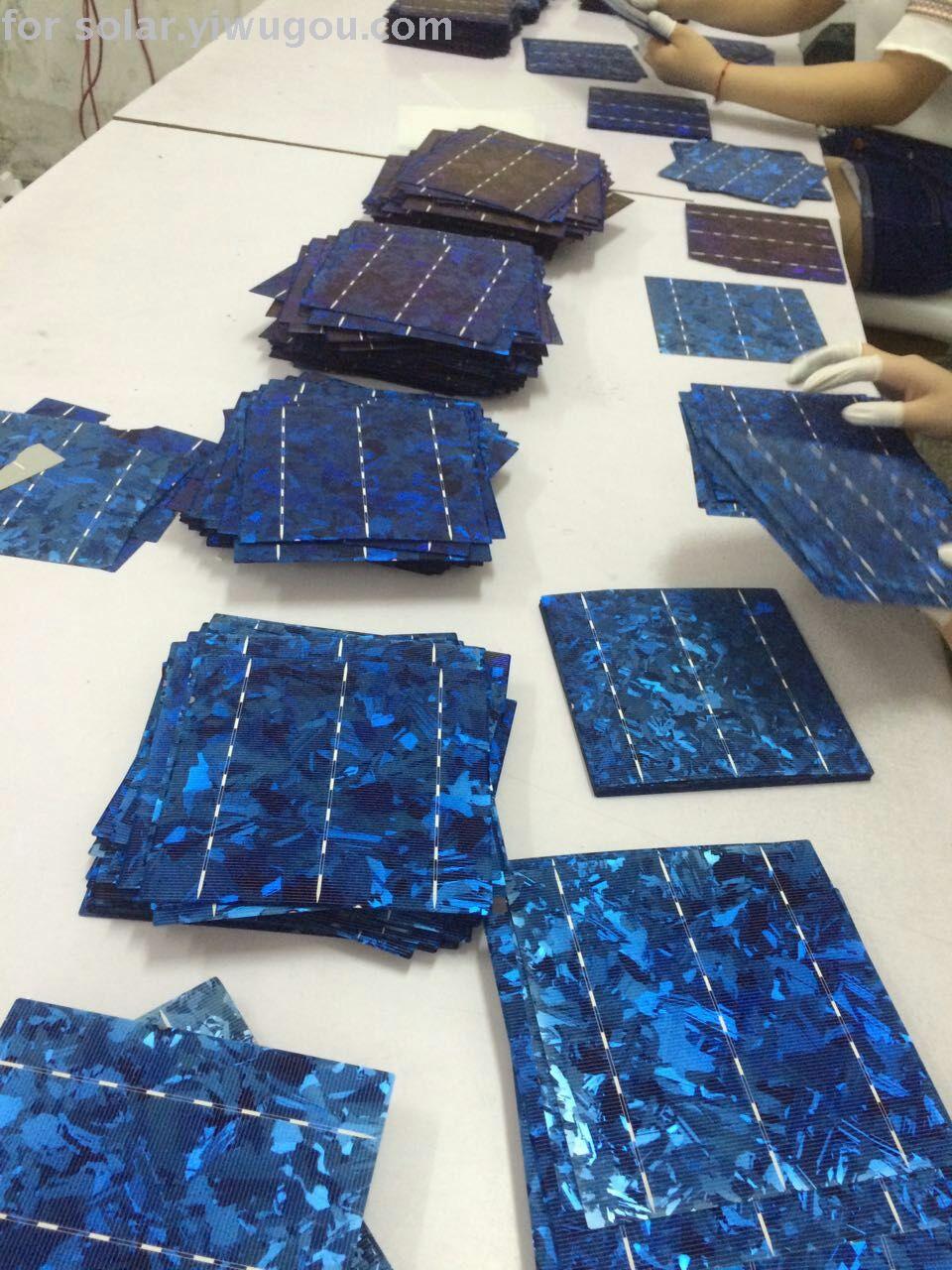
Multicrystalline silicon solar panels have a similar manufacturing process to single crystal silicon solar panels, but the photovoltaic conversion efficiency of multicrystalline silicon solar panels is significantly lower, around 12%. From a cost perspective, multicrystalline silicon solar panels are slightly cheaper than single crystal silicon solar panels, with simpler material manufacturing and lower overall production costs, which has led to their widespread development. Additionally, the lifespan of multicrystalline silicon solar panels is also shorter than that of single crystal silicon solar panels. When considering performance-to-price ratio, single crystal silicon solar panels still have an edge.
Solar panel characteristics
★ Materials selected for multi-crystalline and monocrystalline silicon solar cells, high conversion efficiency, good weak light performance, stable output performance;
★Solar panels can be equipped with tempered or semi-tempered glass on the surface, which can resist deformation under high temperatures.
★ Ensure that the working current, working voltage, and other parameters strictly meet customer requirements, and strictly control the product appearance to improve customer satisfaction.
The electrical performance parameters, size, and thickness of solar glass panels can be customized to meet customer requirements.Customized.

Update time:


TOP


