
Search history
Clear allSearch by image
XDrag and drop an image here or upload an image
Max 5MB per image
UploadSign In | Join

Search history
Clear allSearch by image
XDrag and drop an image here or upload an image
Max 5MB per image
UploadSign In | Join
X Email Mobile
| Number | Unit-price | Total | |||
| I want to buy: | × | 0.7 | = | 0 |


A new item has been added to your Shopping Cart. You now have items in your Shopping Cart.
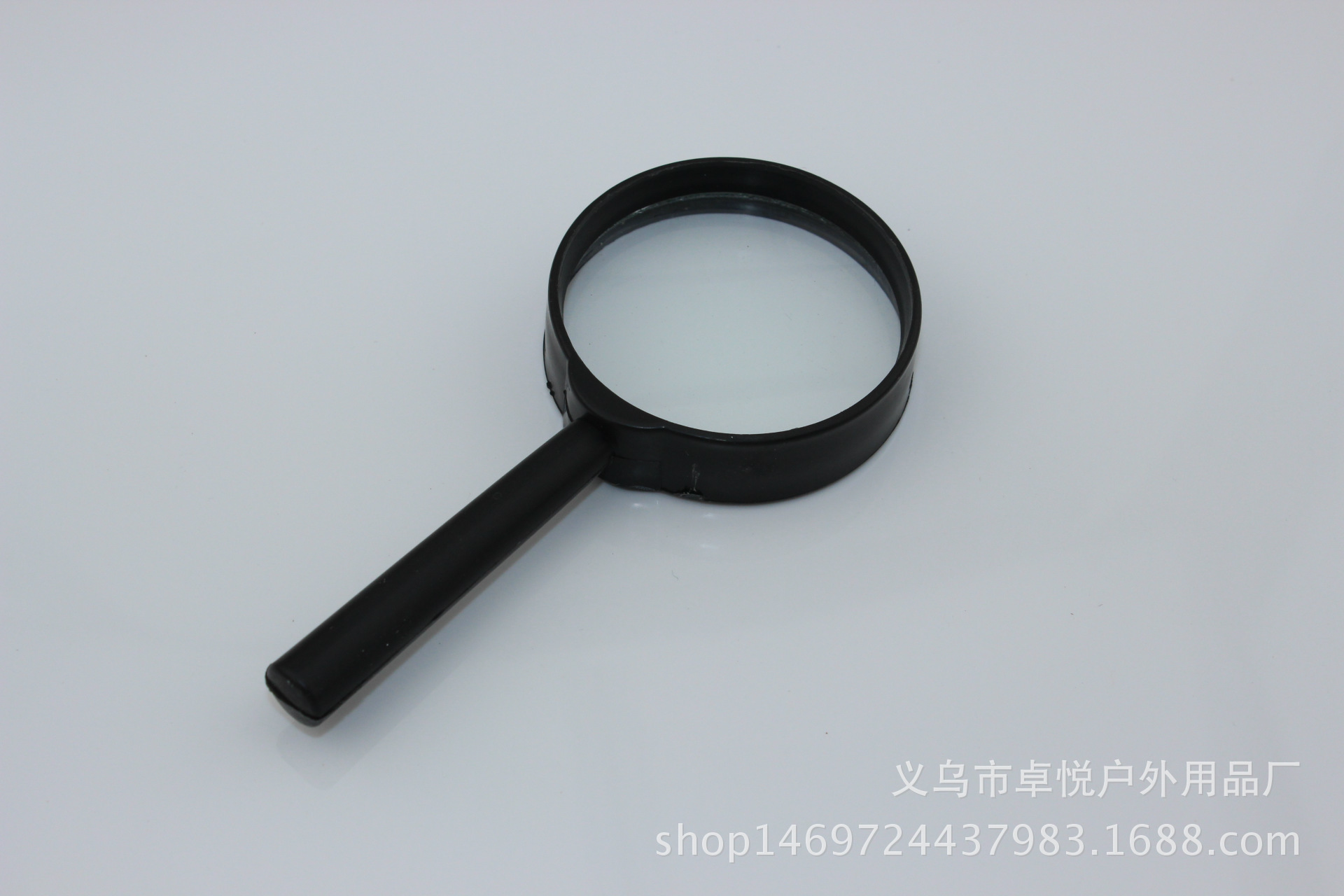
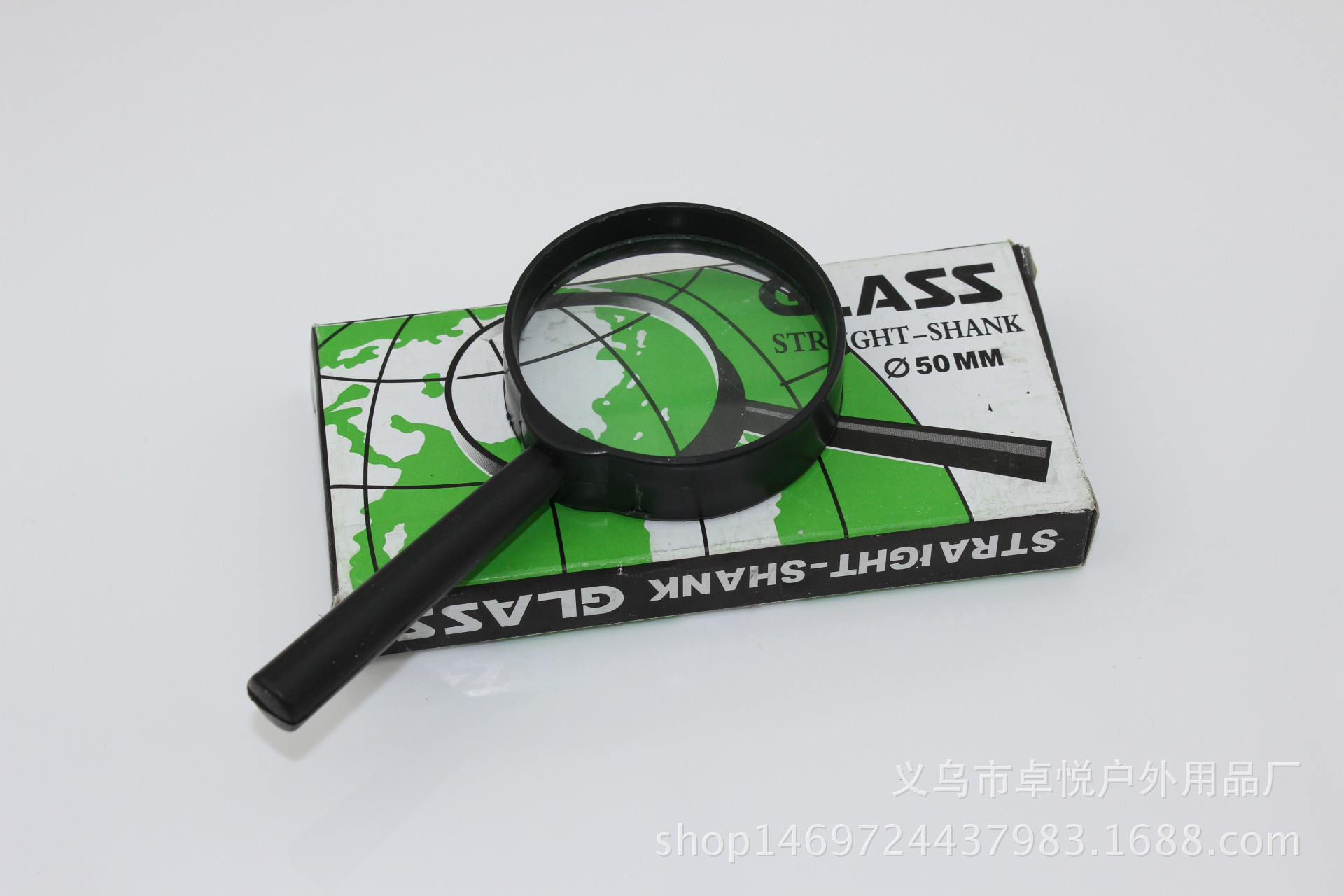
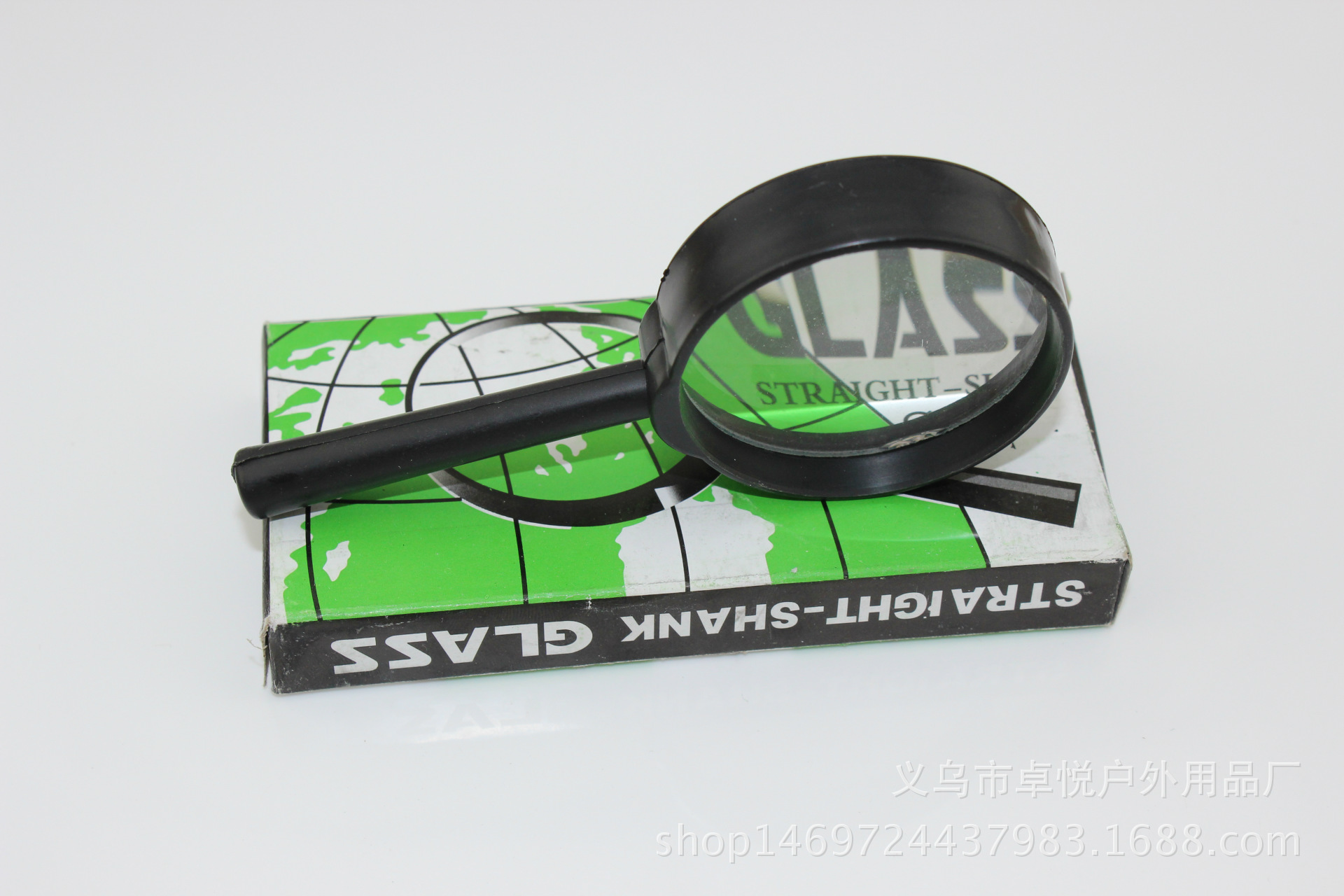
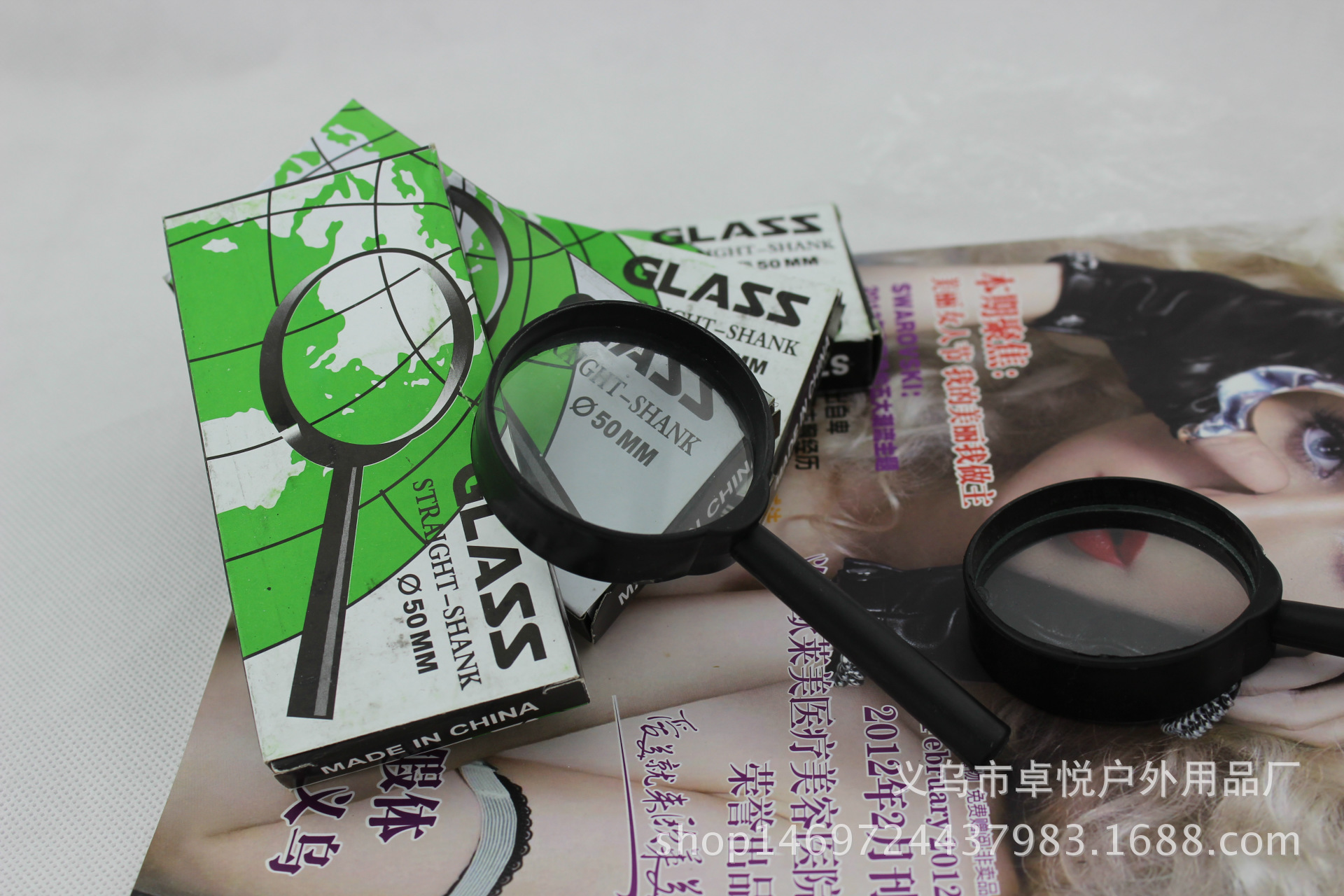
Material]: Plastic handle + glass lens
[Features]: Simple and Elegant
[Packing]: Color box 10 pieces per inner box, 600 pieces per carton
[Function]: Local magnification, reading newspapers, collecting stamps, appreciating calligraphy and painting, etc.
[Dimension]: 50mm
[Usage Method]: Hold the magnifying glass in your right hand, ensuring that the lens is parallel to your line of sight (best when the distance is clear and the magnification is maximum). With your left hand, hold the object you want to observe against the light source and slowly move it towards the lens. As you move the object being identified, find a suitable observation position, and the effect will be very obvious.
[Imaging Principle]: Optical lenses made of curved-surface glass or other transparent materials can magnify objects and form images, as shown in the optical path diagram in Figure 1. For objects AB within the focal point F of the object, with a size of y, they are magnified into an image A B of the same size y.
Magnification of a magnifying glass
Γ=250/f
In the formula, 250 represents the distance at which the object can be clearly seen, measured in millimeters.
f -- magnifying glass focal length, in units of mm
The magnification refers to the ratio of the angle of view of an object observed with a magnifying glass at a distance of 250mm to the angle of view of the same object observed without a magnifying glass.
Update time:


TOP


