
Search history
Clear allSearch by image
XDrag and drop an image here or upload an image
Max 5MB per image
UploadSign In | Join

Search history
Clear allSearch by image
XDrag and drop an image here or upload an image
Max 5MB per image
UploadSign In | Join
X Email Mobile
Hailan Electrical Appliance Firm 15yr.
Contacts zhouaibiao Chat
Mobile 86-13735758480
E-mail 1040472497@qq.com
WeChat 13735758480
Product Features:
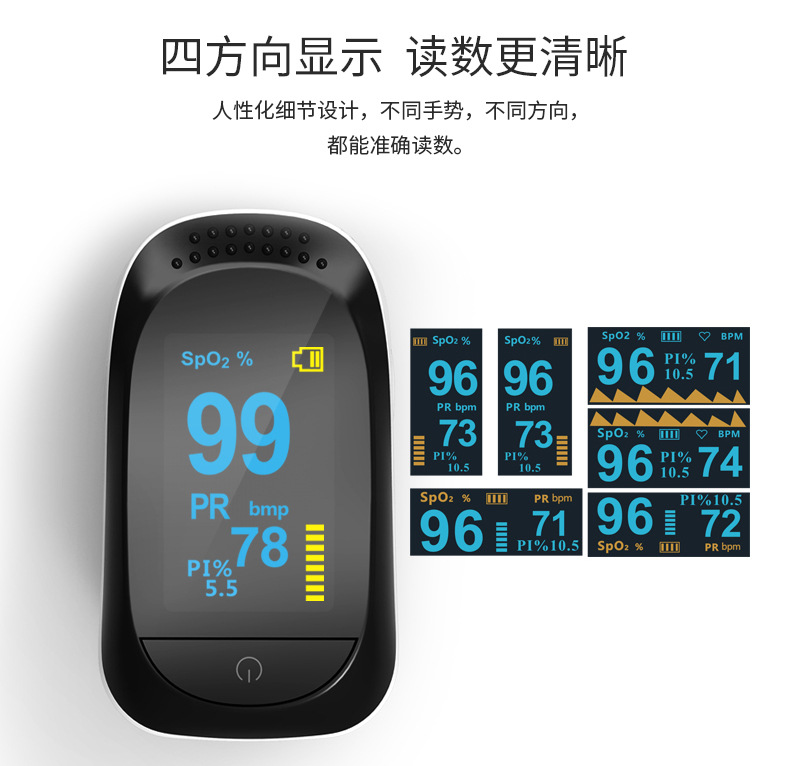
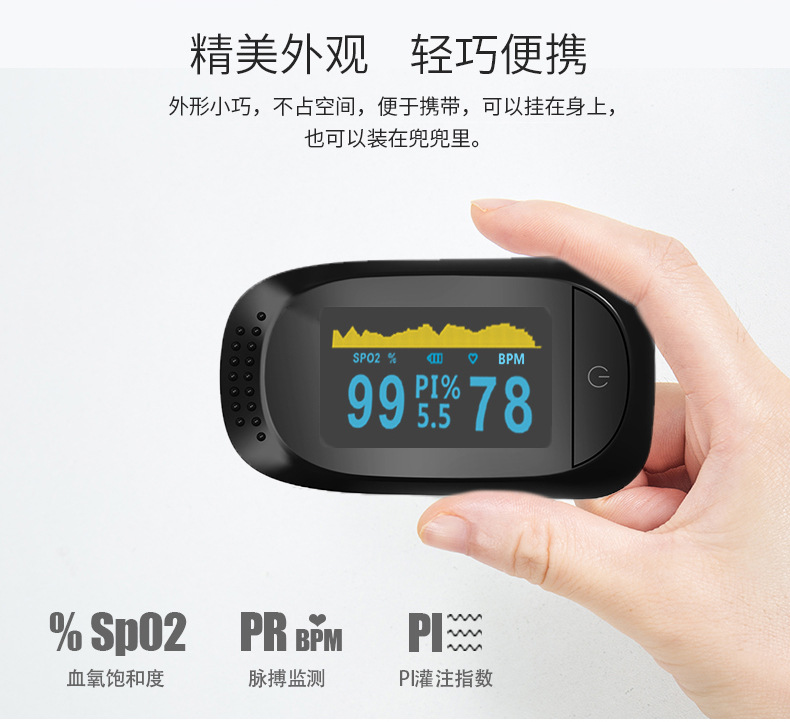
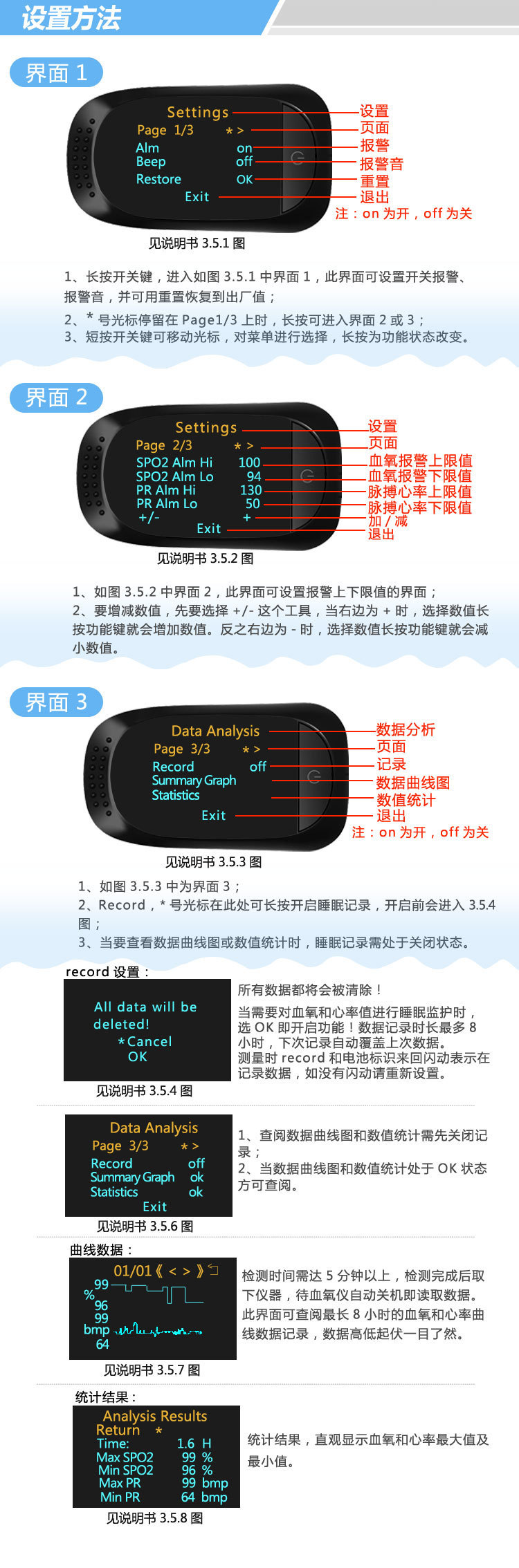
1. 4 parameters:SPO2, PR, PI, 8-hour sleep monitoring and memory storage function!
2. Display Mode: Automatic 4-direction screen rotation with 6 different display modes
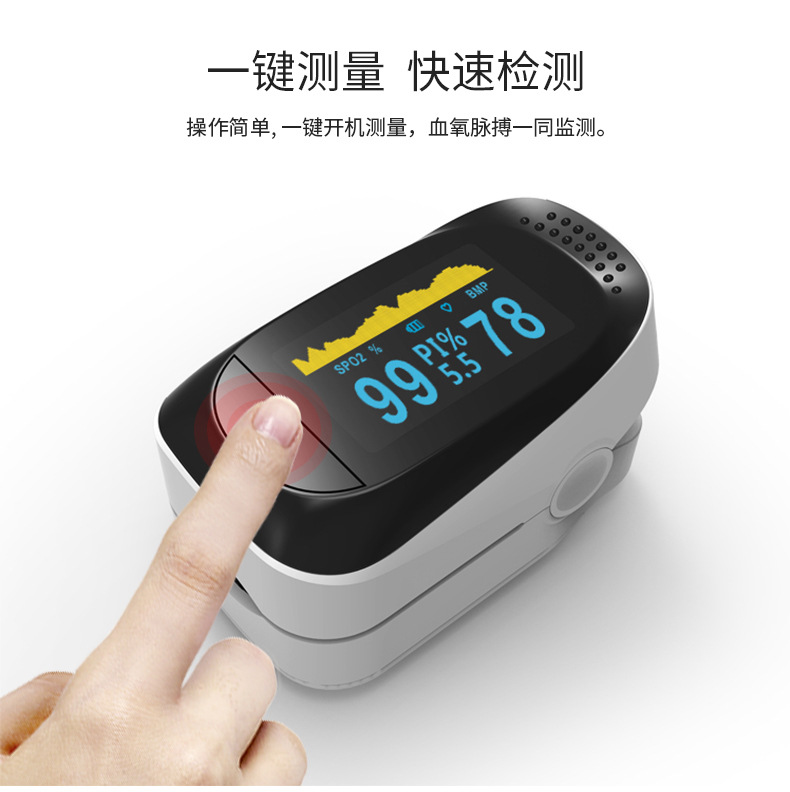
3. Advantages: Lightweight, easy to operate, convenient to carry, and most importantly, it can monitor sleep for 8 hours.
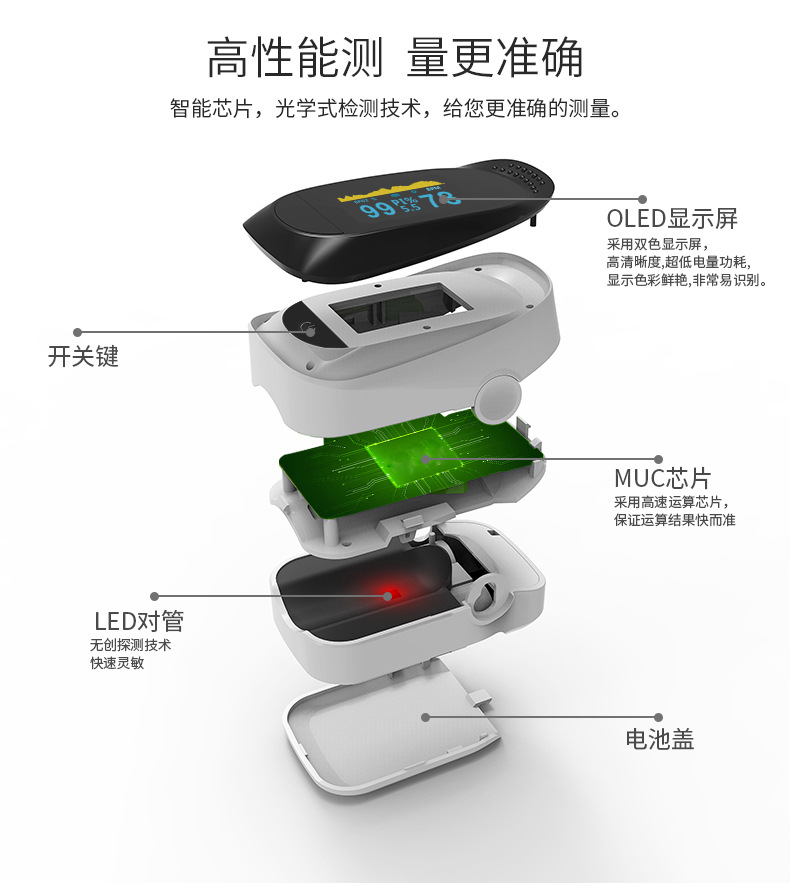
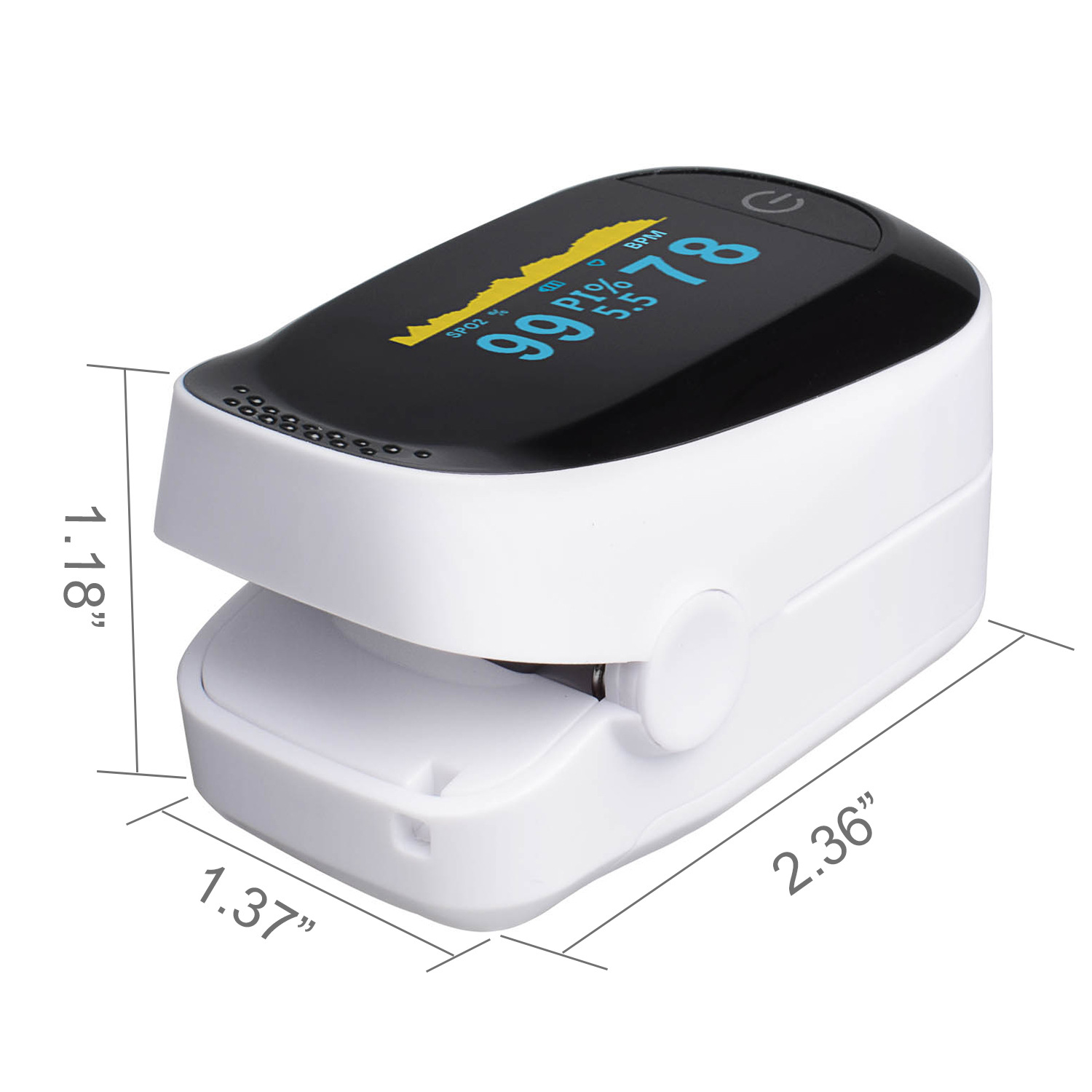
4. Screen display: OLED screen color, SpO2 waveform.
5. Accuracy Range: Low perfusion with accuracy ±4% or even below 0.1%.
6. Power supply and service life:2 pc AAA batteries can last for 20 hours continuously.
Product Parameters
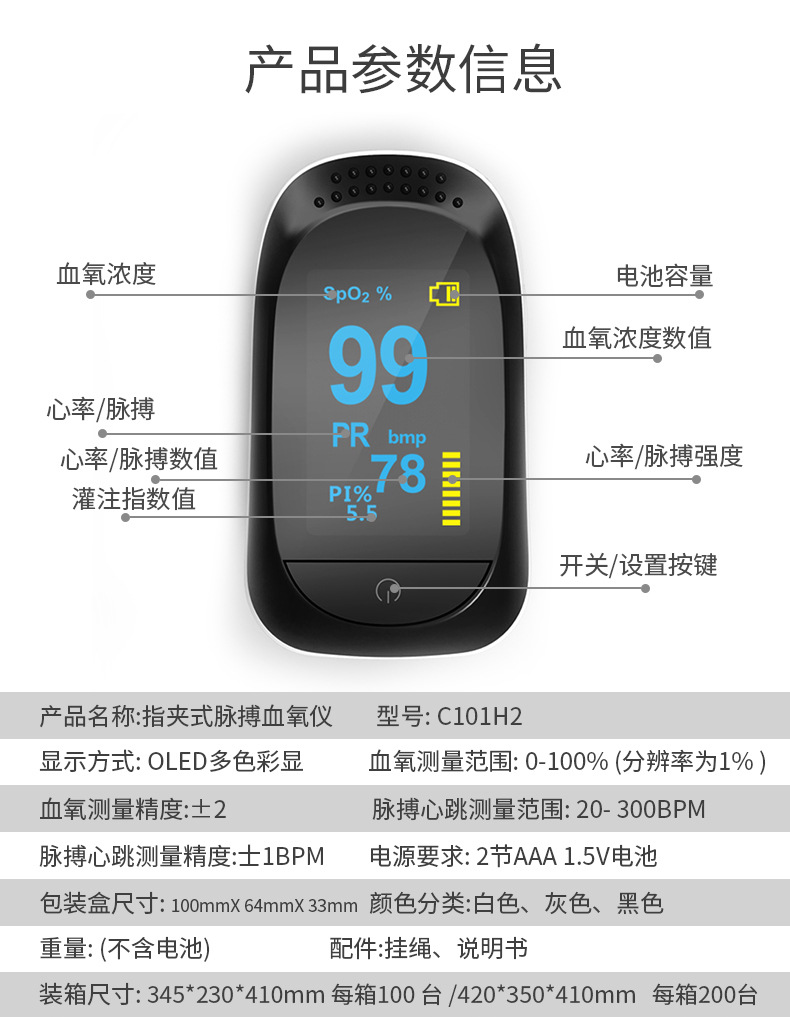
Blood Oxygen Saturation Measurement Range:70% to 99%Pulse Rate Measurement Range:30BPM~240BPM
Blood Oxygen Saturation Measurement Accuracy:Within 70% to 99% ± 2%, not defined if less than 70%Pulse Rate Measurement Accuracy:±1 BPM or ±1% of the measurement value (whichever is larger)
Blood Oxygen Saturation Resolution:Blood Oxygen Saturation ±1%Blood Flow Perfusion Index:≥0.2%, ±0.1%
Sleep Monitoring Time: 8 hoursPower consumption:below 30mAh
Auto Shutdown:8-second auto-shutdown after inactivityenvironmentTemperature:5℃ to 40℃
Storage humidity:15% to 80% operation, 10% to 80% storageAtmospheric pressure:70Kpa~106Kpa
Battery Model:2*1.5V (2 AA Alkaline, Product does not include batteries)Material: ABS+PC
Product dimensions:65mm*30mm*30mm Weight: Net weight 36g. Includes the paper box: 60g (does not include the battery).
Color box size: 102*63*37mm, weight: 64 grams (excluding battery) Packing Size: 100 sets, 345*230*410mm, 7kg
Packing Size: 200 sets, 420*350*410mm, 14kg
:"pi Blood Perfusion Index, Perfusion Indicator
PI, as a parameter indicator, typically reflects the perfusion status of the limb being tested, indicating the machine's detection accuracy. It can still be detected under conditions of low and weak perfusion.
Moreover, the display of PI can also indicate the problems of the patient's own limb condition, that is, when low perfusion occurs, it indicates whether the patient has their own causes such as heart problems or shock, and it can also reflect whether there are external factors such as cold weather or poor peripheral circulation, thereby making judgments based on the above conditions!
PI refers to the perfusion index (Perfusion Index, PI), which reflects the pulsatile blood flow situation, that is, the blood flow perfusion ability. The larger the pulsatile blood flow, the more the pulsatile component, the larger the PI value. Therefore, the measurement site (skin, nail, bone, etc.) and the patient's own blood flow perfusion situation (the flow of arterial blood) will affect the PI value. Since the sympathetic nervous system affects heart rate and arterial blood pressure (affecting the pulse arterial blood flow), the human nervous regulation system or mental state will also indirectly affect the PI value. Therefore, the PI value will also be different under different anesthesia states.
Update time:


TOP


