
Search history
Clear allSearch by image
XDrag and drop an image here or upload an image
Max 5MB per image
UploadSign In | Join

Search history
Clear allSearch by image
XDrag and drop an image here or upload an image
Max 5MB per image
UploadSign In | Join
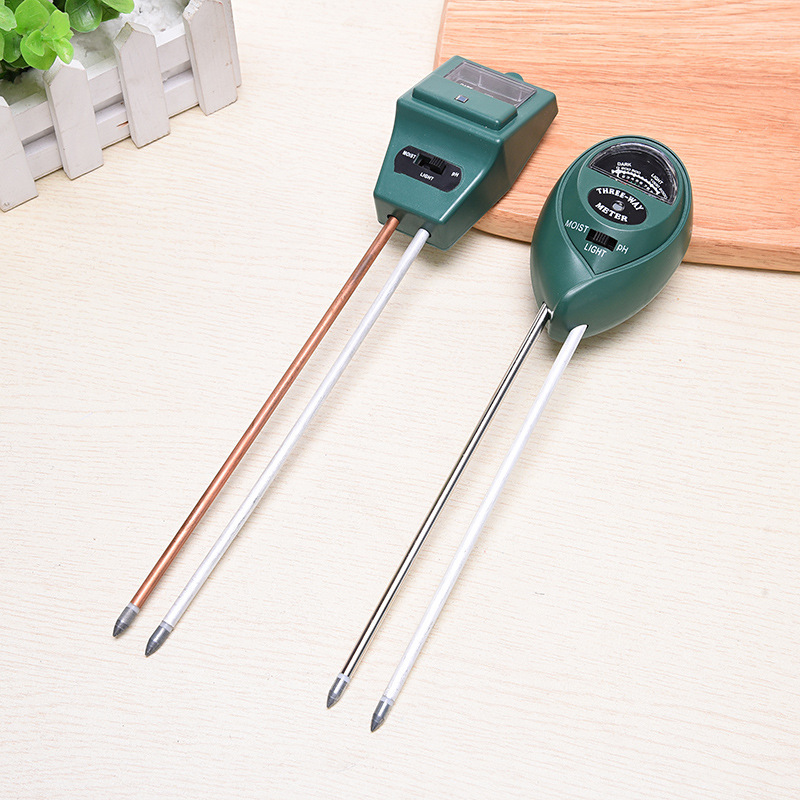
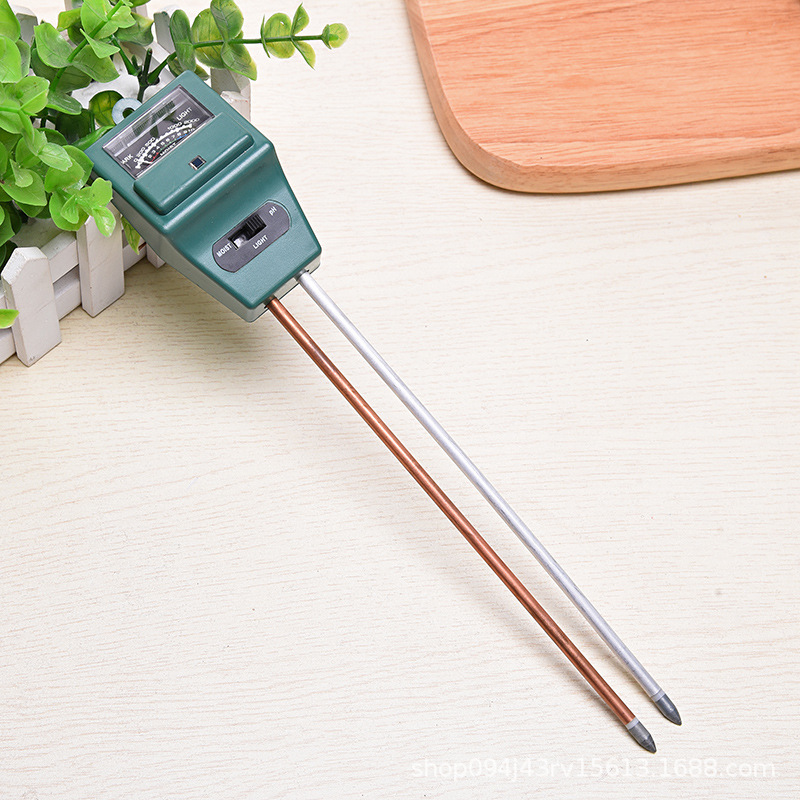
Three-in-One Soil Test Instrument: Measures Humidity, Acid-Alkaline, and Light Intensity
Size: 290*50*38MM
Probe length: 200mm
Weight: 90g
This instrument is a great helper for gardening, capable of measuring the pH value (acidity and alkalinity), soil moisture, and light intensity. It does not require batteries.
Product Features
Affordable and of high quality, these tools are ideal for measuring soil moisture, pH, and light intensity, making them excellent assistants for gardening; they are convenient to use without batteries.
Notes
1. When using the device, be careful not to touch the stone when inserting the electrode, and do not apply excessive force, or it may easily damage the electrode. After use, it is necessary to clean the electrode in time.(Prohibited from directly measuring into the water.)
2. Do not use it for a long time in the soil! To avoid damage.
3. The product is made in China and mainly for export. There is no Chinese explanation, please do not purchase if you mind!
Instructions for Use:
When measuring soil pH and moisture, insert the probe as deeply as possible into the soil, leaving about 1 centimeter of the probe above the soil surface.
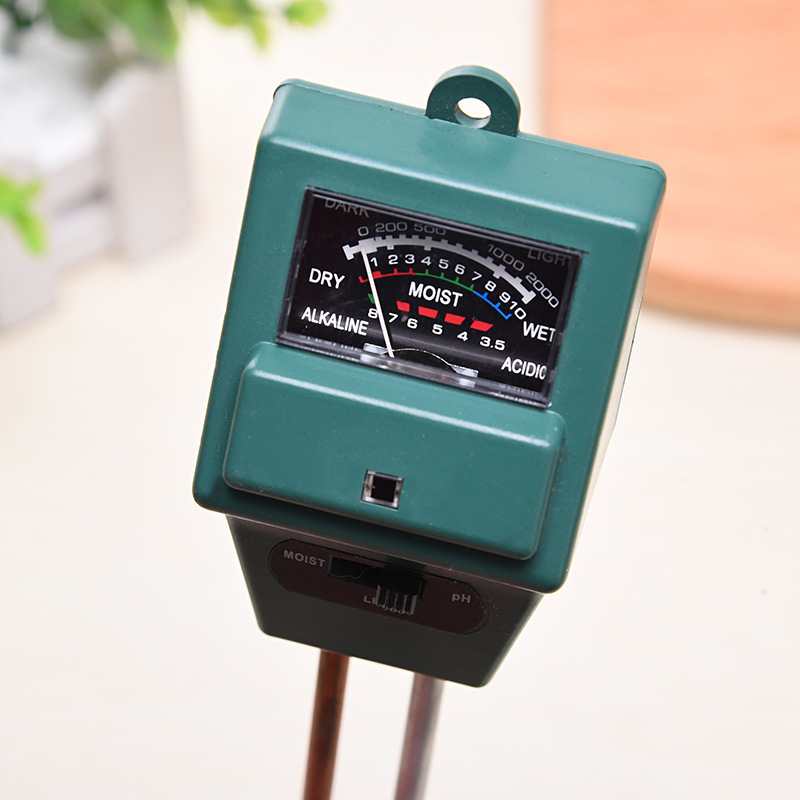
Press the button on the pen to MOIST, MOIST is the moisture key, corresponding to the table is MOIST, DRY is dry, WET is wet, the value of 1-3 (red part) indicates that it needs to water, 4-7 (green part) is appropriate, please adjust the watering time according to the plant variety, 8-10 (blue part) indicates that it is too wet.
Press the button on the pen to PH, PH is the acid-base degree key, corresponding to the value of 8-3.5 on the table, ALKALINE is alkaline, ACDIC is acid, the value of 7 is basically neutral, the smaller the number indicates the greater acidity, please adjust the soil acid-base degree according to the plant species.
The LIGHT key represents the light intensity, with a measurement range of 0-2000 lumens. The higher the number, the stronger the light. Please determine whether to provide shade based on the plant variety.
When using the device, be careful not to touch the stone when inserting the electrode, and do not apply excessive force, or it may easily damage the electrode. After use, clean the electrode.
Press the button on the pen to MOIST, MOIST is the moisture key, corresponding to the table is MOIST, DRY is dry, WET is wet, the value of 1-3 (red part) indicates that it needs to water, 4-7 (green part) is appropriate, please adjust the watering time according to the plant variety, 8-10 (blue part) indicates that it is too wet.
Press the button on the pen to PH, PH is the acid-base degree key, corresponding to the value of 8-3.5 on the table, ALKALINE is alkaline, ACDIC is acid, the value of 7 is basically neutral, the smaller the number indicates the greater acidity, please adjust the soil acid-base degree according to the plant species.
The LIGHT key represents the light intensity, with a measurement range of 0-2000 lumens. The higher the value, the stronger the light. Please determine whether to provide shade based on the plant variety.
Soil pH
Soil pH has a significant impact on soil fertility and plant growth. Many soils in the northwest and north of China have high pH values, while those in the southern red soil areas have low pH values. Therefore, it is possible to plant crops and plants that are suitable for the soil's acidity or alkalinity. For example, tea trees that prefer acidic conditions can be planted in red soil areas, while alfalfa has strong resistance to alkaline soils. Soil pH also has a significant impact on the availability of nutrients. For example, phosphorus is more available in neutral soils, while the availability of trace elements (such as manganese, copper, and zinc) is poor in alkaline soils. In agricultural production, attention should be paid to soil pH, and positive measures should be taken to adjust it.
Update time:


TOP


