
Search history
Clear allSearch by image
XDrag and drop an image here or upload an image
Max 5MB per image
UploadSign In | Join

Search history
Clear allSearch by image
XDrag and drop an image here or upload an image
Max 5MB per image
UploadSign In | Join
X Email Mobile
Hailan Electrical Appliance Firm 15yr.
Contacts zhouaibiao Chat
Mobile 86-13735758480
E-mail 1040472497@qq.com
WeChat 13735758480
All products of this brand sold on Amazon require sellers to establish their own links and promote them independently. It is not allowed to sell other sellers' listings on Amazon. If you find such behavior, immediately file a complaint and conduct a Test Buy investigation. The consequences are at your own risk..
Product Description:
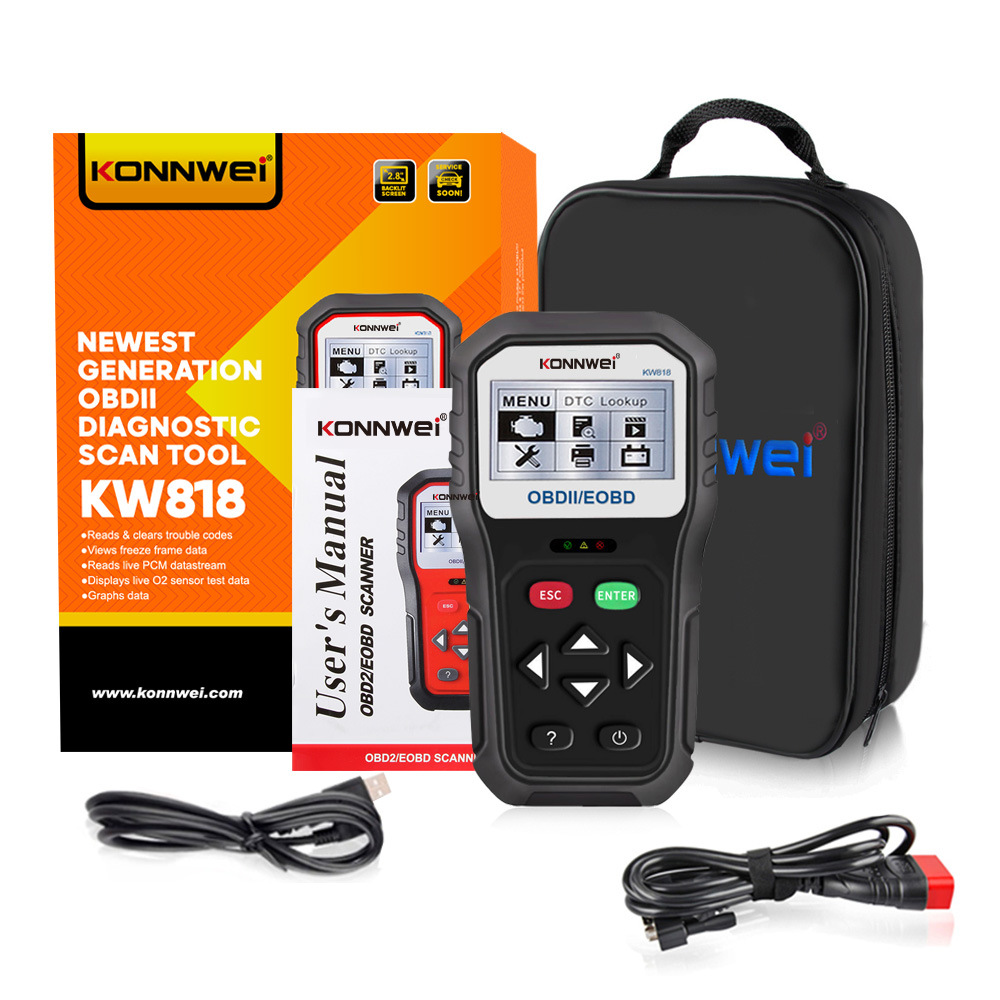
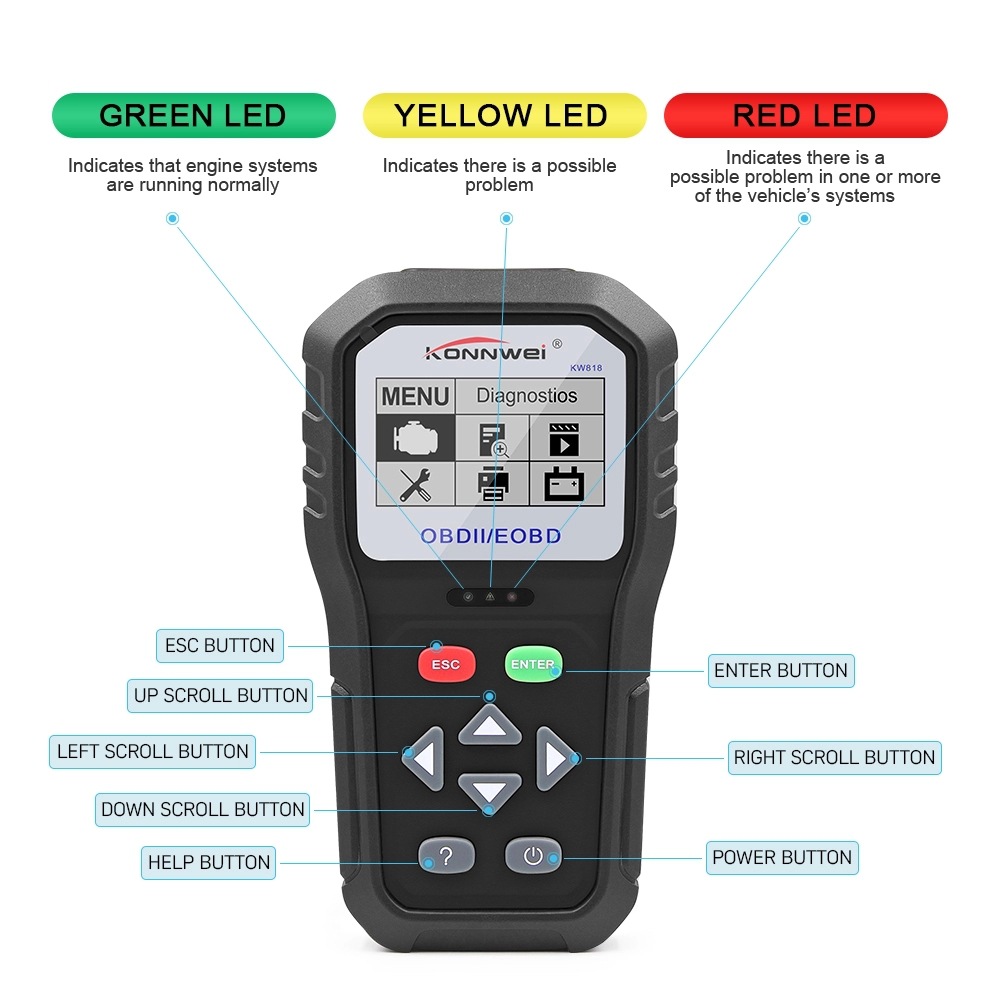
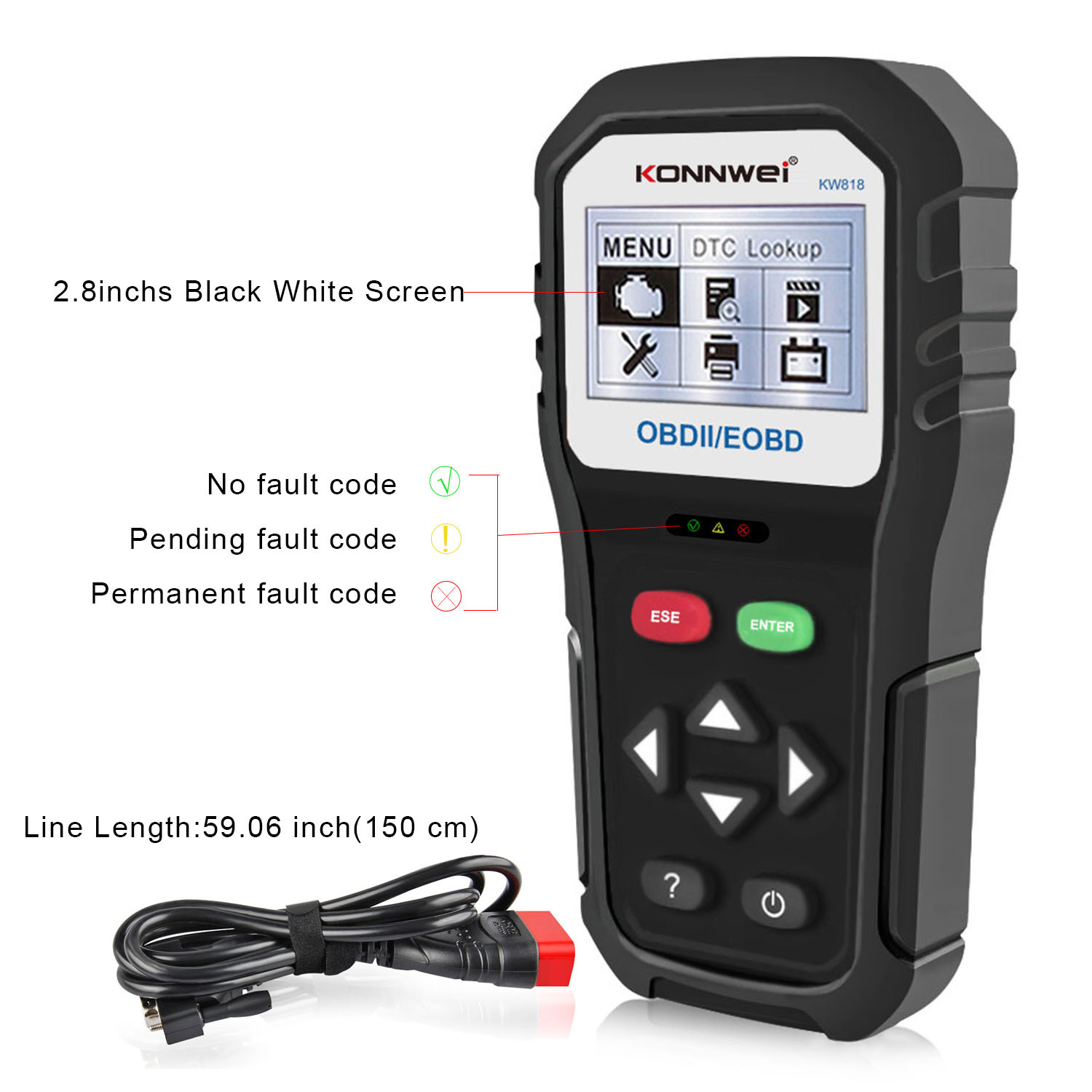
KONNWEI KW818 OBDII EOBD Scanner supports all 10 modes of OBDII test for a complete diagnosis. Featuring the unique patented OneClick IM Readiness Key, TFT color display, and built-in speaker, the KW818 is truly the ultimate in power and affordability, allowing users to do their jobs faster. In addition,数千个故障排除代码提示帮助技术人员节省诊断和维修时间
Scanner Features & Functions:
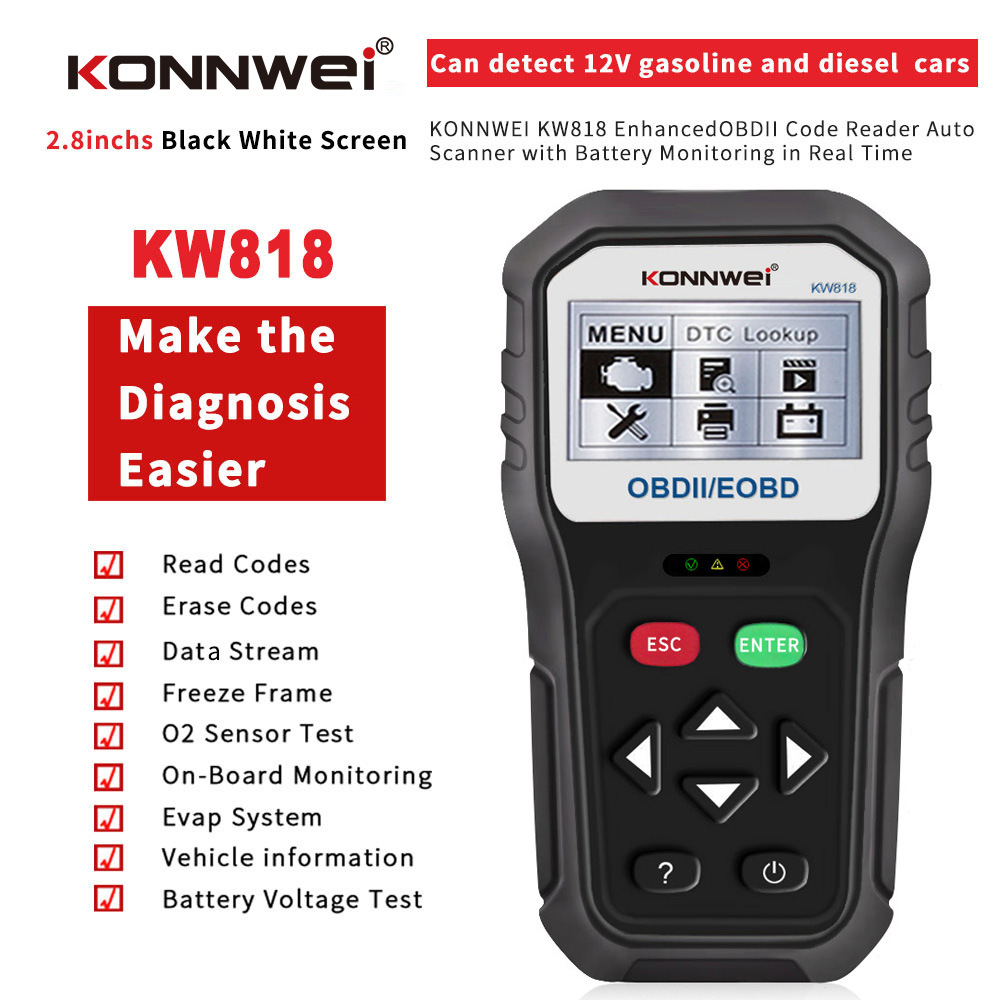
*Works on all 1996 and later OBDII compliant US, European and Asian vehicles
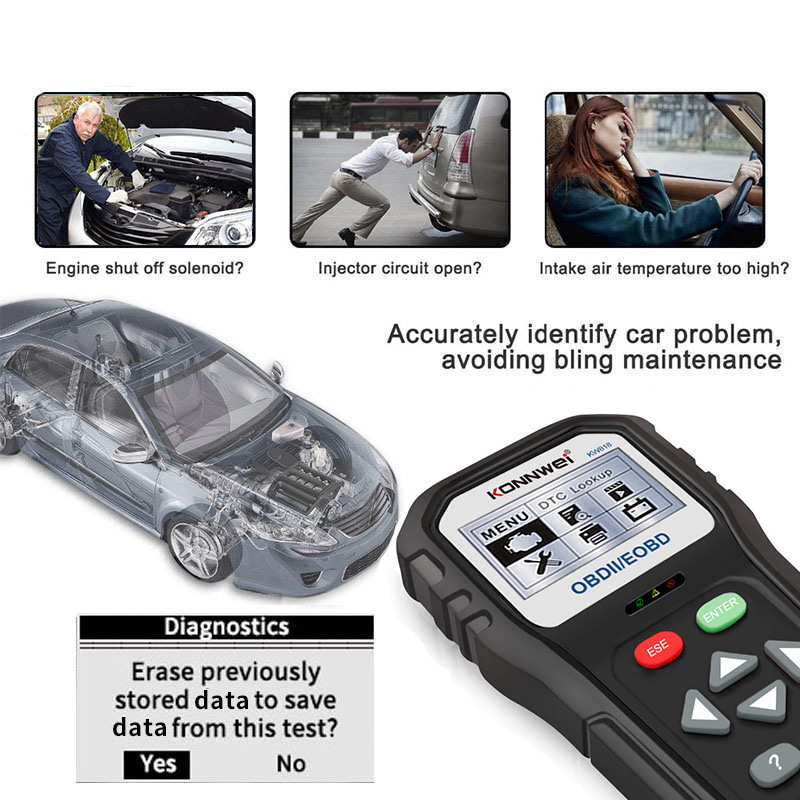
*Easily determines the cause of the Check Engine Light (MIL)
*Retrieves generic (P0, P2, P3, and U0) and manufacturer specific (P1, P3, and U1) codes
*Turns off Check Engine Light (MIL), clears codes and resets monitors
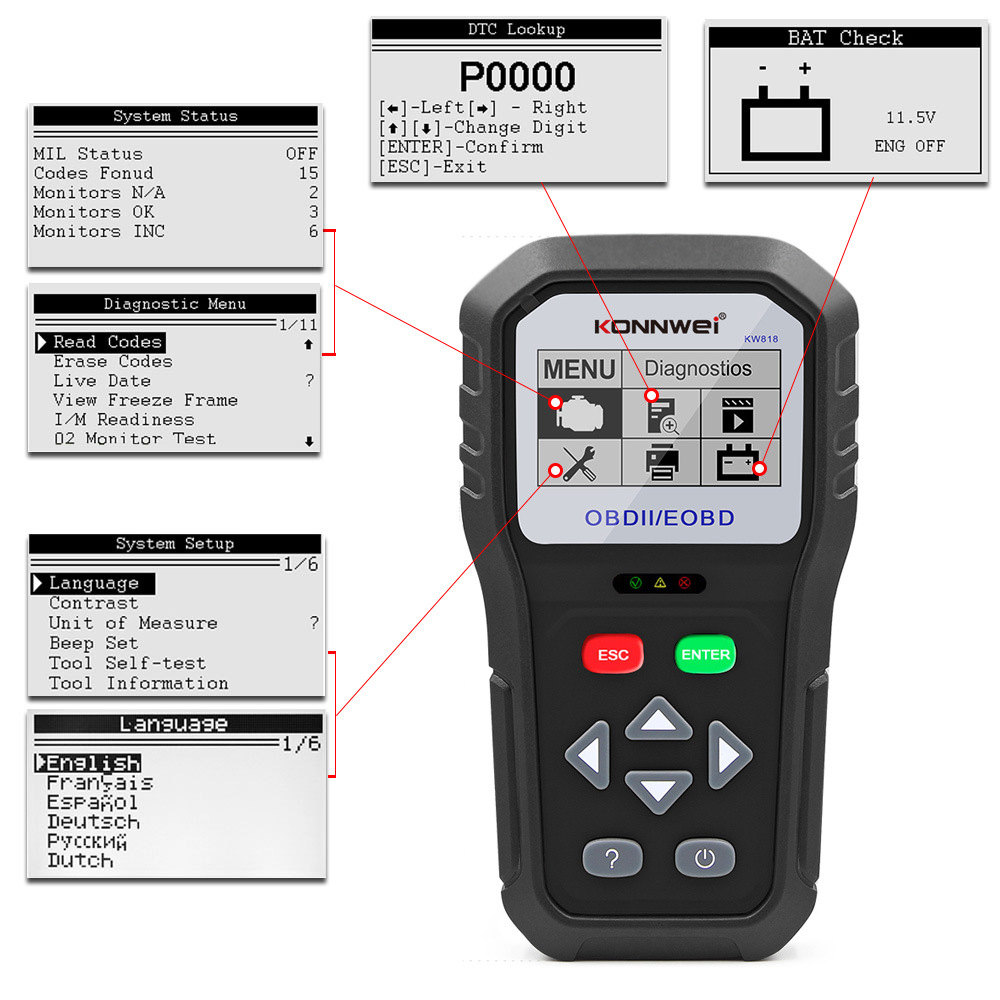
*Displays DTC definitions on unit screen
*Views freeze frame data
*Displays monitor and I/M readiness status (emissions)
Identifies pending codes
*eads live PCM datastream
*Displays live O2 sensor test data
*Graphs data C (1996 and newer)
*Reads, stores, and plays back live sensor data
*Memory/battery backup for off-vehicle data review and analysis
Multilingual menu: - English, Spanish, French, German, Dutch, Russian
Performs modules present test
*Retrieves vehicle information (VIN, CIN and CVN)
*Supports CAN (Controller Area Network) and all other current standards.
OBD-II protocols
*内置OBD-II故障诊断码(DTC)查询库
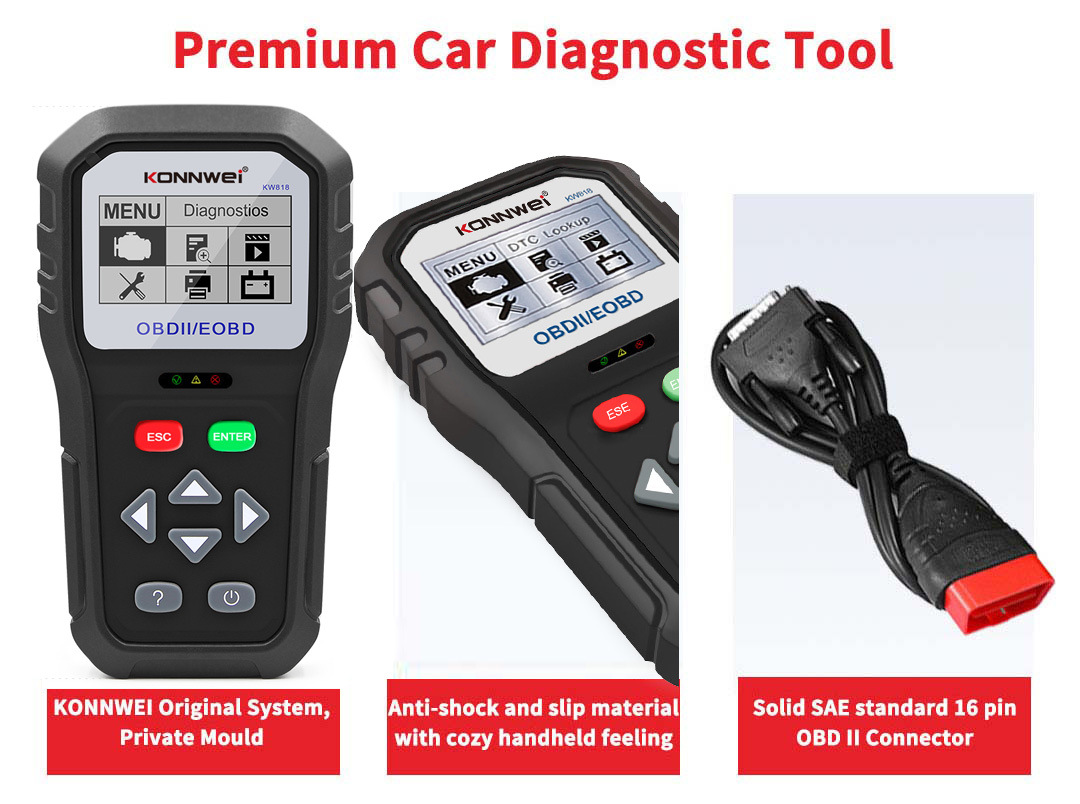
*Large easy-to-read backlit LCD screen
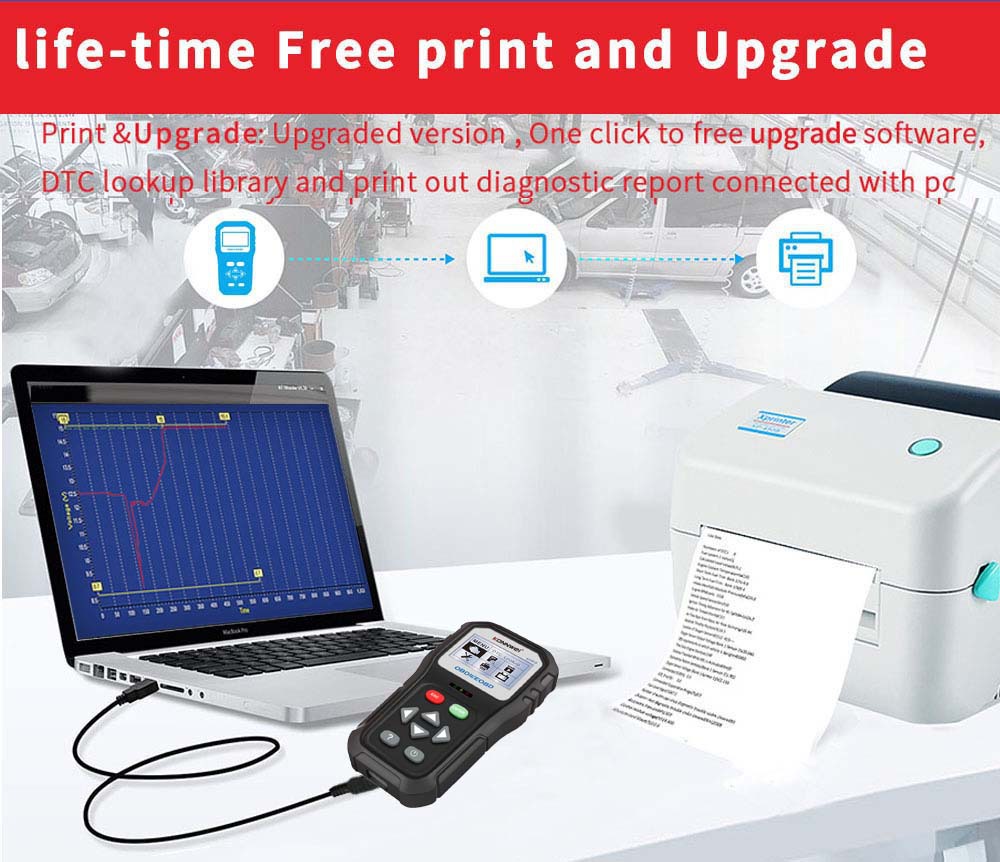
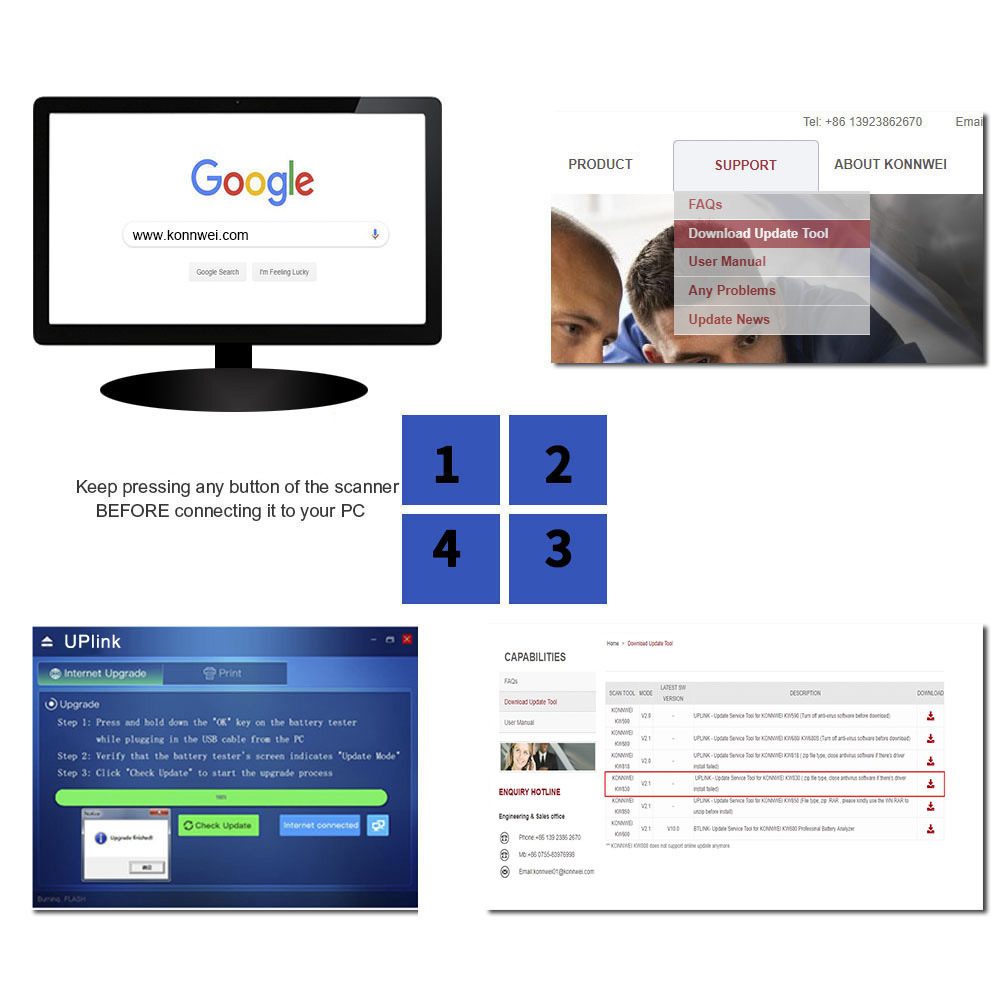
Software upgradeable via internet
Prints data via PC
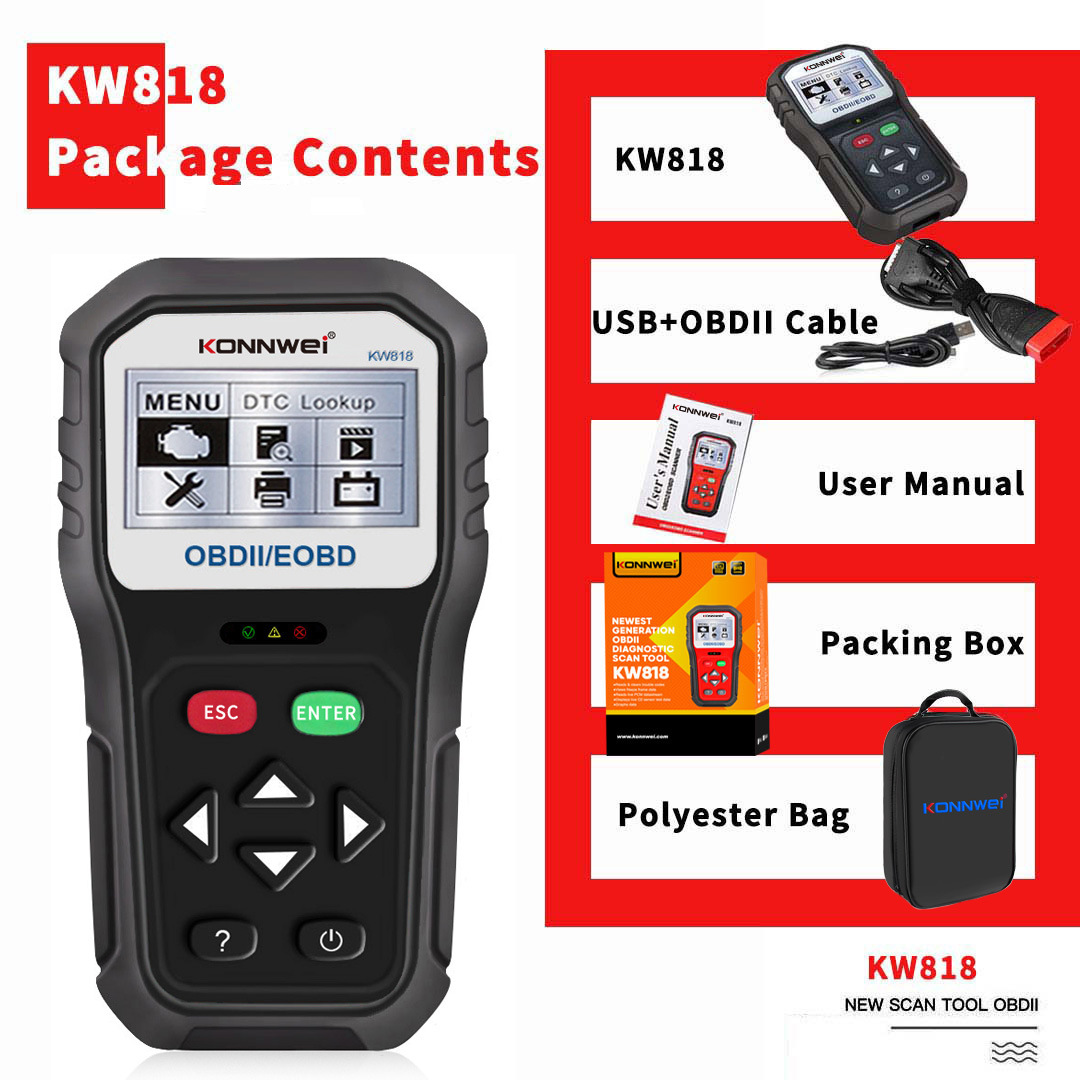
包含配件:
1) 用户手册
2) USB cable
3) Nylon protective case
4) A color box
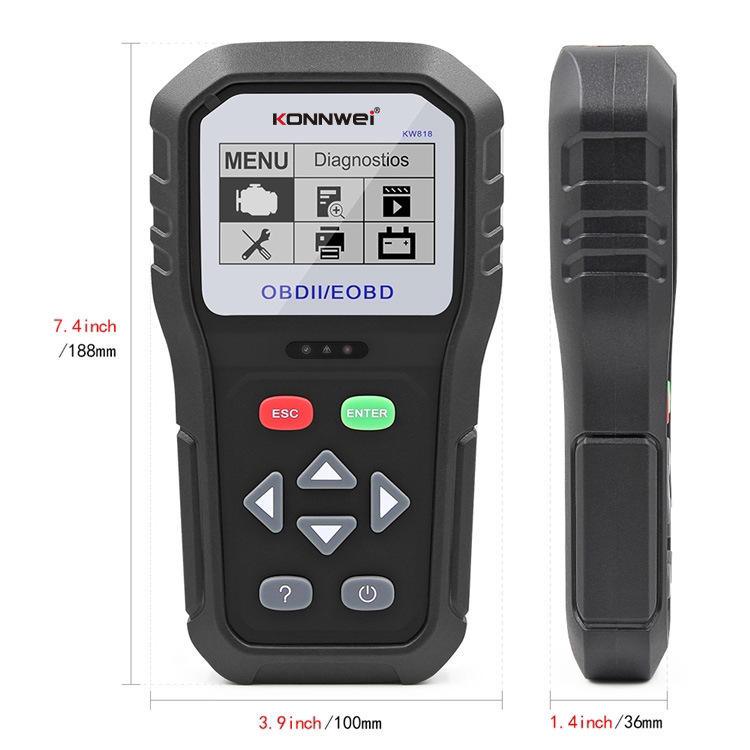
Weight: 0.77 KG
Car fault diagnostic instrument KW818 Chinese instructions:
Can test vehicles that comply with the OBDII protocol. Including CAN, J1850PWM, J1850VPW, ISO9141, KWP2000 protocols. KW850 is easy to use, full OBDII function testing, data flow custom display, and also can be displayed graphically.
Function and Features:
- It can be tested for vehicles in the United States, Europe, and Asia that meet the OBDII protocol after 1996.
- Discover the reason for the engine fault light to solve or clear the problems of the car.
- One-click reading code, simple operation.
- By clearing the code, the temporary fault existing in the ECU is cleared, and the fault warning light goes out.
- Read the sensor information of the engine.
- Read the frozen frame data to understand the sensor information of the car's fault.
- Testing the support situation of the vehicle regarding OBDII.
- Read the oxygen sensor test status.
- Read the online component test status.
- Check the working condition of vehicle components.
- Read vehicle information. (VIN, engine check digit...)
- Customized data flow. (Data display, focusing on analyzing the data flow of interest)
- Data flow can be graphically displayed.
- Supports six languages: English, French, German, Dutch, Spanish, Russian.
- Can detect the battery voltage of a car
- Free online upgrade is available: http://www.itoscanner.com
- Supports a total of 5 types of protocol modes: CAN, J1850PWM, J1850VPW, ISO9141, and KWP2000.
- Fault Library Dictionary.
- Can print the fault code on a computer
- Certified by CE, FCC, and RoHS.
Basic Working Principle:
When a vehicle system fails, the MIL (Mileage-Based Engine Light) or Check Engine Light turns on, and the Powertrain Control Module (PCM) stores the fault information in the memory. The fault code is read from the PCM through the equipment, and the nature and location of the fault can be quickly and accurately determined based on the fault code. Targeted area checks of the relevant parts, components, and wiring are performed to eliminate the fault.



Update time:


TOP


