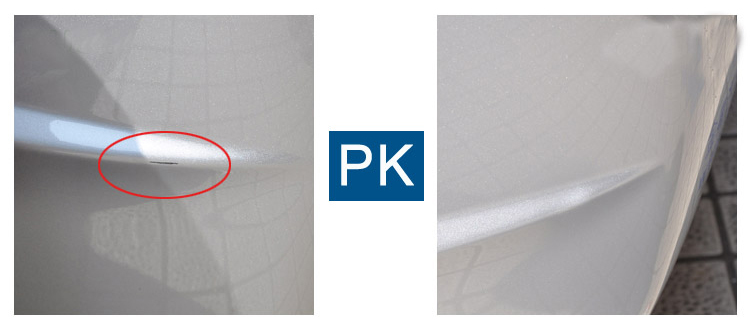
Real-life demonstrationVirtual show
Product DetailsProduct Details
Product InformationProduct Information
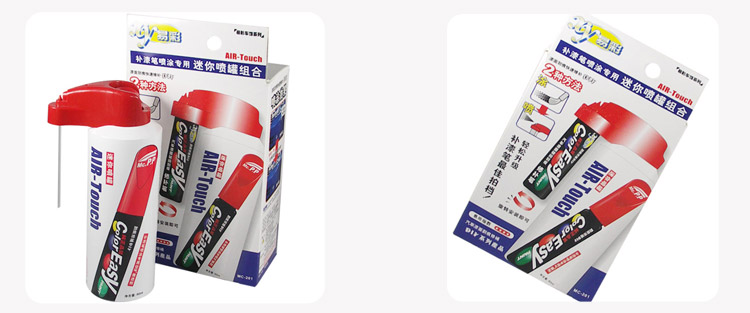
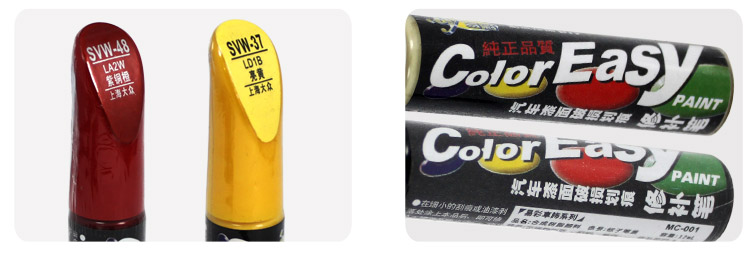
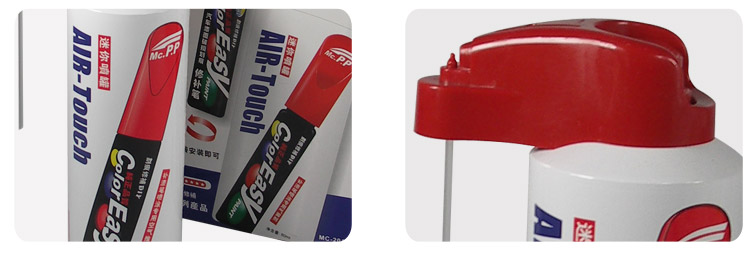
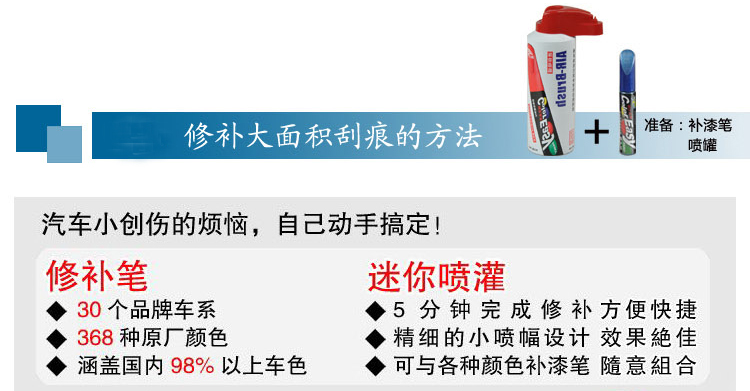
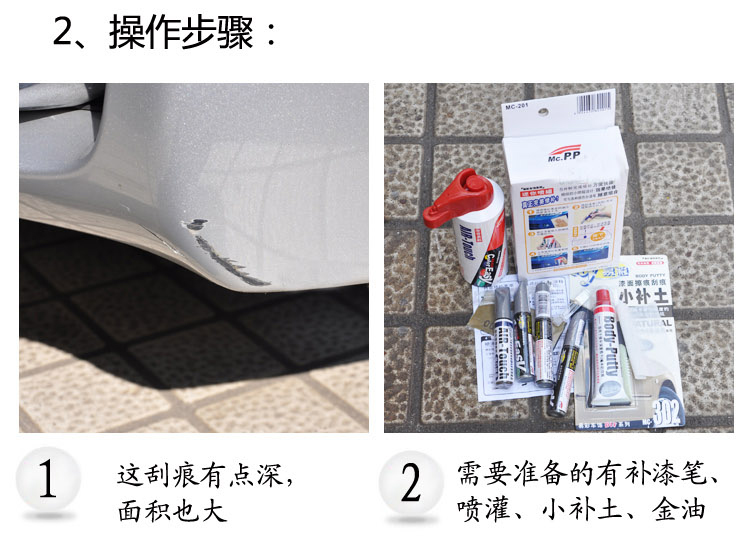
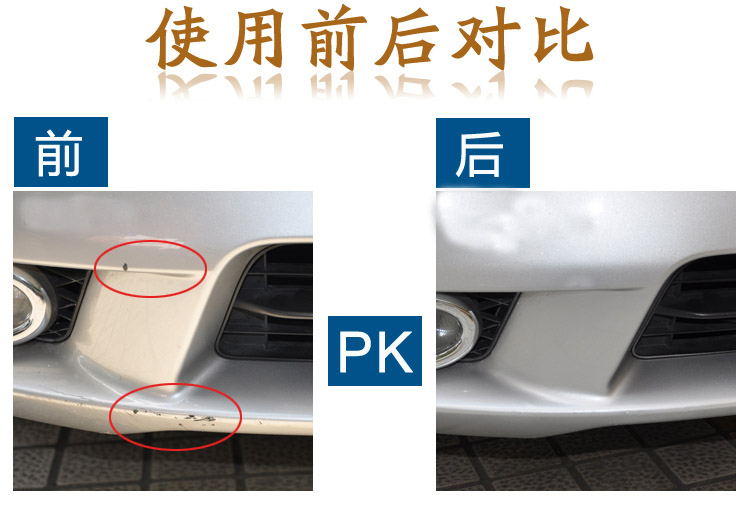
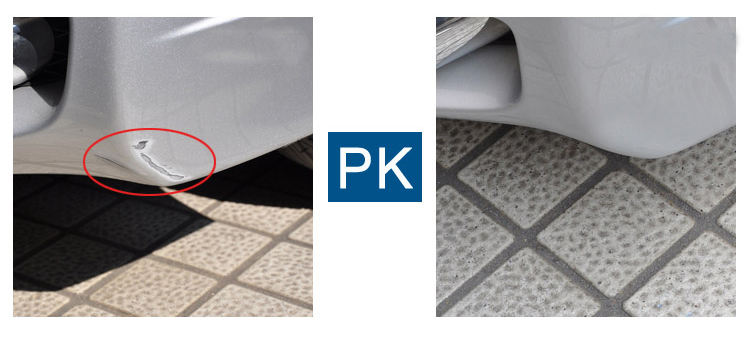
【Product Introduction】 Any car will develop minor scratches after some time of use, which can be both annoying and frustrating. When your beloved car has slight damage, there’s no need to worry anymore—Yicai Auto Paint Repair Pen can solve your problem! Carry a Yicai repair pen with you to quickly and effectively fix small scratches on the car paint. It is very convenient to use, suitable for various types of paint, and almost no trace remains after application. Just select the appropriate model based on the car paint color, apply the product to the scratch or peeling paint, and it will repair, cover, and fill the damage, while also preventing rust. This product uses imported materials and is formulated according to the original car color code. There are over 400 car color repair pens available for choice. Installing any color repair pen instantly turns it into a “Super Mini Automatic Sprayer.” Designed for small scratches, it offers a super fine spray pattern without splashing paint, resulting in a smooth surface after repair. Pits within 2 millimeters can also be easily fixed! Note: Difference between scratch and scuff: A scratch refers to a thin, deep mark caused by sharp objects. A scuff refers to a larger area of mark caused by friction between the vehicle and obstacles.
Instructions for UseInstructions
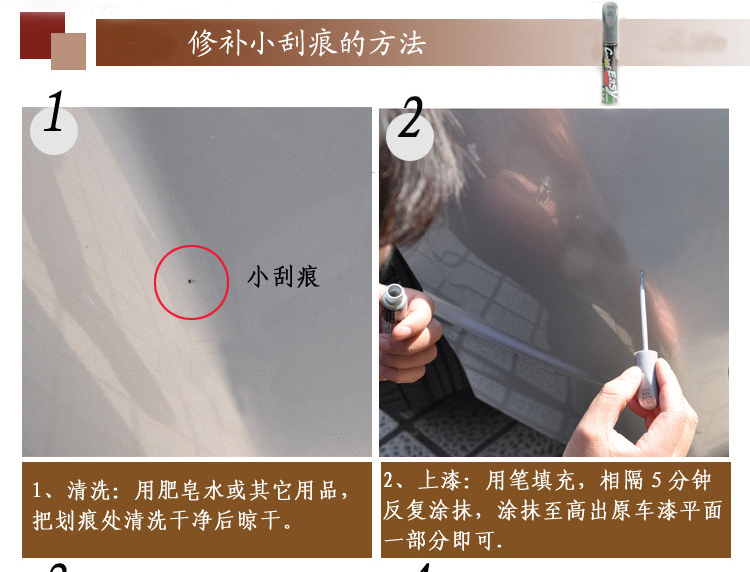
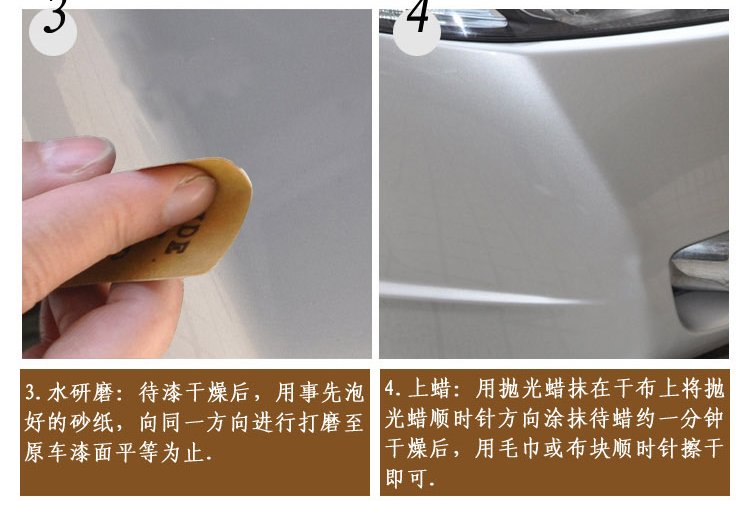
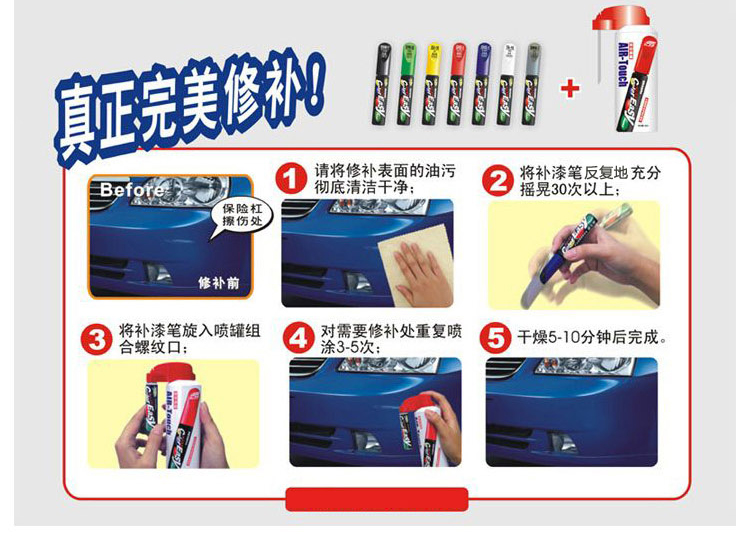
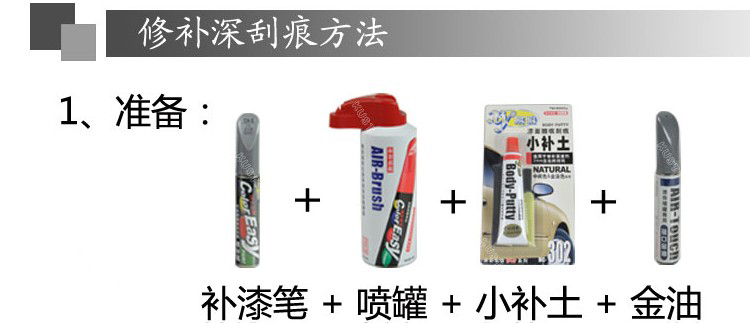
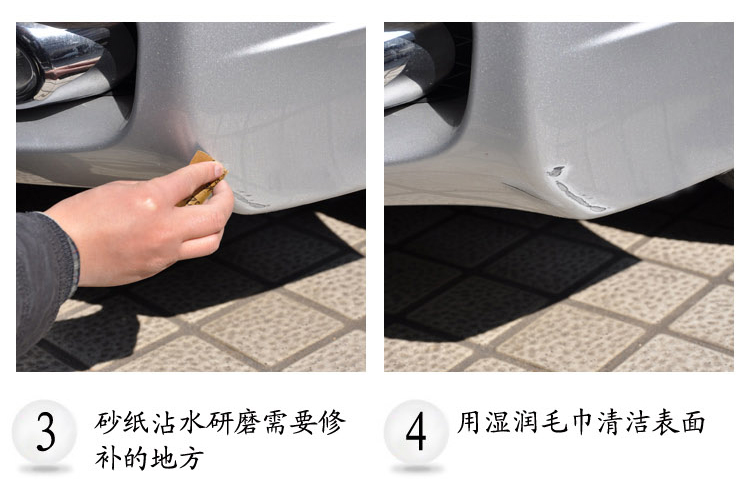
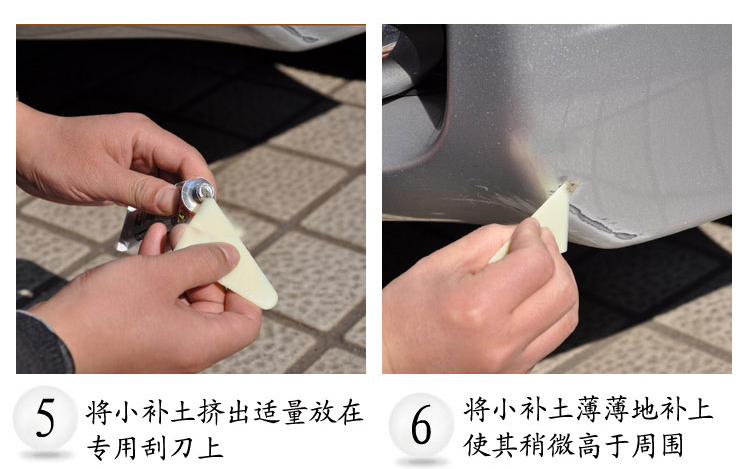
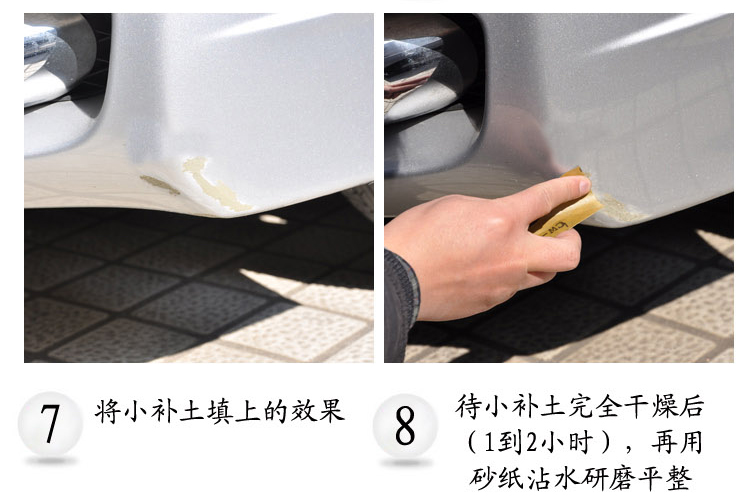
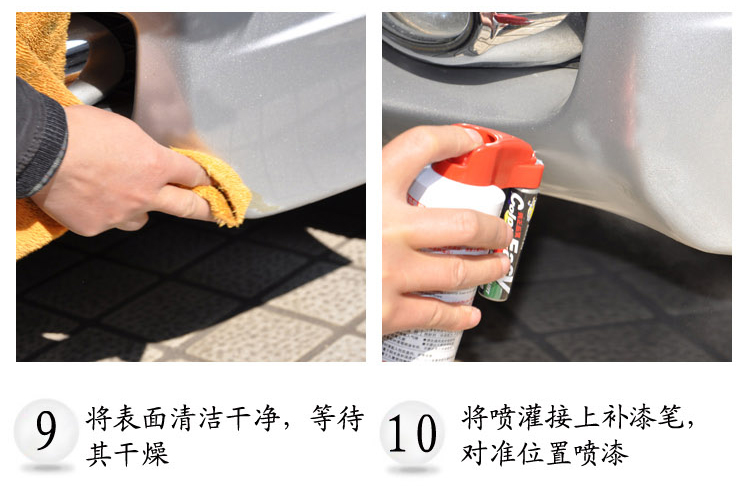
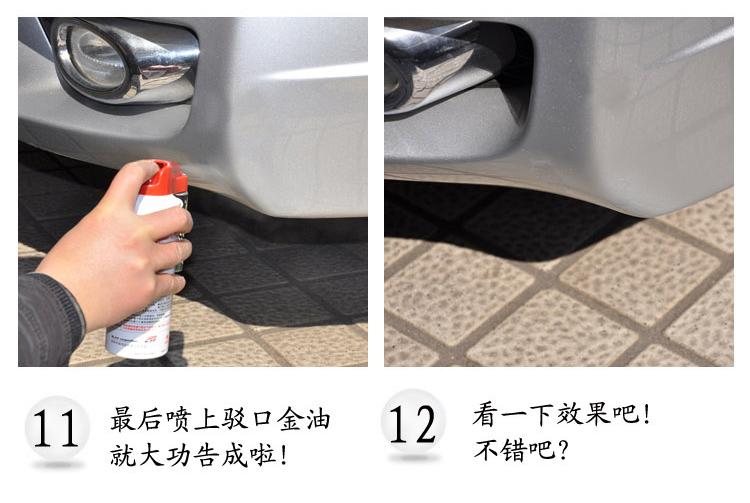
【Usage Instructions】 Please follow the instructions on the packaging box and the accompanying manual. Before repairing, thoroughly clean the surface to be repaired; * Moisture, oil, and rust are the main reasons for repair failure. Please carefully clean and dry the damaged area. For vehicles that have been waxed or coated recently, it is recommended to remove the wax or coating using alcohol or similar substances to improve the adhesion of the paint film. * For uneven marks on the bumper, you can first sand them with sandpaper or repair them with a small knife to make the repair more effective. * Paint settlement may affect performance. Before repairing, shake the filler pen thoroughly and shake it 30 times or more until you hear the sound of the beads hitting each other. * Open the cap of the filler pen when standing it upright to prevent paint spillage. * For deeper scratches, you can apply the included brush several times (with 2–3 minute intervals). * The area directly painted with the filler pen may be slightly uneven. After 2–3 days for the paint film to dry, gently sand it smooth with 2000# wet sandpaper for better results. * The spray can set is used for professional painting techniques to complete the repair. After repair, the surface becomes smooth, so there is no need to sand further. The 400# and 800# sandpaper provided with the spray can are used for preliminary treatment of the damage before repair.
Sample ViewingSample Appreciation
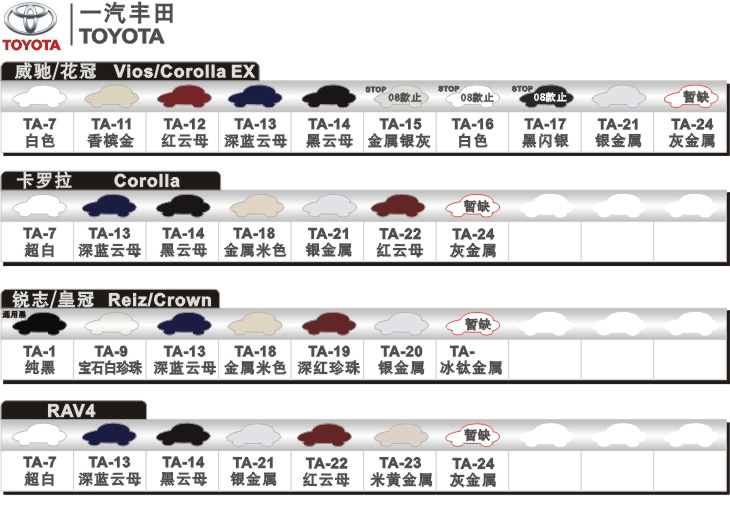
Applicable vehicle modelsApplicable Models
Warm ReminderPlease Remind
【Common Questions】
1. Isn’t it enough to use a paint touch-up brush alone? Why use a spray can?
Answer: A. Using a spray can significantly improves work efficiency, shortens the workflow, and reduces working time. Using a paint touch-up brush requires multiple steps—cleaning, brushing, waiting for drying, repainting, smoothing, sanding with water sandpaper, waxing or polishing—which is time-consuming. With a spray can, you just sand smooth, dry it, and spray—done! (Think of it like why someone would still ride a carriage instead of a car—except for those going on trips or taking wedding photos.) B. Paint touch-up brushes are suitable for small areas with few scratches. For larger, heavily scratched areas, a spray can is the better choice.
2. What’s the difference between this product and self-spray paint?
Answer: A. Self-spray paints are cheaper but usually not designed for cars, use non-official paints, and offer limited colors with noticeable color differences (usually only black, white, and silver). B. Self-spray paints produce larger particles and less even coverage. This spray can is specifically designed for car paint touch-ups—with precise, fine droplets, the particles are much smaller, resulting in a smoother finish.
3. What should be noted when doing DIY repairs?
Answer: Since paint touch-up brushes are DIY products, refer to the instructions before use. Moisture, oil, and rust are common reasons for failed repairs. Clean and dry the damaged area thoroughly. For cars that have been waxed or coated recently, it’s recommended to remove wax using alcohol to improve paint adhesion.
4. Can the spray irrigation kit be reused?
Answer: The spray irrigation can be used multiple times. It contains 80 ML of liquefied propellant, and 1–2 brushes are sufficient to repair 20 CM × 20 CM scratches. As long as there is gas left, replace the spare straw in the kit to reuse it. If the repair area is too large, purchase a refill kit to replenish the gas.
5. Is the color difference significant?
Answer: There will always be some color difference between the repair paint and the original car paint. Why do 4S stores remove a large section of paint when repairing your car? It’s to eliminate visual color differences.
【Precautions】 1. Regarding color difference: The paint touch-up brush is designed specifically for vehicles, and the manufacturer also tries to minimize the color difference during production. However, due to factors such as air pressure, temperature, spraying speed, distance, and thinner ratio in painting, the final result will inevitably lead to color differences—meaning color variation is unavoidable. 2. Amount of spray gas: The product is rated with a gas capacity of 80 milliliters, which is sufficient. If insufficient coverage is achieved, the reasons are usually: 1. Random testing after receiving the product results in wasted gas. 2. When spraying, avoid holding the nozzle tightly without releasing it. This causes the temperature to drop rapidly, resulting in insufficient pressure, poor painting quality, and rapid gas consumption. The correct method is to let the nozzle rest for a few seconds after spraying for 10 seconds, allowing the temperature to recover before continuing. 3. During winter use, wrap the spraying area with a warm towel. Otherwise, similar to the above issues, the cold container may cause inadequate vaporization, leading to wasted gas and ineffective results.