Specification: 1 tonne * 1.6 meters
2 tons * 1.6 meters
Suitable for production factories, manufacturing workshops, warehouses, stations, ports, airports, and other locations. Particularly suitable for sites with fire and explosion safety requirements, such as printing workshops, various oil depots, chemical warehouses, etc.
Features
1,
forkliftIt has a low self-weight, making it easy to operate.
3. High-strength steel fork structure, safe and reliable, durable.
4. High-quality oil cylinders and imported sealing rings significantly improve the sealing performance and reduce maintenance costs.
5. Low price, cost-effective and practical.
Features and Advantages of Manual Hydraulic Forklift
1. The mast of the manual hydraulic stacker truck uses a heavy-duty “C” design
Steel barsColumn steel,
Cold forming. More robust, safer, flexible to move, and easy to operate with less effort;
2. The cylinder uses a high-precision grinding tube, imported oil seals, and an integrated valve core, making disassembly and maintenance easier; the pressure relief mechanism is a foot-pedal type, with a steady lifting speed, significantly enhancing safety.
3. Utilizing advanced spraying technology not only improves the product appearance but also enhances the durability of the manual hydraulic lift truck.
4. The manual hydraulic stacker is a pollution-free manual hydraulic stacker with features such as efficient transportation, easy operation, and a small turning radius.
5. Suitable for production factories, manufacturing workshops, warehouses, stations, ports, airports, and other locations. Particularly suitable for sites with fire and explosion safety requirements, such as printing workshops, oil depots, and chemical storage facilities.
6. It can be implemented in conjunction with pallet containers, containers, etc.
Unitized TransportationNot only does this reduce collisions, scratches, and similar issues, but it also decreases the workload and storage area, significantly improving work efficiency.
Advantages
1,
Manual hydraulic forkliftIt is an essential auxiliary tool for material handling. Pallet handling is the lightest option, and most importantly, anyone can operate it.
2. The throttle handle has an appropriate design, with a plastic grip, making it particularly comfortable to use. The operator’s hands are protected by a sturdy protective device. It is easy to operate the lifting, lowering, and steering controls with the hand.
Tray cartEasy to use, safe, and comfortable.
3. Anti-torsion steel structure; the forks are made of high-strength tension-resistant channel steel. The fork tips are circular, which prevents damage to the pallet when inserted, and the guide wheels ensure smooth insertion of the forks into the pallet.
4. A robust lifting system that meets most lifting requirements and is galvanized according to standard requirements. The pump cylinder is mounted on a heavy-load protection base, and the cylinder tube is chrome-plated. Low position
Control Valveand
Relief valveEnsure safe operation and extend service life.
5. The wheels rotate smoothly and are equipped with sealed bearings. Both front and rear wheels are made of wear-resistant nylon, resulting in minimal rolling resistance. Options include rubber, polyurethane, or specialized tires.
6. The hydraulic system and bearings require no maintenance at all, but in extreme conditions, such as in a humid environment or during flushing with high-pressure hoses, all bearings are equipped with oil filling holes for refilling.
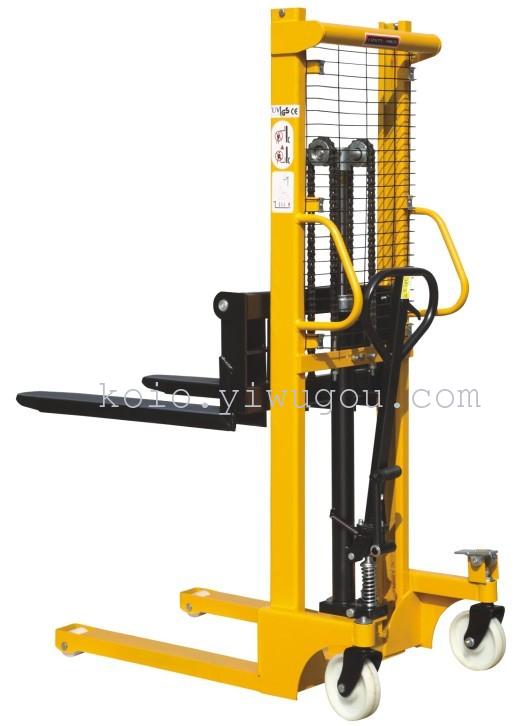
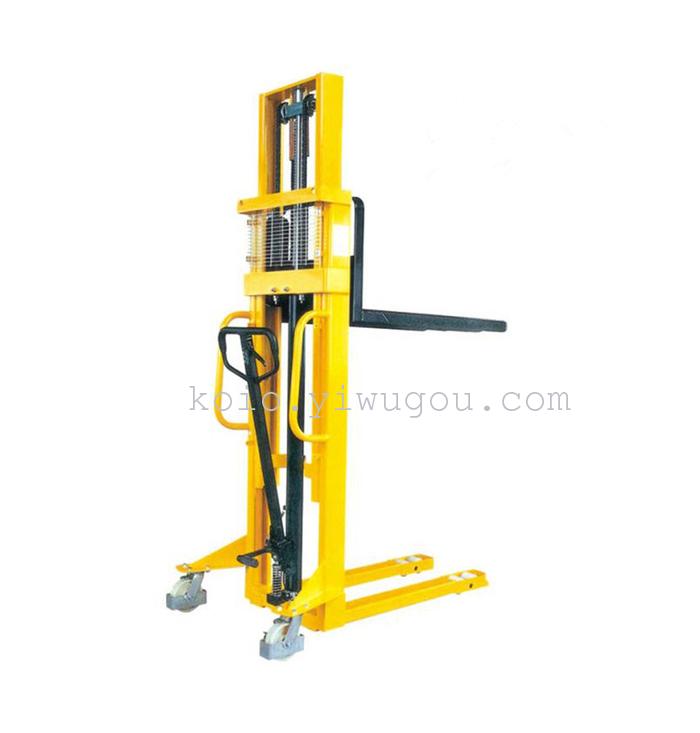
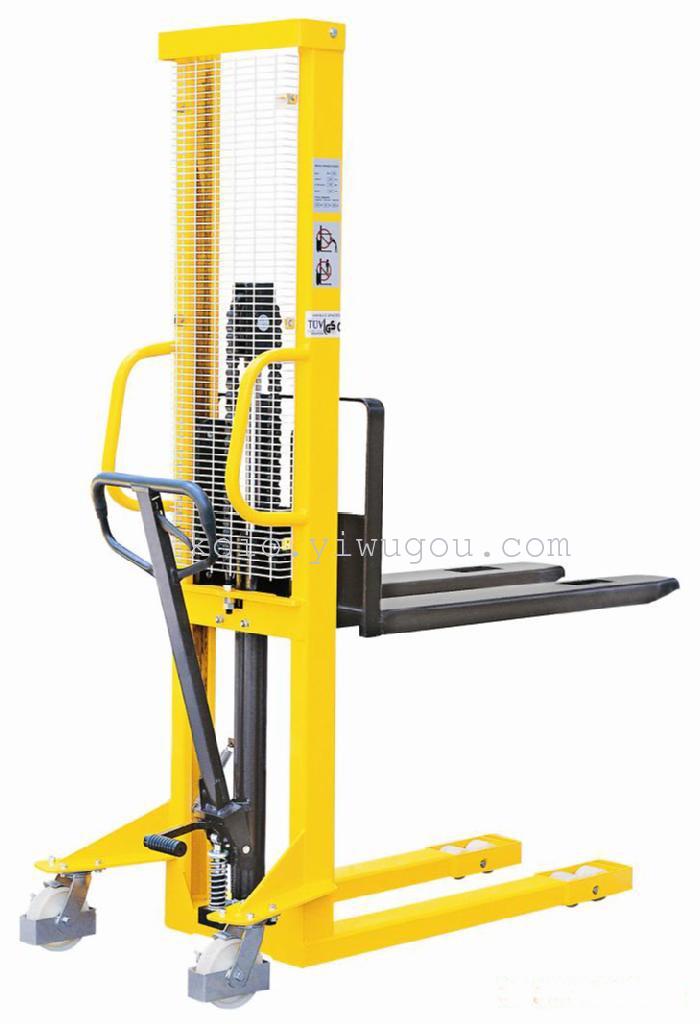
The stacker truck features a simple structure, flexible control, good responsiveness, and high explosion-proof safety performance. It is suitable for narrow passages.
Regarding work in confined spaces, it isOverhead warehouseDatabaseIdeal equipment for palletizing in workshops. It can be widely used in industries such as petroleum, chemical manufacturing, pharmaceuticals, light textile, military manufacturing, paint, pigments, and coal, as well as in places containing explosive mixtures like ports, railways, freight yards, and warehouses. It can also be used to load and unload palletized goods inside ships, vehicles, and containers.stackingandTransporting work. It can significantly improve work efficiency, reduce the labor intensity of workers, and give the company a competitive edge in the market.