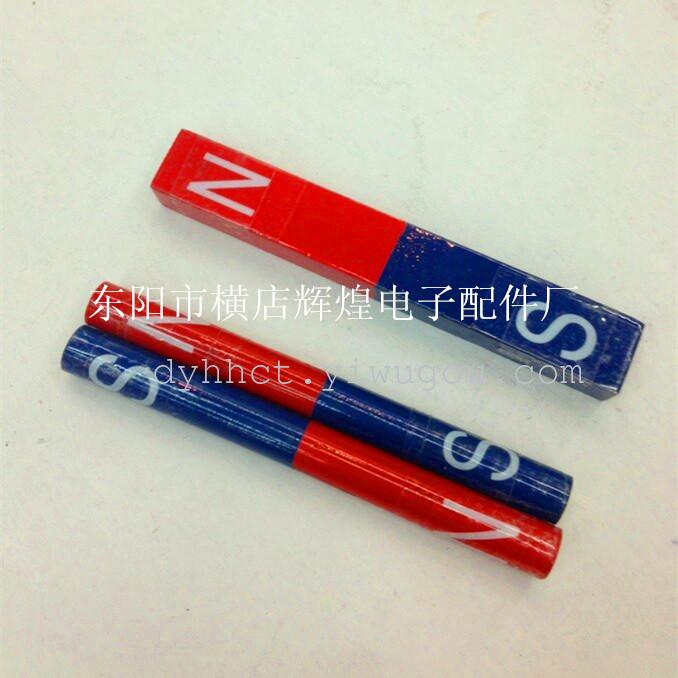
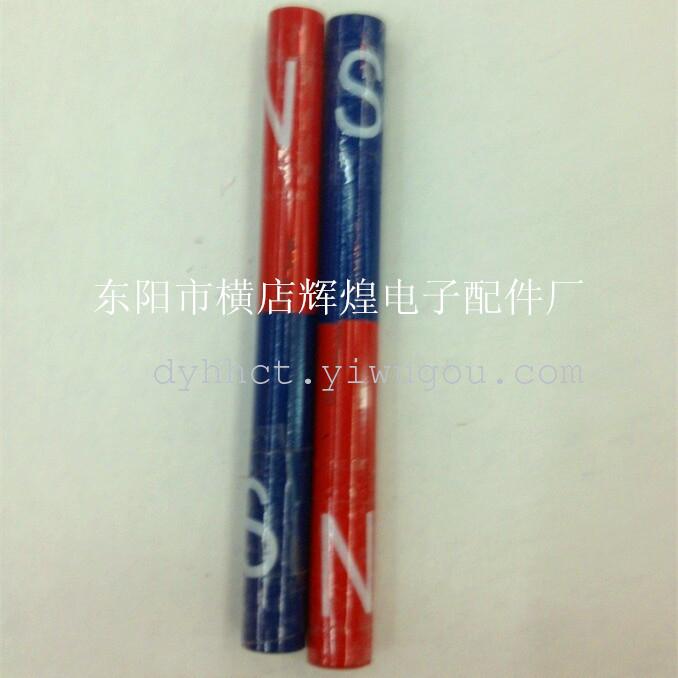
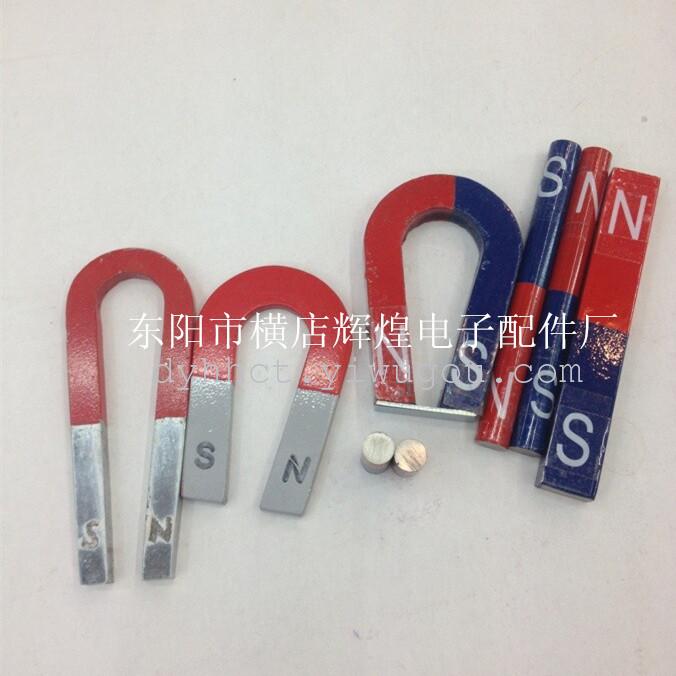
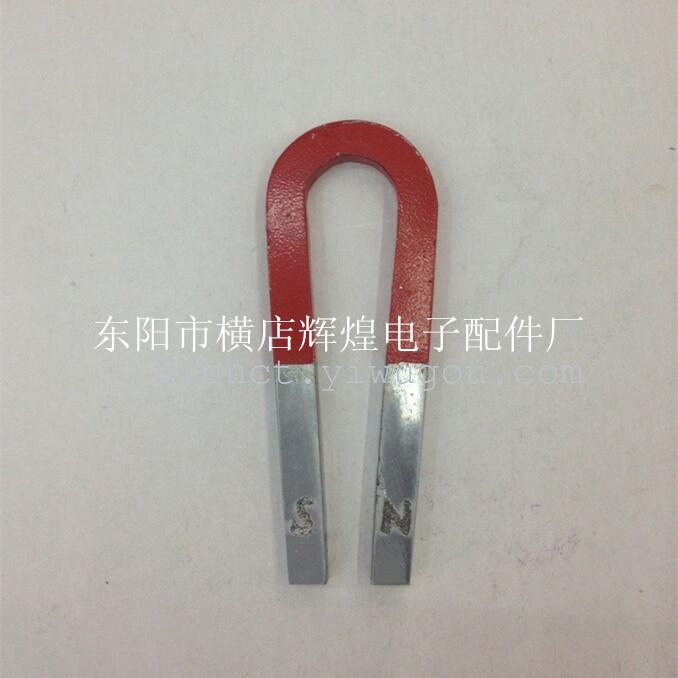
The magnetic properties of aluminum-nickel-cobalt change very little with temperature. It is still widely used in permanent magnet devices that require high temperature stability, such as instruments and motors. It is particularly suitable for use in weapons systems like torpedoes, missiles, and aircraft, as well as in spacecraft such as satellites. This material has a high residual magnetic flux density, up to 1.3.5 T, but its intrinsic coercivity is very low, typically less than 160 kA/m. Its demagnetization curve is nonlinear, and the recovery line of aluminum-nickel-cobalt permanent magnets does not coincide with the demagnetization curve. Therefore, special attention must be paid to its unique characteristics during the design and manufacturing of magnetic circuits; stable magnetization treatment must be performed on the permanent magnets beforehand. Due to the low coercivity of aluminum-nickel-cobalt permanent magnets, it is strictly prohibited to expose them to any ferromagnetic materials during use to prevent local irreversible demagnetization or distortion in the magnetic flux density distribution. Additionally, to enhance its resistance to demagnetization, the pole surfaces of aluminum-nickel-cobalt permanent magnets are often designed as long cylinders or rods. Furthermore, the aluminum-nickel-cobalt permanent magnet material has low mechanical strength, high hardness, and is brittle, with poor machinability. As a result, it cannot be used as structural components; only minor grinding or electrical discharge machining can be performed during processing, and forging or other mechanical processing methods are not applicable.
Alnico permanent magnet materials are one of the first permanent magnet materials to be widely used, and their production processes and technologies are quite mature. The table below lists the common grades and main magnetic properties of Alnico permanent magnet materials produced in China.
Table: Alnico permanent magnet material grades and their main magnetic properties
|
Code Number
|
Br
(T)
|
HcB
(kA/m)
|
(BH)max
(kJ/m3)
|
αBr
(%/℃)
|
Μr
|
|
LN10
|
0.60
|
36
|
10
|
-0.022
|
6.0~7.0
|
|
LNG13
|
0.68
|
48
|
13
|
6.0~6.7
|
|
LNG32
|
1.20
|
44
|
32
|
-0.016
|
3.5~4.8
|
|
LNG3X2H
|
1.10
|
56
|
32
|
3.2~4.5
|
|
LNGT32
|
0.80
|
100
|
32
|
-0.020
|
2.4~3.6
|
|
LNGT40
|
0.72
|
410
|
40
|
|
LNG52DIV>
|
1.30
|
56
|
52
|
-0.016
|
2.4~3.6
|
|
LNG60
|
1.35
|
60
|
60
|
2.4~3.6
|
|
LNGT56
|
0.95
|
104
|
56
|
-0.02 ~ -0.025
|
2.4~3.6
|
|
LNGT70
|
>0.90
|
145
|
70
|
|
LNGT72
|
1.05
|
11
|
72
|
0.02 ~ -0.025
|
2.0~3.2
|
|
LNGT85
|
1.08
|
120
|
85
|
2.0~3.0
|
|
LNGS9
|
0.5
|
35
|
<9
|
6.0~6.7
|
|
LNGS25
|
1.05
|
46
|
25
|
3.2~4.3
|
|
LNGTS28
|
0.7
|
95
|
28
|
Note: L stands for aluminum, N stands for nickel, G stands for cobalt, T stands for titanium, S stands for sintering
The notable feature of aluminum-nickel-cobalt permanent magnet materials is:
① The temperature coefficient is small, and the remanent magnetization reversible temperature coefficientαBrOnly -0.02%/℃ approximately, the remanent force reversible temperature coefficient is +0.015%/℃ approximately;
② Excellent corrosion resistance;
③ The Curie temperature reaches 860 °C, and the applicable temperature can reach 550 °C.