
Search history
Clear allSearch by image
XDrag and drop an image here or upload an image
Max 5MB per image
UploadSign In | Join

Search history
Clear allSearch by image
XDrag and drop an image here or upload an image
Max 5MB per image
UploadSign In | Join
Pine Turpentine Common Sense:
As is well known, turpentine is quite brittle and is prone to breakage. During multiple transportation processes, it may also produce powder and small pieces. This can be easily re-compacted by heating it in a pan. Special price items are shipped at random, and each package may contain pieces. If you are concerned, please avoid this product. Thank you for your cooperation! If there are any gods or fairies with poor vision who have not read the product description and need to return or exchange the product, they will need to bear the shipping costs!
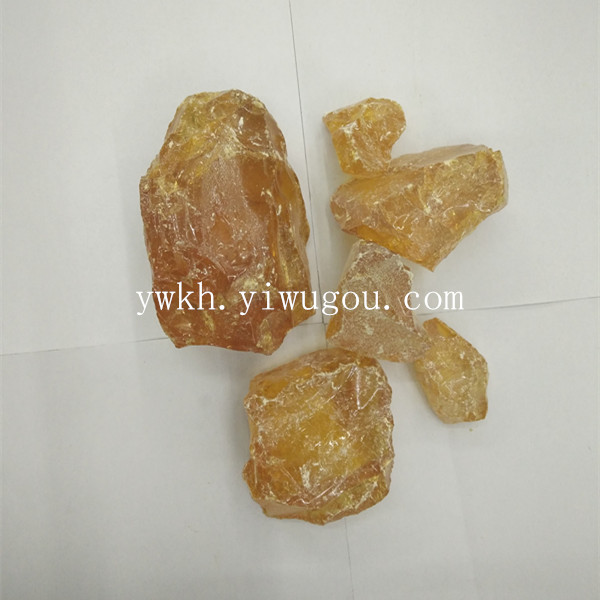
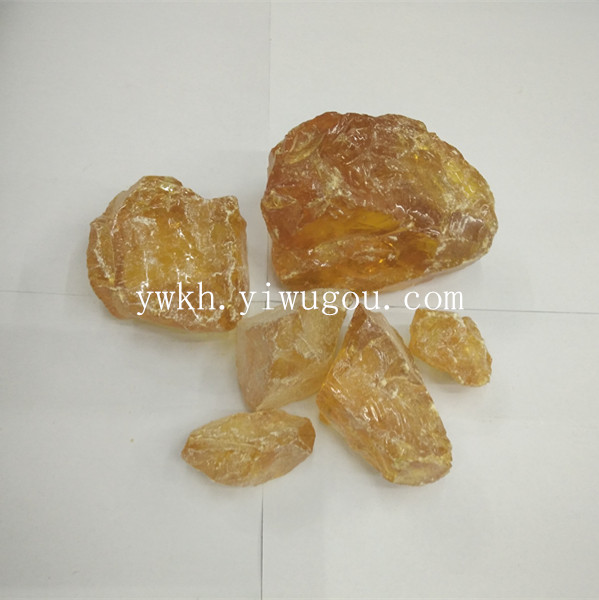
Pine rosin is the oil that flows out of the interior of pine tree trunks, which melts into a watery state at high temperatures and then dries to form a solid block (without a fixed melting point). Its color is dark brownish-red, and it is an important chemical raw material.Mainly used in circuit board soldering as a solder assist, in the musical instrument field, rosin is applied to the bow hair of erhu, violin, horsehead fiddle, etc., to increase the friction between the bow hair and the string.
英文名:Colophony
拉丁名:Colophonium
The image is a real-object photograph. Generally, when you see pine resin, you'll notice some powder on the surface. However, after polishing or slightly heating, it becomes transparent and crystal-like, just like amber!
Since metal surfaces contact with air will form an oxide film, the higher the temperature, the more severe the oxidation. This oxide film prevents the liquid solder from wetting the metal, just as oil on glass prevents water from wetting. Solder flux is a special material used to remove the oxide film, also known as a soldering aid.
Widely used in welding.Solder Pastesandstringed instrumentsWait!
Pine resin orPine resin soap ingredients, pine resin paint, pine resin inkImportant raw materials!
Pine rosin broken down can also be anti-skid, suitable for the anti-skid facilities of dance floors, sports fields, and ice rinks!
The Properties of Turpentine
Physical properties: Rosin is a transparent solid with a light yellow to yellow-red color. Its softening point is 70-90°C, specific gravity is 1.070-1.085, and the heat of solution is 15.8 kcal/kg. The specific heat capacity is 0.54 kcal/kg·°C, the thermal conductivity is 0.11 kcal/m·h·°C, the volume resistance rate is 5×10¹⁶ Ωcm, and the flash point is 216°C. Rosin also has a crystallization characteristic, which is prone to crystallization. It has a crystallization trend in organic solvents such as acetone, and the critical temperature for crystallization is about 100°C. The melting point of crystalline rosin is 110-135°C, and it is difficult to saponify. In addition, rosin has optical activity, and the specific rotation of rosin should be controlled between 0-15° (the best point is +7°) to achieve the lowest crystallization phenomenon and trend.
Source and Processing
(1) Fat rosin
The resin collected from pines by cutting and then processed and refined into rosin is called rosin. Its feature is that it can be continuously harvested from pines, which is conducive to the full use of resources. China has rich resources of pine resin, and is the largest producer of rosin. The production of rosin is still expected to remain above 350,000 tons for a long time. Therefore, it is estimated that the annual production of rosin in the world can still be maintained at 650,000 to 700,000 tons in the next 20-30 years.
Mongolian Pine Incense
Pine rosin is obtained by chopping up pine roots or trunks, soaking them in a solvent to extract the resin, and then refining it. It is mainly produced in the United States, with raw materials relying on the original pine forests in the southeastern part of the country. Due to the reduction of forest resources, there is a shortage of raw materials for wood rosin, and the output has declined from 316,000 tons in 1950 to only 20,000 tons currently. The former Soviet Union also produces wood rosin, but due to the reduction of resources, the output has also plummeted. It is estimated that the current world output of wood rosin accounts for less than 5% of the total output of rosin.
Floating oil pine resin
Derived from the pulp and paper industry, black liquor from sulfate pulp production is processed to obtain it. Originally, it was not as good as rosin from pine resin, but due to continuous improvements in quality, its performance is now similar to that of rosin from pine resin. Due to the reduction in the proportion of pine wood used in papermaking, the yield of rosin from the fractionation of floating oil has been reduced (from 27% to 21%). Therefore, despite an increase in crude floating oil fractionation capacity in recent years, the production of rosin from floating oil has remained relatively stable, accounting for about 30%-35% of the total rosin production.
Industrial raw materials
Rosin is an important chemical raw material, widely used in various industrial sectors, with the following main applications:
1、Soap Industry - Rosin is cooked with pure soda or caustic soda to form rosin soap. Rosin soap has great cleaning power, is easily dissolved in water, can dissolve oils, and easily forms foam. Rosin has adhesive properties that prevent soap from cracking and deteriorating due to acidification.
2、Pine rosin in the papermaking industry is used as a papermaking adhesive. Pine rosin is mixed with sodium hydroxide to make pine rosin sodium soap, which is the adhesive. The adhesive is mixed with the pulp and added with alum, making the pine rosin become insoluble in water free resin acid particles attached to the small fibers. When the pulp is rolled and heated on the drying cylinder, the pine rosin softens and fills between the fibers. This effect is called "glueing" or "sizing". After the paper is "glued", it can enhance water resistance, prevent ink penetration, improve strength and smoothness, and reduce shrinkage.
3. Paints and Coatings Industry: Rosin is easily soluble in various organic solvents and forms a film easily, which gives it a luster. It is one of the basic raw materials for paints and coatings. The role of rosin in paints is to make the paint shine, dry quickly, and have a smooth and non-peeling paint film.
4. Ink Industry: Rosin is primarily used in printing inks as a color carrier, and it also enhances the adhesion of the ink to paper. Without rosin in the ink, the ink will appear dull and blurry when printed.
5. Adhesive Industry: Adhesives based on rosin esters and hydrogenated rosin esters are commonly used as hot-melt adhesives, pressure-sensitive adhesives, and rubber thickeners.
6. Rubber Industry: Rosin is used as a softener in the rubber industry, which can increase its elasticity. The potassium rosin dichloride can be used as a synthetic
7. Food Industry Hydrogenated rosin glyceride is heated with natural gum arabic, wax, and vinyl acetate, among other ingredients. Then, flavorings, sugar, and pigments are added to make a uniform mixture, which can be used to make chewing gum. After slaughtering pigs, cattle, and sheep in a slaughterhouse, the hair left on the animals and their heads can be removed using a depilation agent composed of 88-94% melted rosin and 6-12% cottonseed oil.
8. In the electrical industry, 35% rosin and 65% bright oil are mixed to form an insulating oil that is used as a protective film on cables, serving as an insulating and heat-resistant agent. Rosin mixed with electriwood and other synthetic resins are used as insulating clear paints.
9. Construction Materials Industry - Rosin is primarily used in the construction materials industry as a foam stabilizer in concrete and as a binder for floor tiles. Rosin is also used as a binder for asbestos-free vinyl tiles. By mixing rosin with linseed oil, calcium carbonate, charcoal, pigments, etc., it can be used to manufacture tile mats.
Solder Pastes
Since metal surfaces contact with air will form an oxide film, the higher the temperature, the thicker the oxide layer. This oxide film prevents the liquid solder from wetting the metal, just as oil on glass prevents water from wetting the glass. Solder flux is a special material used to remove the oxide film.
1. Removing oxidation film: In essence, the material in the solder assistant reacts with the oxidation film, thereby removing it. The reaction products become suspended slag, floating on the surface of the solder.
2. Oxidation prevention: After melting, it floats on the surface of the solder, forming an isolation layer, thereby preventing the oxidation of the welding surface.
3. Reducing surface tension: Increasing the fluidity of solder helps the solder to wet the soldered parts.
Instrument accessories
Rosin is applied to the bow hair of erhu, violin, and other musical instruments to increase the friction between the bow hair and the strings. The best is refined transparent block-shaped rosin, and natural crystalline rosin secreted and solidified on pine trees can also be used as a substitute.
The popular folk method of applying turpentine to a string instrument is as follows: first, split a crack in a bamboo strip, then insert the turpentine into the crack. Then light the bamboo strip on fire to melt the turpentine, which is then dropped onto the instrument's body. This method is called "hot-turpentine application." Although hot-turpentine application is convenient and saves time for playing, it hinders the performance of certain bowing techniques, and the instrument's body and skin do not appear clean.
Now, the more common practice is to 'wipe the incense' by directly rubbing the incense on the bow hair repeatedly. This way, after one application of incense, you can play for at least an hour. Practice has shown that the sound of the violin is not very ideal immediately after 'wiping the incense', and it takes about two or three minutes for the sound to gradually return to normal. When wiping the incense, do not apply too much force to avoid breaking the bow hair.
After using the new rosin for a few hours, the old rosin will start to work.
Without rosin, the bow will slip when playing the strings, and the sound will not be produced. A little bit of rosin will make the bow hair slightly sticky, allowing it to "grip" the strings to make them vibrate to produce sound. When you buy rosin, it is usually wrapped in cloth or a small box. It not only has adhesive properties but is also very hard, and in general, it can last for a long time. The harder the rosin, the more likely it is to break.
Many brands of rosin have two colors, but the price is the same. The light one is like the color of honey, and the deep one is like the color of licorice. When playing, the rosin will turn into powder, and at this time, its color is all the same white.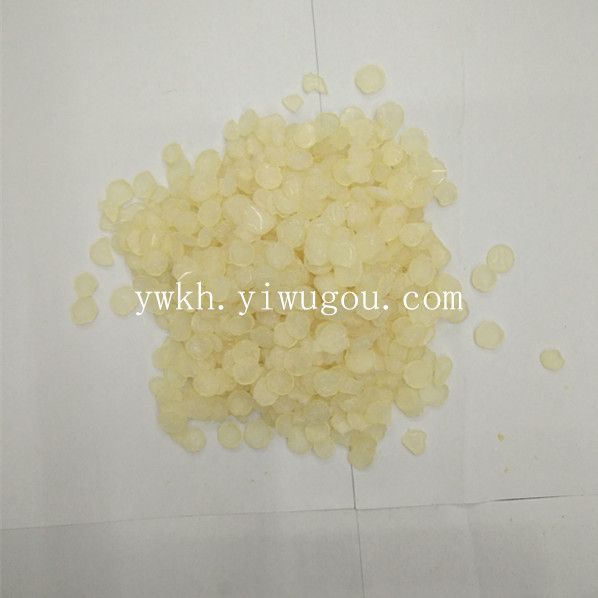
Update time:


TOP


