
Search history
Clear allSearch by image
XDrag and drop an image here or upload an image
Max 5MB per image
UploadSign In | Join

Search history
Clear allSearch by image
XDrag and drop an image here or upload an image
Max 5MB per image
UploadSign In | Join
Pujiang Jian Yu health materials Co., Ltd 15yr.
Contacts Anna Chat
Mobile 18758911519
18758911519

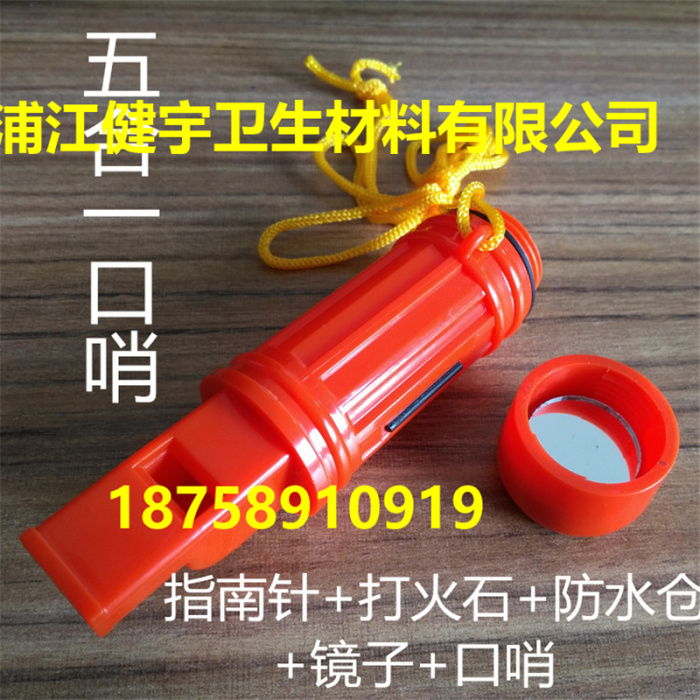
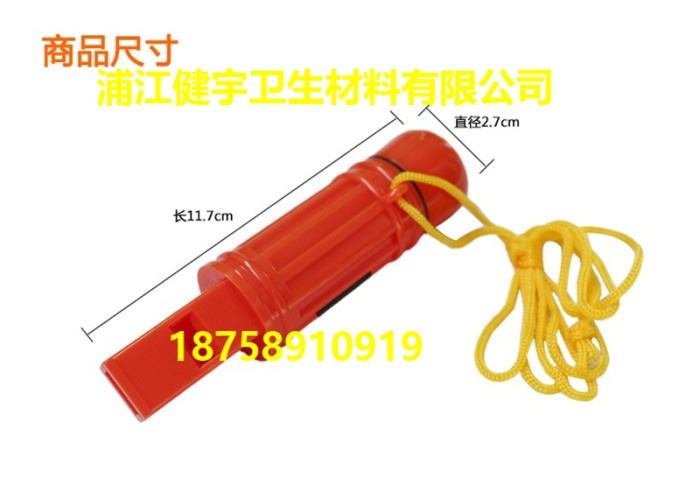
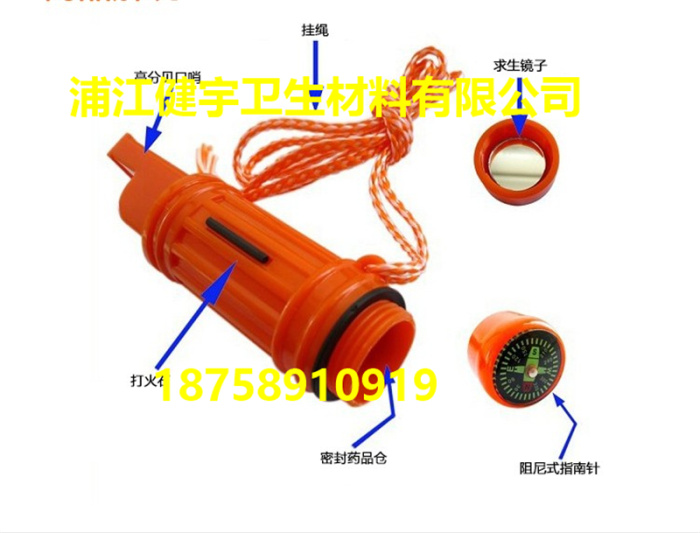
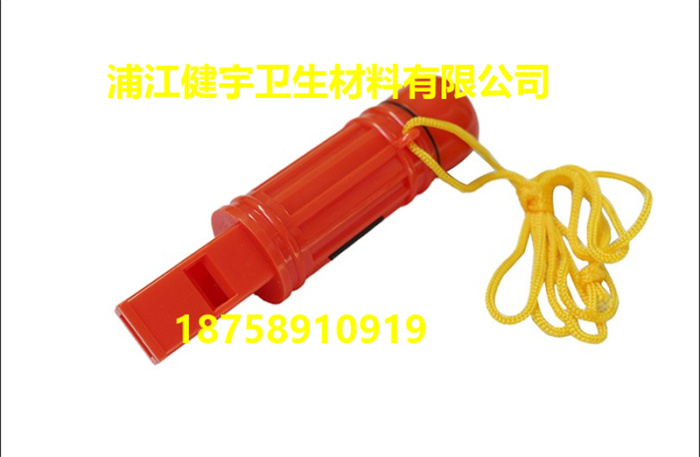
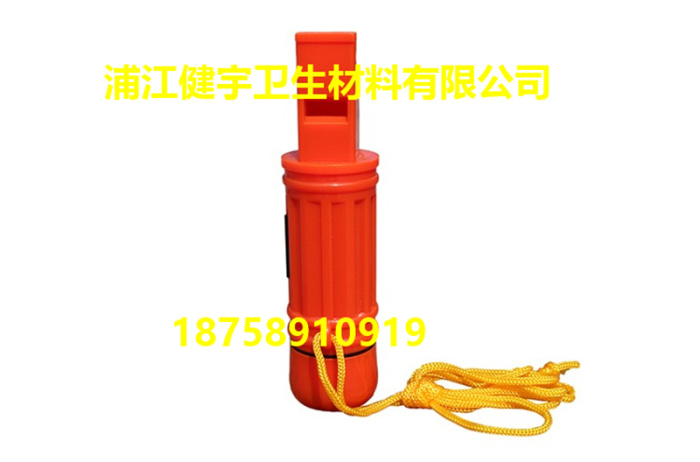
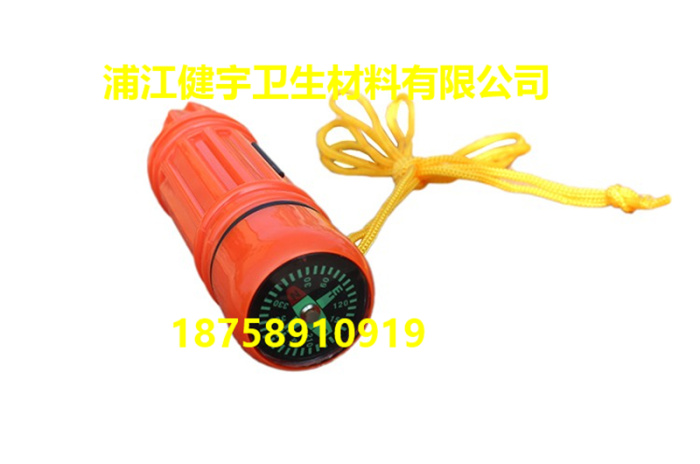
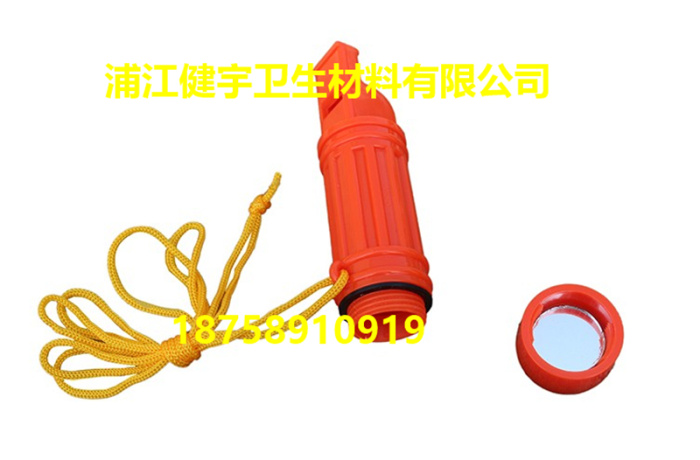
This product is widely used and includes: a mirror, a compass, a whistle, a flint, and a waterproof compartment.
About the Use Standards of Survival Whistle [Repost]
A survival whistle does not necessarily have to be used in an emergency, such as to greet those in front or behind, to determine the distance, and to determine the direction of the sound source, and so on and so forth...... However, there is a problem here, which is that sometimes when climbing a mountain, it is just a whim to blow the whistle, and if one blows too much, everyone doesn't think anything of it. When they hear others blowing, they don't feel like blowing either, and they walk by themselves. In this case, if someone's ankle twists or there is a need for help, or if the new hikers in the middle are far away and don't know how to get to the crossroads, it is a very urgent matter if no one responds to the whistle blowing, because the others still think nothing has happened, and they are busy silently and hard working, with no time to pay attention to it. It's like the story of "The Wolf Comes."
Symbol Explanation: ● Short sound (within one second); ■■■ Long sound (over 3 seconds); The whistle sound within the instruction is 2-3 seconds, and the interval between instructions is over 30 seconds (e.g., to repeat the instruction, you need to wait over 30 seconds).
Communication (T): ■■■ (a long sound) is used for voice communication among the team to determine the direction of each other's whistle signals. After receiving a whistle command, it is used to indicate that the command has been received (similar to the shout "Hey~~~~~").
Assembly (U): ● ● ■■■ (two short and one long) Move towards the direction of the whistle call (similar to the shout "Assembly!!!!")
Advance (V): ● ■■■ (one short and one long) Rest time: represent the entire team's departure. During movement: represent accelerating forward (similar to shouting "Charge!!!")
Front Team Wait (W): ● ■■■ ■■■ (One short two long) Used when the front team needs to wait for the rear team due to the long distance of the march (similar to the shout "Please wait~~~ wait~~~~")
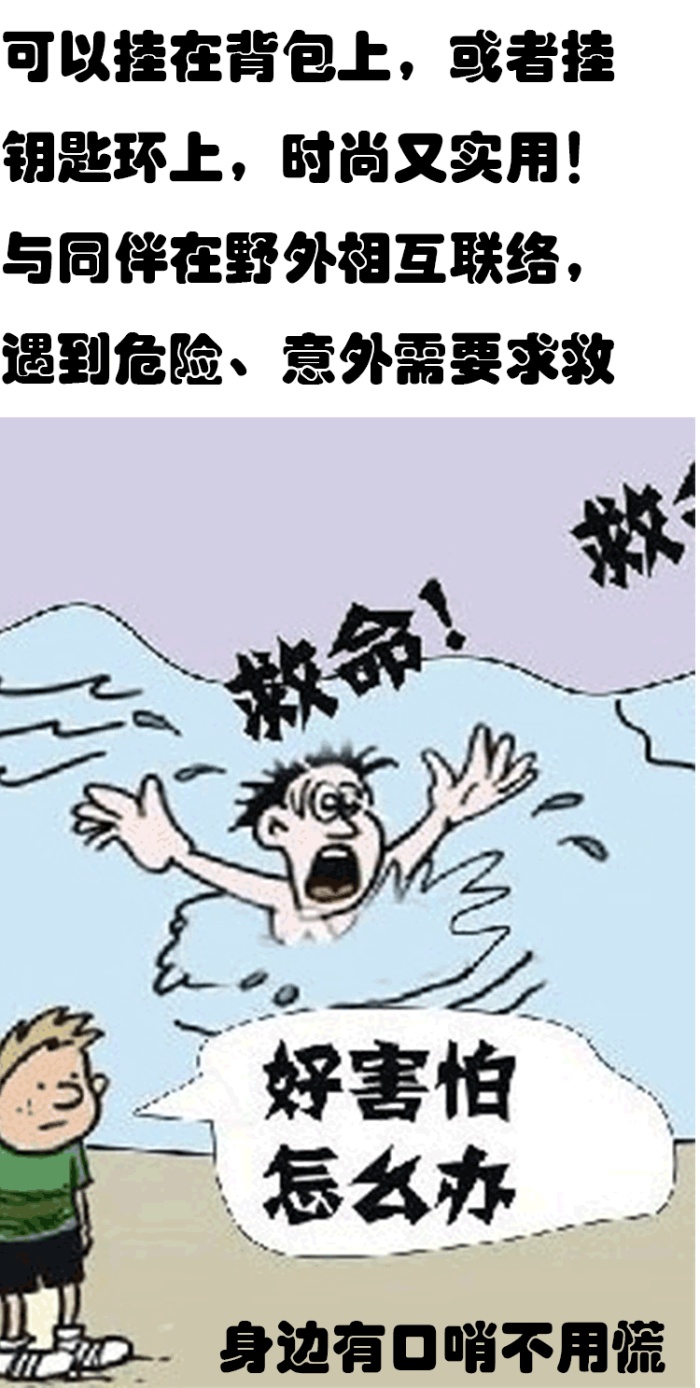
SOS: ● ● ● (Three short beeps) When in need of help, send out this signal. The receiver responds with a communication tone (T) to indicate they will come to assist (similar to shouting 'Help! Help! Help!')
SOS: ● ● ● ■■■ ■■■ ■■■ ● ● ● (Three short, three long, three short) This is the international SOS code, please remember it.
Update time:


TOP


