
Search history
Clear allSearch by image
XDrag and drop an image here or upload an image
Max 5MB per image
UploadSign In | Join

Search history
Clear allSearch by image
XDrag and drop an image here or upload an image
Max 5MB per image
UploadSign In | Join
For bulk custom orders from the factory, please contact: 1 5858 9 4 0 8 6




Product Name: KX19 4 2 Demonstration Thermometer
Model Number: KX1942
Size: 200*50*8 mm
Weight: Approximately 120g
Material: Acrylic + Paper
Color: Transparent + White + Red
Battery usage: No
Packaging: 500 pcs
Box dimensions: 600*450*550mm
Thermometers are tools that can accurately determine and measure temperature, and they are divided into analog thermometers and digital thermometers. Various types of thermometers have been designed and manufactured based on different usage purposes. The design principles behind their creation include: the thermal expansion and contraction of solids, liquids, and gases due to temperature changes; the variation in pressure of gases (or vapors) under constant volume conditions depending on temperature; the effect of the thermoelectric effect; the change in resistance with temperature; and the influence of thermal radiation.


The first thermometer was invented by the Italian scientist Galileo (1564–1626) in 1593. His first thermometer consisted of a glass tube with one end open and a glass bulb the size of a walnut at the other end. When in use, the bulb was heated first, and then the glass tube was inserted into water. As the temperature changed, the water level inside the tube would rise and fall, and the amount of movement could be used to determine the temperature changes and levels. Since thermometers rely on thermal expansion and contraction, they are greatly affected by external atmospheric pressure and other environmental factors, resulting in greater measurement errors.
Later, Galileo’s students and other scientists made repeated improvements based on this principle, such as turning the glass tube upside down, placing liquid inside the tube, and sealing the glass tube. Notably, the Frenchman Breguet created a thermometer in 1659. He reduced the volume of the glass bulb and replaced the temperature-measuring substance with mercury, thus establishing the basic form of a thermometer. Subsequently, the Dutchman Wulfram Huygens developed a more accurate thermometer in 1709 using alcohol, and again in 1714 using mercury as the measuring substance. He observed the boiling point of water, the temperature when water mixes with ice, and the temperature when salt water mixes with ice. After numerous experiments and verifications, he established 0°F as the temperature at which salt water freezes, 32°F as the temperature at which pure water freezes, and 212°F as the boiling point of water under standard atmospheric pressure. Using °F to represent Fahrenheit temperature, this is the Fahrenheit thermometer.
Along with the introduction of the Huai thermometer, the Frenchman Réaumur (1683–1757) also designed and manufactured a thermometer.
He believed that the expansion coefficient of mercury was too small to be used as a temperature measurement substance. He focused on studying the advantages of using alcohol as a temperature measurement substance. Through repeated experiments, he found that alcohol containing 1/5 water expands in volume from 1000 volume units to 1080 volume units between the freezing and boiling temperatures of water. Therefore, he divided the range between the freezing and boiling points into 80 parts, which became the temperature scale for his thermometer—this is the Reaumur thermometer.
It took over 30 years after the Fahrenheit thermometer was developed before the Swedish person Carlisle improved the Allemann-Haitter thermometer in 1742. Schlesmer reversed the values of two temperature points (i.e., boiling point at 100 degrees, freezing point at 0 degrees), resulting in a percentage temperature, or Celsius temperature, denoted as °C. What is the relationship between Fahrenheit and Celsius temperatures? H = 9/5°C + 32, or °C = 5/9 (H - 32).




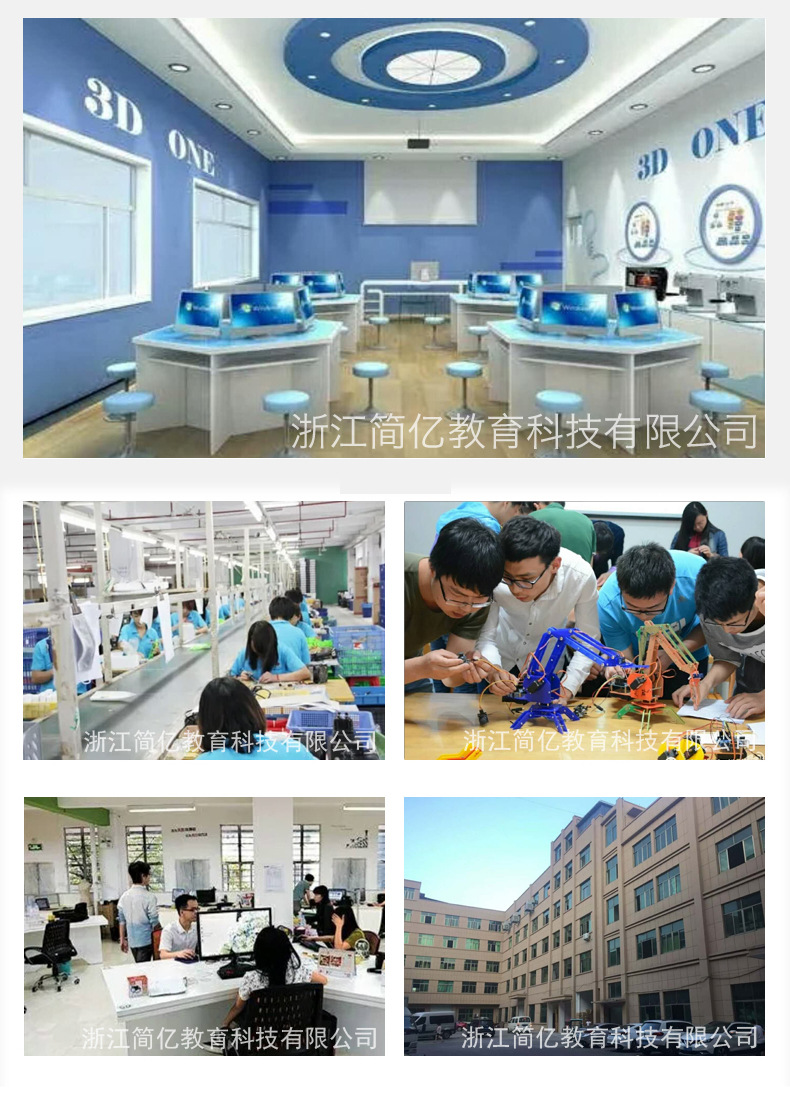

Zhejiang Jianyi Education Technology Co., Ltd.
Zhejiang Jianyi Education Technology Co., Ltd. (formerly Yifei Toys Factory)Established in 2007, the current brand names include “XING TEACHER” and “JIAN YI”. Through 10 years of relentless effort, the company has gradually matured. Our firm is a member of the Ministry of Education’s Teaching Equipment Industry Association and a key enterprise in Zhejiang Province’s teaching equipment sector. For three consecutive years, it was recognized by Jinhua City as a “Contract-Abiding and Creditworthy” entity, and in 2014, it was awarded the title of “Advanced Enterprise in Jinhua Teaching Instruments Industry” by Zhejiang Province.
Zhejiang Jianyi Education Technology Co., Ltd. is a high-tech enterprise that integrates modern scientific research and development of educational equipment, curriculum design, integrated teaching resources, and technical services. With its high-tech products and modern educational equipment, Zhejiang Jianyi Education Technology Co., Ltd. sells its products across the country and to Europe, America, Japan, South Korea, and other regions. After years of accumulation, the company has reached a certain scale. In terms of technological innovation, the company has professional designers who develop complete sets of educational products and upgrade existing products. In terms of production, management, and installation services, the company strictly adheres to the standards of the ISO9001 international quality assurance system. In marketing, the “Teacher Xing” products have been introduced to many provinces and cities in China and enjoy a good reputation. Over the years, it has provided high-quality, advanced, and professional series of modern teaching equipment and specialized R&D and customization services for the education sector. With excellent, highly qualified professionals, comprehensive after-sales service, high product quality, and a positive corporate image, the “Teacher Xing” educational and scientific series in physics, chemistry, energy, geography, biology, art, and more have won multiple bids in education bureau tenders. Zhejiang Jianyi Education Technology Co., Ltd. continues to uphold the business philosophy of “ultimate quality, diligent service, and sincerity in people,” maintain the “Teacher Xing” culture, build the “Teacher Xing” brand, and advance the development of “Teacher Xing.” It provides excellent equipment and high-quality services for school teaching and research. We are willing to cooperate wholeheartedly with new and old friends at home and abroad, work together, and serve education with all our efforts and contribute to the education industry.

Please check that the circuit is unobstructed and all components are intact before assembly, as well as ensure all contact points are properly aligned. During assembly, be careful not to let glue get on your clothes or skin. Keep the components out of reach for younger siblings to prevent them from accidentally swallowing them! Do not play with them on your head, as the model may fall and hurt you!


Update time:


TOP


