
Search history
Clear allSearch by image
XDrag and drop an image here or upload an image
Max 5MB per image
UploadSign In | Join

Search history
Clear allSearch by image
XDrag and drop an image here or upload an image
Max 5MB per image
UploadSign In | Join
For bulk custom orders from the factory, please contact: 1 5858 9 4 0 8 6




Product Name: KX1 95 Table Tennis Ball
Model Number: KX1956 Table Tennis Ball
Size: Racket: 240*145 mm, base: 150 mm; Table Tennis Ball: 40 mm; Total length: 1600 mm
Weight: Approximately 530g
Material: fiber rod + plastic components + table tennis balls + paddle + hardware components
Color: Mixed Color
Does it use a battery: No
Packaging: 48 pieces
Box dimensions: 455*415*655 mm
Table tennis is a skill-based ball sport, and it is considered China's national sport.
Table tennis originated in the UK, named for the "ping pang" sound it makes when played. It consists of a round ball weighing 2.5–2.7 grams, white or orange in color, made of celluloid or plastic. Players use rackets and play on a table with a net between them. It can be played as singles or doubles, where both players hit the ball until one cannot return it, allowing the other to score.

Origin
Table tennis
Table Tennis (11)
Table tennis originated in the UK. At the end of the 19th century, tennis was popular in Europe, but due to limitations in facilities and weather, some British students moved tennis indoors. They used dining tables as courts, books as nets, and parchment as rackets, playing around on the tables. In 1890, several British naval officers stationed in India accidentally found it exciting to play tennis on a small table. Later, they replaced the flexible balls with solid rubber.
A hollow plastic ball, with wooden boards replacing the net racket, allowing this innovative "tennis game" to be played on a table—this is how table tennis got its name.


Table tennis
Table Tennis (3)
Table tennis became a popular sport that gained popularity shortly after its emergence. In the early 20th century, the United States began producing table tennis equipment in bulk. It became the top racket sports activity in America, with over 200,000 Americans playing table tennis. Initially, table tennis had other names, such as indoor tennis. Later, an American manufacturer coined the term "Ping-pang" based on the sound produced when table tennis balls collide, which was used as a patent registered trademark for his "table tennis" products. Over time, Ping-pang became another official name for table tennis.
After it reached China, people created the new term "table tennis".
Many terms used in table tennis originated from tennis. The ball used in table tennis is called a Ping-pong ball or Table-tennis ball. The table for table tennis is called a Ping-pong table, the surface is referred to as the Court, the net in the middle is called the Net, the structure that supports the net is called Net support, and the table tennis racket is called a Ping-pong bat.
In table tennis singles matches, traditionally, the system is either best of three or best of five sets (with 11 points per set). In 2001, it was changed to best of seven or best of five sets (with 11 points per set). The term “set” refers to a match phase, and the serve is called Serve.
Among the numerous table tennis competitions, the most prestigious one is the World Table Tennis Championships, which was originally held once a year but was changed to being held every two years in 1957.
Live Stream
(1) Fast attack grip style. The second knuckle of the index finger and the first knuckle of the thumb are positioned in front of the racket in a clamping shape, with a distance of 1–2 cm between the two fingers. The handle rests against the thumb pad, and the remaining three fingers bend naturally and rest on the upper 1/3 of the back of the racket.
(2) Arc type grip method. The arc type grip method is essentially the same as the fast attack type grip method, with the difference being that the thumb and index finger form a small ring shape, while the other three fingers naturally overlap on the back of the racket, and the first joint of the middle finger rests on the extension line of the racket handle.
Horizontal shot
The horizontal grip is similar to shaking hands. The middle finger, ring finger, and little finger bend naturally to hold the racket handle, while the thumb rests on the front of the racket near the middle finger. The index finger stays straight and lies diagonally on the back of the racket. When serving with the forehand, the index finger moves slightly upward; when serving with the backhand, the thumb moves slightly upward.
Fast Attack Type
Common grips for the fast attack style (including left-pushing right-attack and two-sided attack tactics) are as follows: 1. The right side of the racket handle is placed against the third joint of the index finger, while the second joint of the index finger presses against the right shoulder of the racket. The first joint of the index finger bends naturally inward, and the first joint of the thumb presses against the left shoulder of the racket (the distance between the thumb and index finger should be appropriate). The other three fingers bend naturally and overlap slightly, with the first joint of the middle finger supporting the back of the racket to keep it stable.
Grip the racket
Grip the racket
With this grip style, the wrist is more flexible. It allows use of wrist movements during serving to deliver balls with similar motion but different rotation and landing; it also enables flexible delivery of diagonal and straight balls. It is advantageous for handling balls within the court: hitting a return from the backhand position with the backhand before responding to a serve from the forehand position, or hitting a side forehand shot from the backhand position after a backhand stroke—this facilitates the coordinated combination of forehand and backhand techniques. For mid-range close-in balls, the wrist can hang naturally, allowing adjustment of the racket shape through the wrist to properly return the ball. When playing forehand shots using this grip, the thumb and middle finger exert force together, while the index finger remains relatively relaxed, the ring finger slightly away from the middle finger, and the fingertips lightly support the back of the racket to maintain stability during power application. When playing backhand shots or push shots, the index and middle fingers exert force together, while the thumb remains relatively relaxed. When using the wrist for power (including both forehand and backhand strokes), the middle finger provides the main force, with the thumb and index finger maintaining the stability of the racket shape while providing auxiliary force.
2. The grip method is essentially the same as the first type, but the distance between the thumb and index finger is larger (a deeper clamping position). This grip facilitates concentrated force application in the upper arm and forearm. As a result, it allows for more powerful shots such as mid-range and long-distance forehands, smashes, and powerful volleys. However, due to the greater distance between the thumb and index finger and the deeper grip, it may affect the flexibility of the wrist, resulting in limited ability to handle in‑court balls, turnovers, pushbacks, and close‑range shots.
3. Place the right side of the racket handle between the second and third joints of the index finger, with the thumb and first joint of the index finger pressing against the left and right shoulders of the racket. The distance between the two fingers should be appropriate (but slightly smaller than the first grip method). Use the left side of the first phalanx of the middle finger to support the back of the racket, while the ring and little fingers are tilted under the middle finger. The ring finger helps support the back of the racket with the middle finger, ensuring the racket remains stable.
This grip style is used by some backhand attackers. Its advantage is that when hitting with the backhand, the forearm is lifted with the ball head facing up, which facilitates high-pressure shots from the backhand and enables the ball to fly quickly and powerfully. Due to the downward position of the racket when holding it firmly, this grip is more coordinated when attacking balls that come from the middle of the court. Because the distance between the thumb and index finger is small and the wrist is flexible, it is easier to handle insides, and it works well for aggressive spin shots. The downside is that it is difficult to hit high-pressure shots on forehand away shots due to the downward position of the racket. Additionally, the flexibility of the wrist makes it hard to keep the racket shape stable.
5 Serve Techniques Edit
(1) Body posture
Knees slightly bent, feet shoulder-width or slightly wider, with the front feet touching the ground (mainly using the inner sides of the feet to push off), toes applying slight pressure on the ground, heels slightly off the ground, weight centered between the feet, upper body slightly forward-tilted with abdomen contracted, non-racket arm naturally bent, elbow holding the racket slightly outward, racket placed right front of the abdomen, wrist relaxed naturally, racket head pointing diagonally forward to the right, elbow for a horizontal grip downward, forearm naturally raised flat, wrist relaxed, racket head pointing upward, non-racket arm naturally bent to the left side of the body. Eyes focused on the incoming ball.
(II) Positioning
People with different playing styles have different positioning methods. In the left-pushing, right-attacking positioning style, the left foot is usually slightly ahead of the right foot, and the position of the left foot is generally on the extension line of the left side of the table surface. The distance between the body and the end line of the table is approximately 40 centimeters.[6]
Table tennis serving methods
(1) Forehand smash shot
1. Characteristics: High speed, long impact range, and strong force. It hits the right upper corner or the left middle area of the opponent, posing a significant threat.
2. Key points: ① The ball should not be thrown too high; ② Increase the swinging speed at the moment of hitting; ③ The first landing point should be close to the sideline of one’s court; ④ The point should be at the same height as the net or slightly below it.
(II) Backhand rapid shots and rapid backspin balls
1. Features: High speed, low arc, strong forward motion, which forces the opponent to retreat to catch the ball, facilitating attacks. It is often used in combination with rapid backspin balls.
2. Key points: ① The hitting point should be at the same height as the net on the left front side of the body, or slightly lower than the net; ② Pay attention to wrist movement during power generation; ③ The first impact point should be near the end line of the opponent’s service area.
(III) Throwing short balls
1. Features: The hitting motion is minimal, and the shot comes out quickly. The ball does not fall out of the opponent’s court after the second bounce, making it difficult for the opponent to exert force to return, push, or attack.
2. Key points: ① The serve should not be thrown too high; ② When hitting the ball, wrist strength should outweigh forearm strength; ③ The first impact point of the serve is on the table, and it should not be too close to the net; ④ The serve motion should be similar to that of a long serve to make it difficult for the opponent to judge.
(t_IV) Right-handed serve with rotation or without rotation
1. Features: The ball travels slowly, with little forward momentum. It primarily uses similar serving actions to create spin variations, aiming to confuse the opponent and cause errors in their receiving serve or create opportunities for self-attack.
2. Key points: ① The ball should not be thrown too high; ② When serving a spin ball, slightly push the racket back during the cut shot to hit the lower part of the ball; the more spin the ball has, the more attention should be paid to the forward movement of the arm; ③ When serving a non-spin ball, reduce the backward angle of the racket at the moment of impact and increase the forward push force.
(t_5) Forehand left-side topspin (bottom spin) shot
1. Features: There is a strong rotation force on the upper (lower) side on the left. When the opponent blocks the shot, it bounces towards the upper (lower) side on the right. Generally, one stands slightly to the left of the center line or serves from the side.
2. Key points: ① When serving, draw in the abdomen; the hitting point should not be far from the body. ② Try to increase the amplitude and arc of the swing from right to left to enhance the side spin. ③ When serving a left-handed top spin serve, quickly retract the wrist at the moment of hitting, with the racket rubbing against the ball from the center to the upper left. ④ When serving a left-handed bottom spin serve, tilt the racket slightly backward, with the racket rubbing against the ball from the middle to the lower left.
(t_6) Reverse swing with upper (lower) spin to the right
1. Features: Strong upward (downward) spin on the right side; after being blocked, it bounces upward (downward) to the left side. It is best to use a left-side diagonal long shot along with a middle-right near-the-net short shot.
2. Key points: ① Pay attention to the abdominal contraction and waist rotation movements; ② Make full use of wrist rotation in conjunction with forearm power; ③ When hitting a right-handed upper spin ball, at the moment of impact, the racket rubs against the middle part of the ball toward the upper right direction, with the wrist making an upward bend; ④ When hitting a right-handed lower spin ball, tilt the racket slightly backward, and at the moment of impact, the racket rubs against the lower part of the ball toward the right side.
(t_VII) Squat serve
1. Features: The squat serve is a type of serve used by the server, which Chinese athletes began using in the 1950s. Players with horizontal rackets find it easier to serve a squat ball than those with straight rackets. Players with straight rackets must change their grip method when serving, by moving the index finger to the back of the racket. A squat serve can be served with left or right spin. When the opponent is unprepared, it poses a significant threat. Serving a high-quality ball at critical moments often leads directly to a point.
2. Key points: ① Pay attention to the coordination between serving and swinging actions, and control the timing of hitting the ball. ② The serve should be of high quality with a smooth motion to prevent the opponent from attacking before you fully stand up. ③ When serving downward squatting right-hand upper or lower spin balls, step slightly forward with the left foot, tilt the body slightly to the right, and swing the racket from behind left to front right. Friction at the middle of the racket touching the ball toward the right results in a right-hand upper spin; friction from the middle to lower part of the ball toward the right results in a right-hand lower spin. ④ When serving downward squatting left-hand upper or lower spin balls, stand slightly flat with the right half of the body facing upward, keeping the body mostly aligned with the table, and swing the racket from behind right to front left. Friction at the racket touching the ball results in a left-hand upper spin; friction from the middle of the ball toward the lower part results in a left-hand lower spin. ⑤ When serving left (right) hand upper or lower spin balls, pay special attention to quickly executing a semi-circular friction motion over the ball.
(t_VIII) Forehand High Serve
1. Features: The most prominent feature is the high toss of the ball, which increases the positive pressure on the racket during its descent. The serve is fast, with strong momentum and diverse spin, and it curves after hitting the court surface. However, the high toss serve technique is complex and somewhat challenging.
2. Key points: ① Do not throw the ball too far from the court or away from your body. ② The hitting point should be at the same height as the net or slightly below it, preferably at the middle-right area near your waist (15 centimeters). ③ Try to increase the inward movement and arc of the ball. ④ Left-handed topspin and bottomspin serves are similar to low toss serves. ⑤ After touching the ball, add a rightward forward recovery motion, which can help the opponent judge better (combined with serving right-handed spin, it is more effective).
7 Tips for Learning Editing
In terms of the overall movement structure, shots can be divided into two main categories: forehand and backhand shots. Shooting is the most important technique for rapid attacks; it has strong destructive power and is a key skill in resolving battles.[6]
(1) Key movements (using the right hand as an example)
1. Right-handed serve: Stand slightly in front of the left foot near the center right side of the table, with the body tilted opposite the table surface. The racket hand is naturally relaxed in front of the abdomen, with the racket half-horizontal. As the ball comes in, prepare for the shot by pulling the racket slightly to the right, at about the same height as the table surface. The racket face forms an angle of approximately 80 degrees with the table surface, and the forearm is roughly parallel to the table surface. When the ball bounces off the table, swing the racket hand from the right toward the front upper left, using rapid inward movement of the forearm combined with wrist rotation to create a curved motion along the ball. Hit the ball in the middle to upper part during its ascent, with the hitting position located one forearm’s length ahead of the right side of the body.
2. Backhand stroke: Stand close to the table with the right foot slightly ahead, the hand holding the racket bent naturally in front of the abdomen on the left side, and the center of gravity on the left foot. Follow the trajectory of the incoming ball to draw back the racket. When the ball bounces off the table, the hand holding the racket accelerates the swing from left rear to right front, using the forearm for power, with the wrist rotating outward and the racket tilted forward. Shift the center of gravity to the right foot, aiming at the upper middle part during the ascent phase of the shot. The key points and challenges of this stroke lie in racket swing power and the correct hitting point.[6]
(II) Teaching Methods
Manual imitation of forehand and backhand strokes, focusing on arm swing, waist rotation, and weight shift. The practitioner stands near the center right (left) side of the court, throwing and hitting shots toward the right (left) diagonal line near the right (left) corner line. Emphasize forearm internal force generation, wrist internal (external) rotation, and the impact point. Two players practice against each other: one throws and hits, while the other blocks and returns; roles switch. Two players stand diagonally: one plays forehand (backhand) shots, while the other pushes and blocks; roles switch. Two players practice against each other: one hits one point with two shots, while the other pushes two shots to one point; roles switch. Two players play forehand (backhand) shots along the diagonal line. Two players play against each other using straight lines in the middle.[6]
(III) Common Mistakes and Correction Methods
When serving with the forehand, I hesitate to swing boldly, there are pauses, and the arc is not well created. Correction method: practice by mimicking the swing with hands only to ensure a full swing.
The angle between the upper arm and the body is too small. Correction method: Relax the shoulders and increase the distance between the upper arm and the body.
Lift the elbows and arms. Correction method: During close-range fast attack drills, emphasize lifting the elbow and shoulder downward when hitting the ball.
The wrist hangs down, with the racket perpendicular to the forearm. Correction method: emphasize internal rotation of the wrist and move the handle to the left, followed by hand-to-hand imitation exercises.
The judgment of the ball's landing point is inaccurate, and the approach shot is not executed properly. Correction method: First, practice receiving a flat serve, then practice continuous pushing shots to correct this issue.
When hitting backhand shots, the racket face tilts forward too early. Correction method: Perform handless setup drills to make the racket face tilt slightly later.
The approach before hitting is insufficient. Correction method: Practice a flat serve, and experience the wrist external rotation motion during the shot.[6]


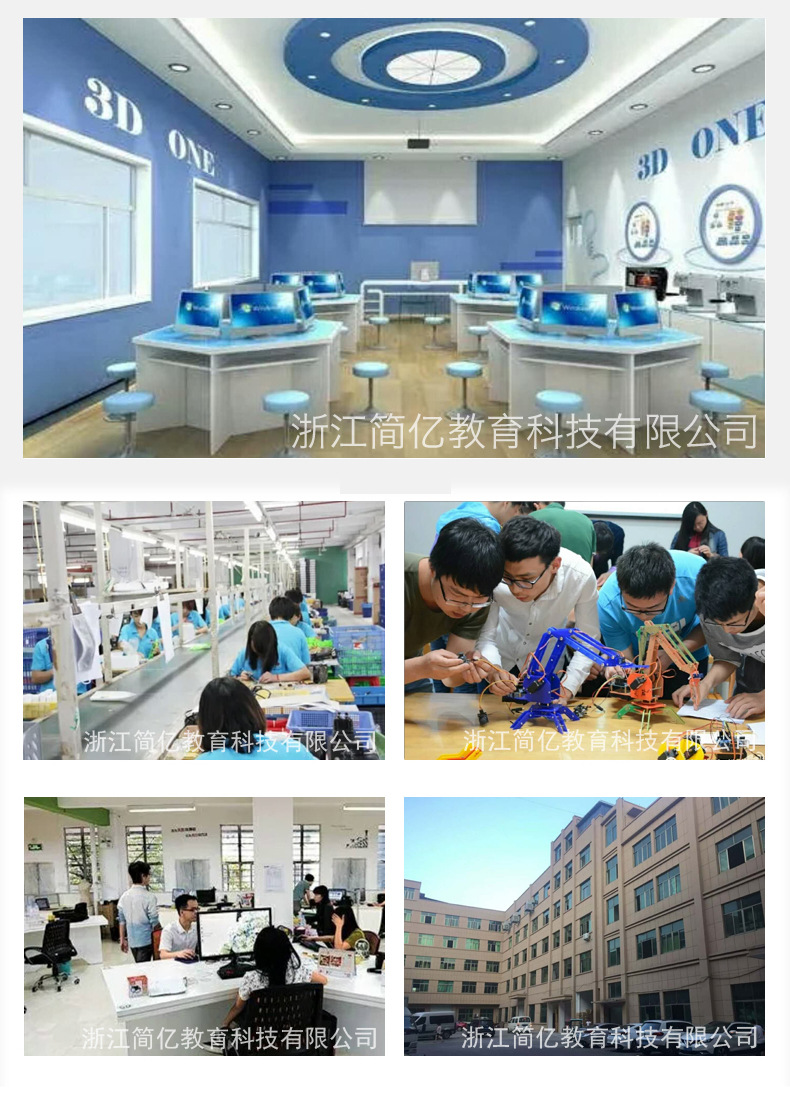

Zhejiang Jianyi Education Technology Co., Ltd.
Zhejiang Jianyi Education Technology Co., Ltd. (formerly Yifei Toys Factory)Established in 2007, the current brand names include “XING TEACHER” and “JIAN YI”. Through 10 years of relentless effort, the company has gradually matured. Our firm is a member of the Ministry of Education’s Teaching Equipment Industry Association and a key enterprise in Zhejiang Province’s teaching equipment sector. For three consecutive years, it was recognized by Jinhua City as a “Contract-Abiding and Creditworthy” entity, and in 2014, it was awarded the title of “Advanced Enterprise in Jinhua Teaching Instruments Industry” by Zhejiang Province.
Zhejiang Jianyi Education Technology Co., Ltd. is a high-tech enterprise that integrates modern scientific research and development of educational equipment, curriculum design, integrated teaching resources, and technical services. With its high-tech products and modern educational equipment, Zhejiang Jianyi Education Technology Co., Ltd. sells its products across the country and to Europe, America, Japan, South Korea, and other regions. After years of accumulation, the company has reached a certain scale. In terms of technological innovation, the company has professional designers who develop complete sets of educational products and upgrade existing products. In terms of production, management, and installation services, the company strictly adheres to the standards of the ISO9001 international quality assurance system. In marketing, the “Teacher Xing” products have been introduced to many provinces and cities in China and enjoy a good reputation. Over the years, it has provided high-quality, advanced, and professional series of modern teaching equipment and specialized R&D and customization services for the education sector. With excellent, highly qualified professionals, comprehensive after-sales service, high product quality, and a good corporate image, the “Teacher Xing” educational and scientific series in physics, chemistry, energy, geography, biology, art, and more have won multiple bids in education bureau tenders. Zhejiang Jianyi Education Technology Co., Ltd. continues to uphold the business philosophy of “ultimate quality, diligent service, and sincerity in people,” maintain the “Teacher Xing” culture, build the “Teacher Xing” brand, and advance the development of “Teacher Xing.” It provides excellent equipment and high-quality services for school teaching and research. We are willing to cooperate wholeheartedly with new and old friends at home and abroad, work together, and serve education with all our efforts, contributing to the education industry.

Please check that the circuit is unobstructed and all components are intact before assembly, as well as ensure all contact points are properly aligned. During assembly, be careful not to let glue get on your clothes or skin. Keep the components out of reach for younger siblings to prevent them from accidentally swallowing them! Do not play with them on your head, as the model may fall and hurt you!


Update time:


TOP


