
Search history
Clear allSearch by image
XDrag and drop an image here or upload an image
Max 5MB per image
UploadSign In | Join

Search history
Clear allSearch by image
XDrag and drop an image here or upload an image
Max 5MB per image
UploadSign In | Join
|
mixed wholesale
混批 |
CN¥ 0.0 |
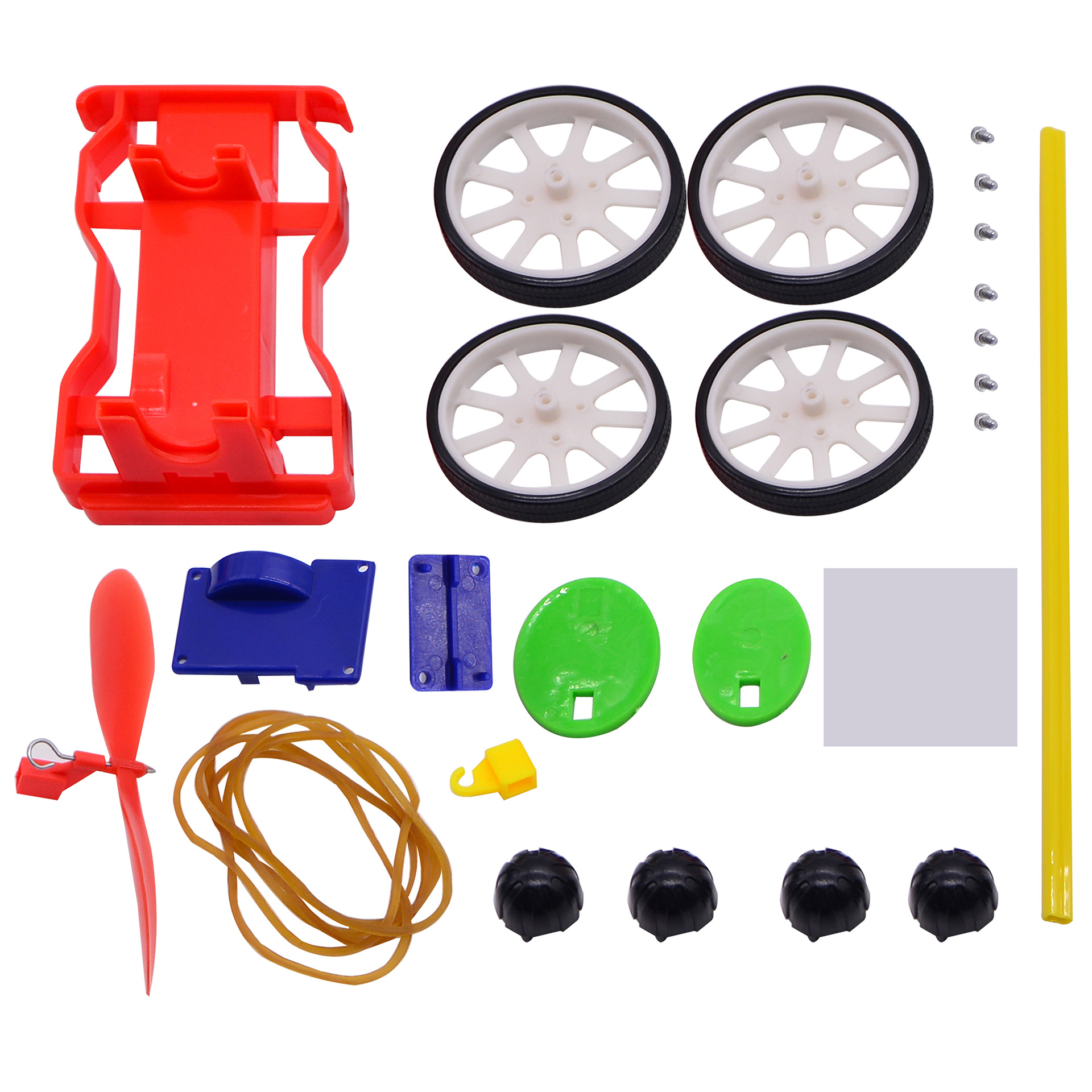
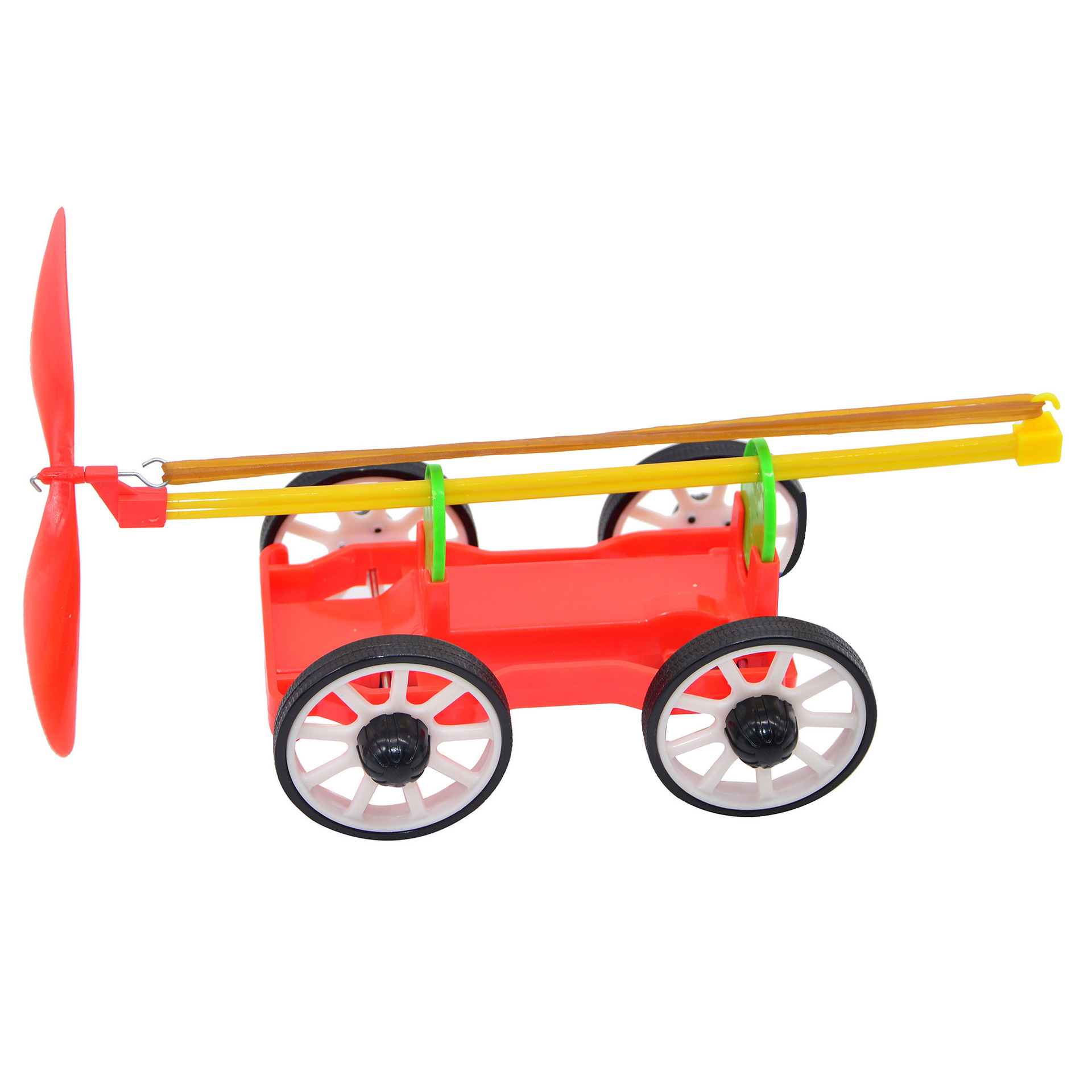
Product Name: Wind Power Test Vehicle
Model Number: C106 Wind Test Vehicle
Size: 210*105*145 mm
Weight: 100g
Material: plastic components + hardware components + rubber bands
Packaging: 150 pcs
Box dimensions: 600*500*450mm
Scientific Insights:
Today, let's build a wind-powered vehicle. Let's explore together!


Experimental Objectives:
1. Understand the working principle of the wind turbine
2. The interaction of knowledges is mutual
Experimental Cognition:
The interaction between two objects is mutual. When one object exerts a force on another, the second object also exerts a force back at the same time and in the same direction. These two forces are referred to as action and reaction forces. The magnitudes of the action and reaction forces are always equal, and their directions are always opposite, acting along the same line. When a person pushes against a wall, this force is the action force, and the wall also exerts a force back—the reaction force—of equal magnitude. This principle applies to rowing, swimming, and spacecraft flight. When you push a table with your hand, your hand hurts; when you kick a ping-pong ball against the floor, you will find that the greater the force you apply, the higher the ball jumps.
Scientific Expansion:
1. It refers to forces of equal magnitude, opposite direction, acting on two objects along the same line, and with the same nature.
2. Balanced forces are two forces acting on the same object, with equal magnitudes, opposite directions, and acting along the same line. The properties of the two forces can be different.
3. Two forces that are in mutual balance can exist independently, and their interaction forces arise and disappear simultaneously.
4. In mutual forces, only two objects are involved (the force-applying object is also the object receiving the force), whereas in balanced forces, three objects are required (two force-applying objects and one object receiving the force).
5. The interaction forces act on two objects respectively, while the balanced forces act on one object together.
6. The interacting forces have no resultant force; there is only a resultant force for the balanced forces.
7. The forces involved in interactions have their own effects, while balanced forces share a common effect. Based on the nature of the forces, they can be classified into elastic forces, friction forces, gravitational forces, etc. The forces and reaction forces between objects always belong to forces of the same nature. For a pair of forces and reaction forces, it cannot be said that one force is the cause and the other is the result. Either of the two forces can be considered a reaction force, and the other becomes a reaction relative to it.
Scientific Exploration:
Experiment Report:
Do you know which phenomena related to force and reaction are present in our actual activity, kids?
Update time:


TOP


