
Search history
Clear allSearch by image
XDrag and drop an image here or upload an image
Max 5MB per image
UploadSign In | Join

Search history
Clear allSearch by image
XDrag and drop an image here or upload an image
Max 5MB per image
UploadSign In | Join
|
mixed wholesale
混批 |
CN¥ 0.0 |
Product Name: KX1 323 Tank
Model Number: KX1 323
Size: 150*85*100 mm
Weight: Approximately 150g
Material: wood + motor unit + battery case + pulley + belt + foam...
Packaging: 300 pcs
Box dimensions: 600*450*550mm
A tank is an armored combat vehicle with enclosed armor protection, a rotating turret, and tracked propulsion. It is the primary weapon in modern land warfare and is known as the "land battle" weapon. It features powerful direct fire capability, high off-road mobility, and robust armor protection. Tanks possess excellent off-road mobility, solid armor protection, strong firepower, and effective assault capabilities. They are primarily used to engage enemy tanks or other armored vehicles, as well as to suppress and destroy anti-tank weapons, destroy fortifications, eliminate enemy forces, and fight against enemy tanks. Tanks are generally equipped with a medium or large-caliber cannon (some modern tanks can even fire anti-tank or helicopter missiles) and several anti-aircraft (anti-air) or coaxial machine guns. Most tanks use rotating turrets, but a few use fixed main guns. Tanks consist mainly of a weapon system, fire control system, power system, communication system, and armored body. Now that we know what a tank is, let’s get started and build a wooden mini-tank together.
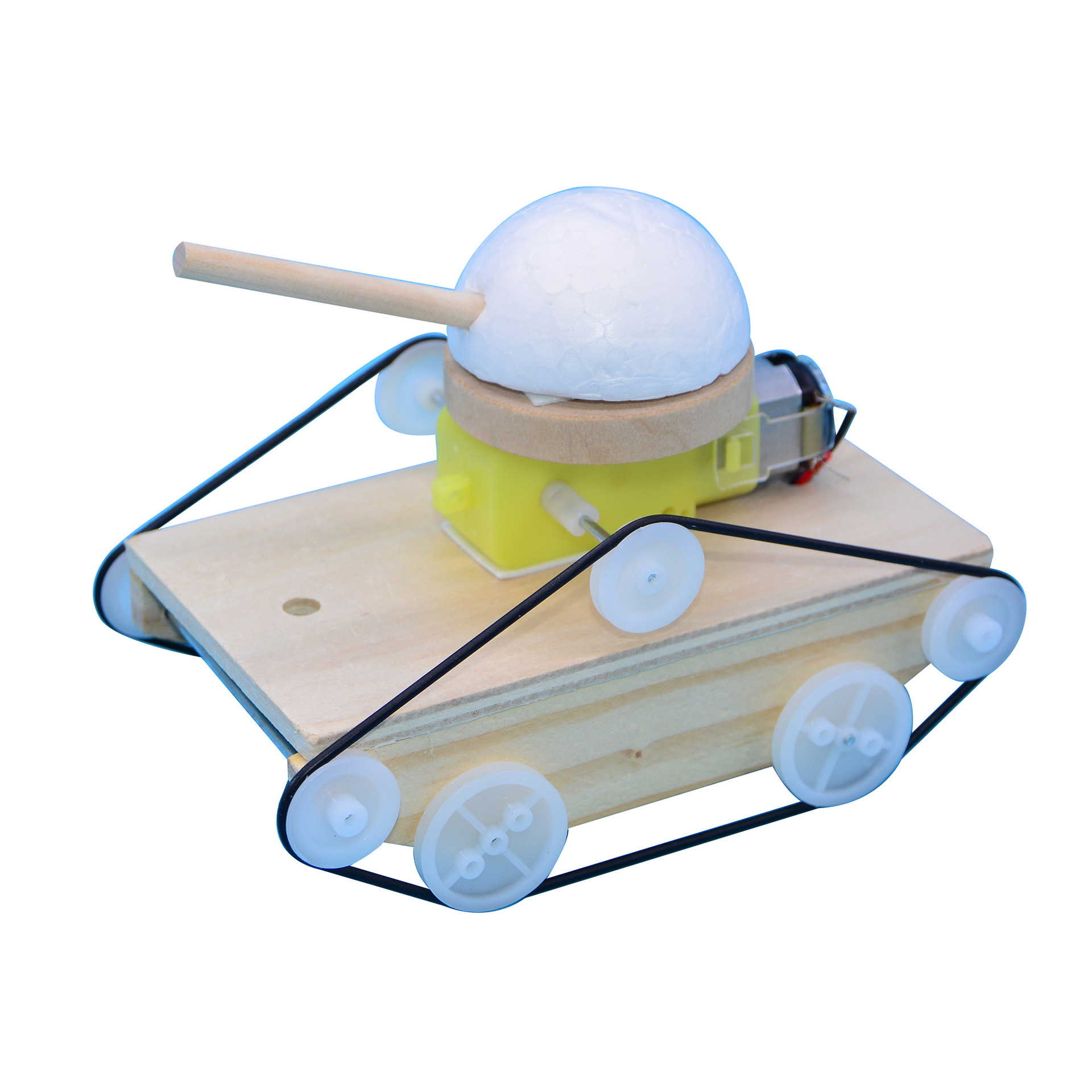
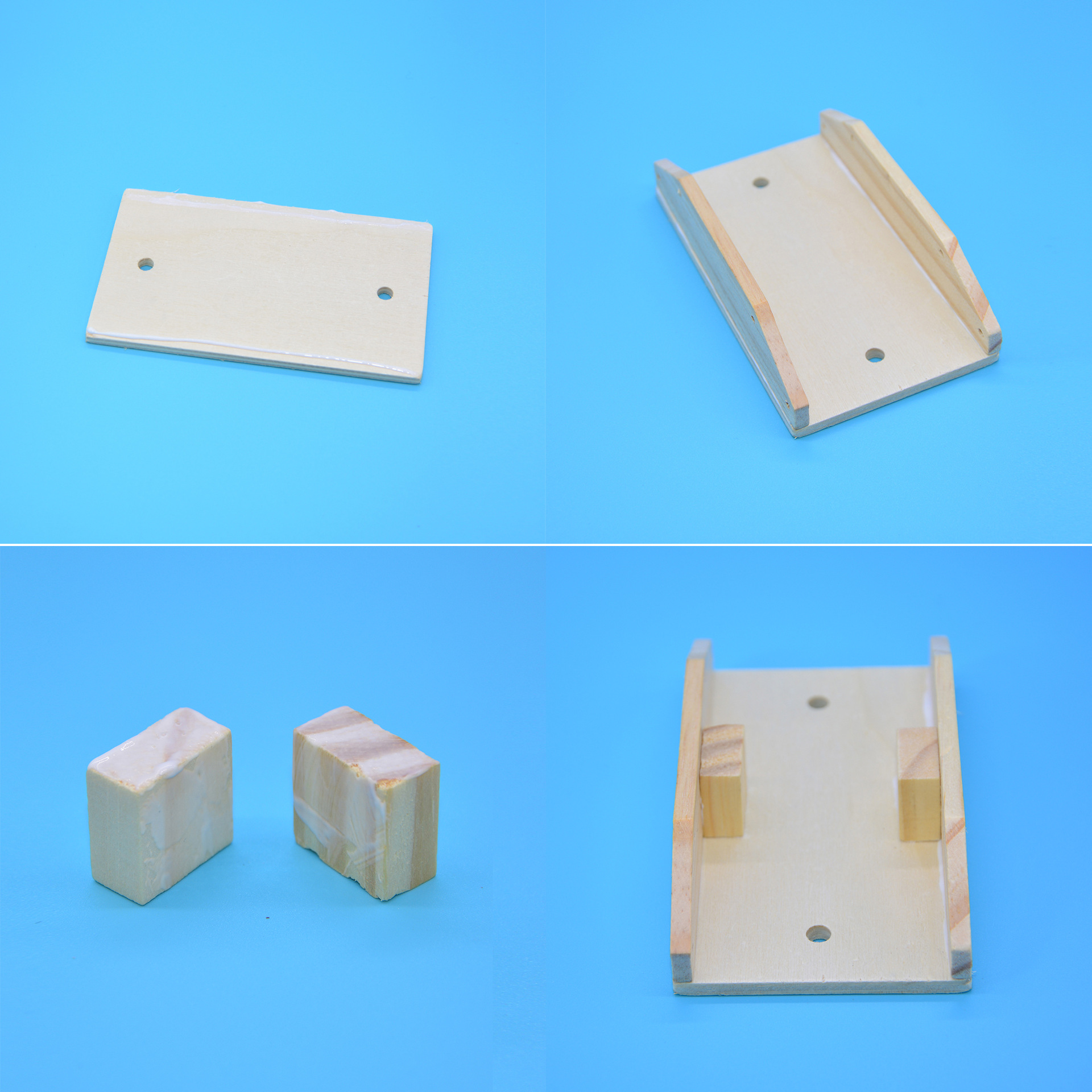
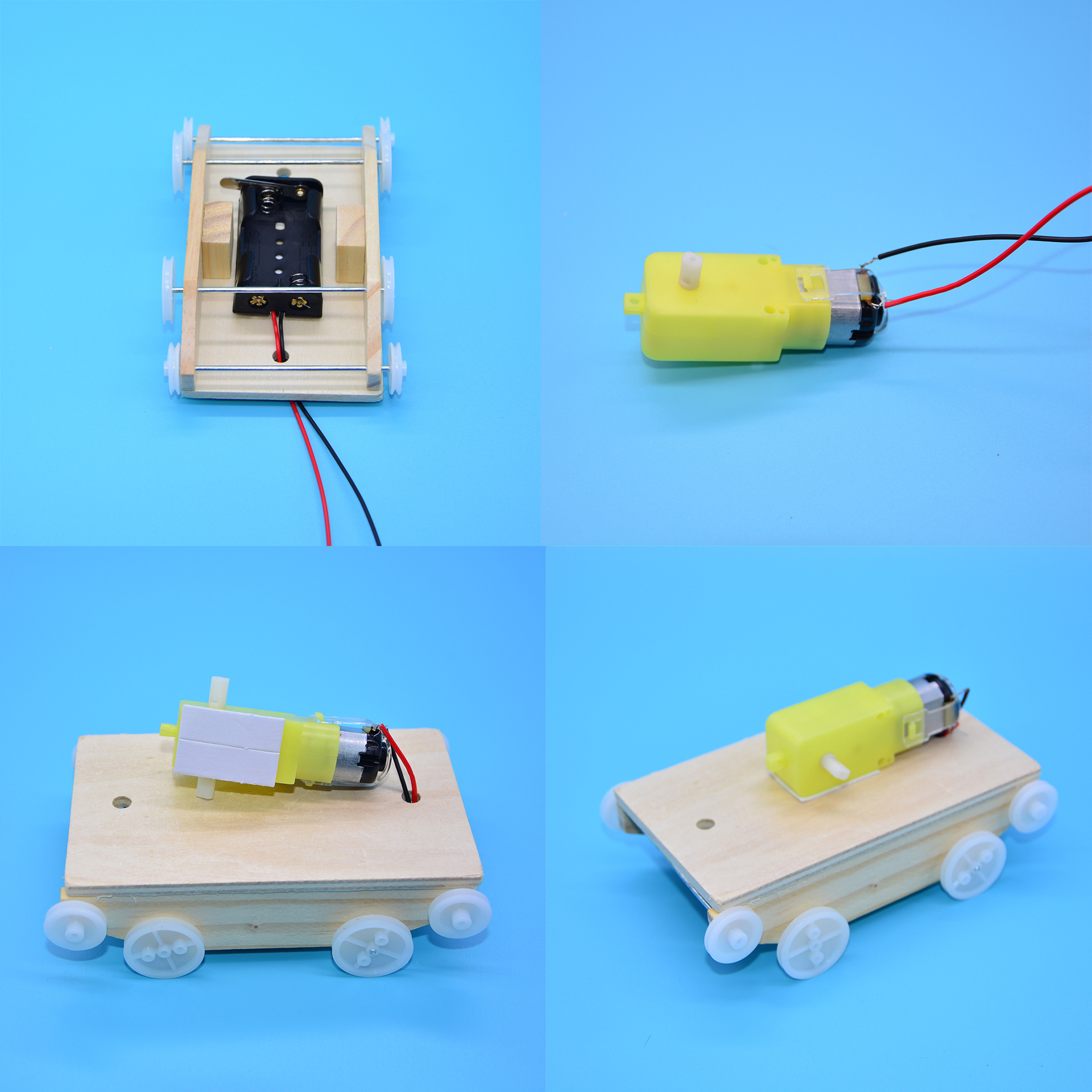
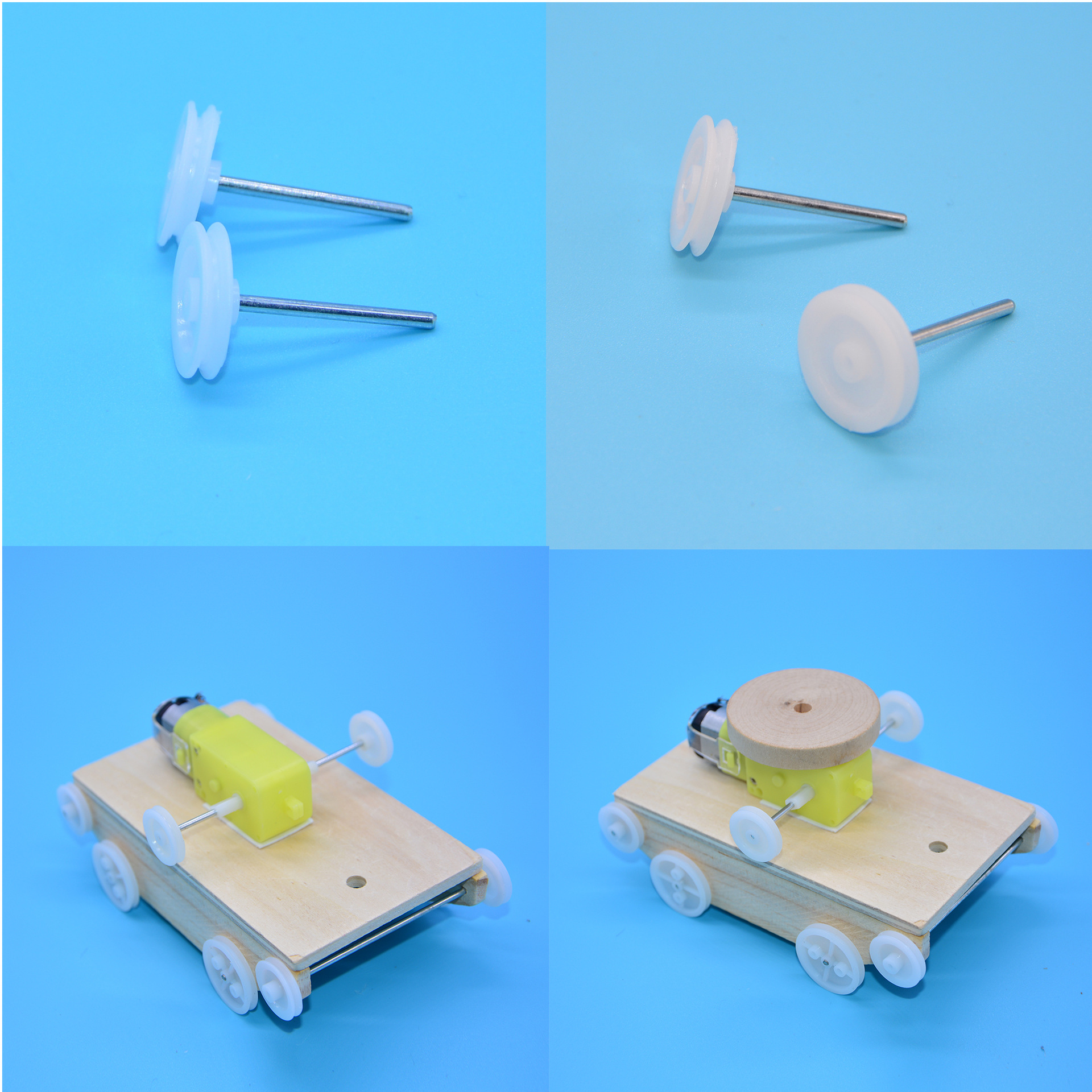

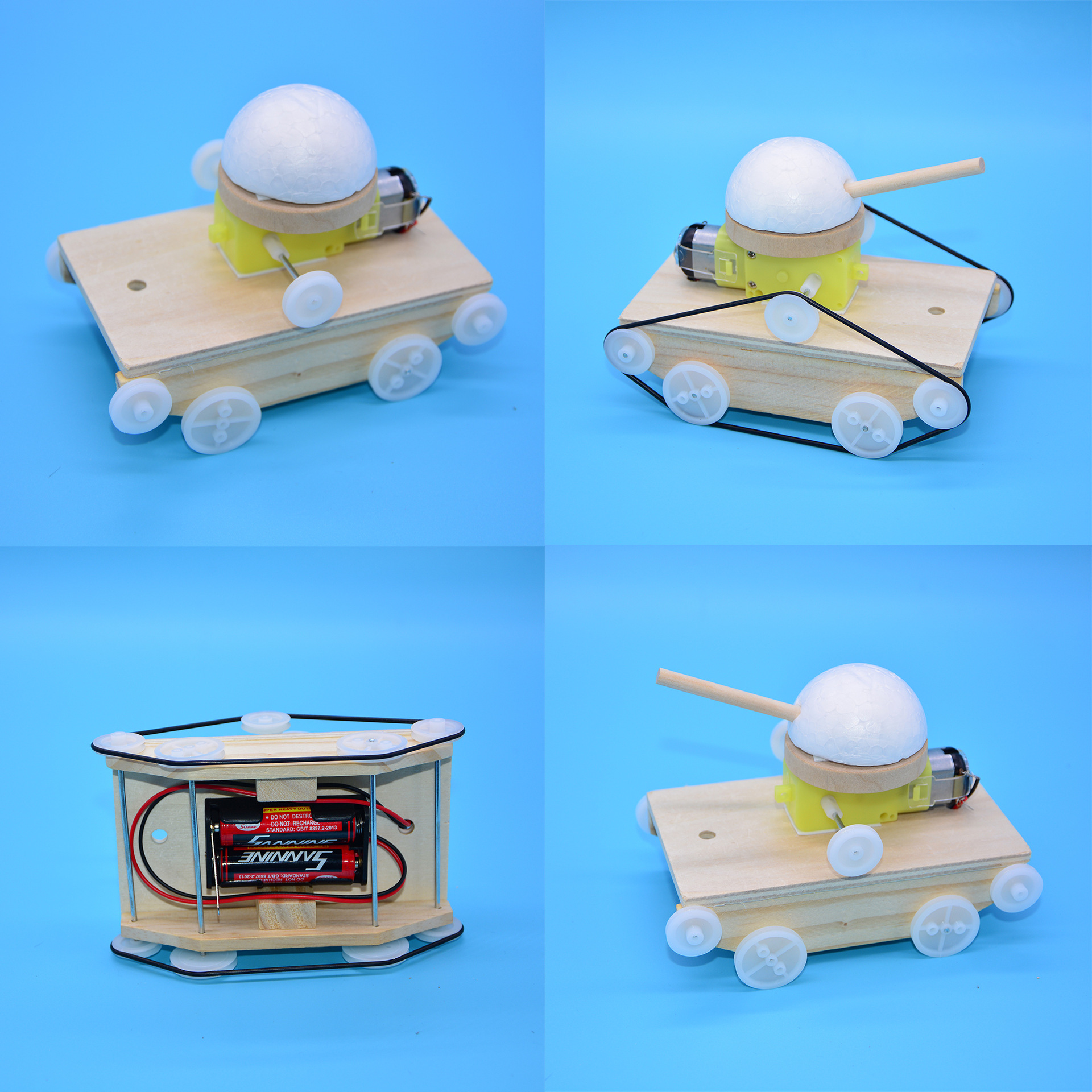
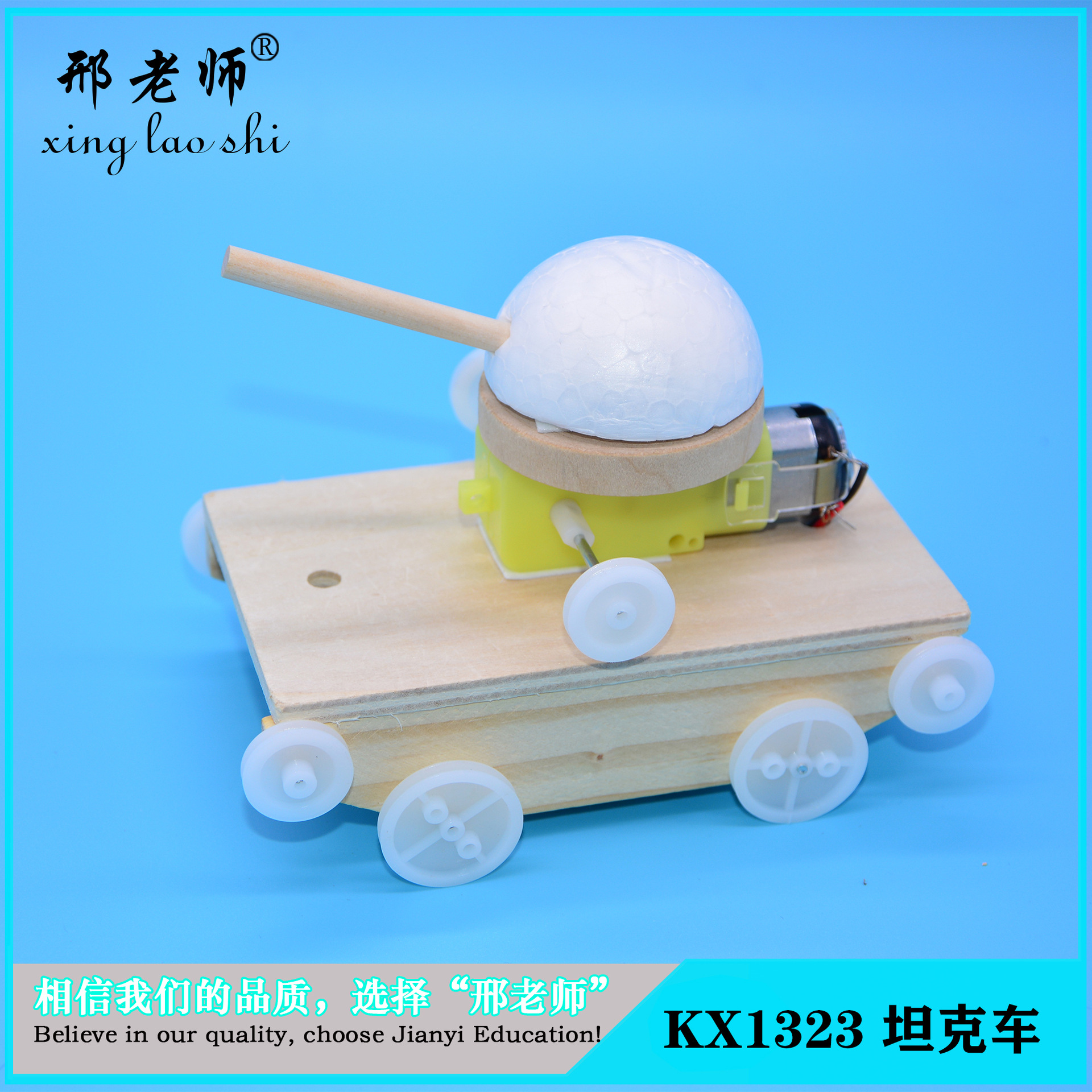
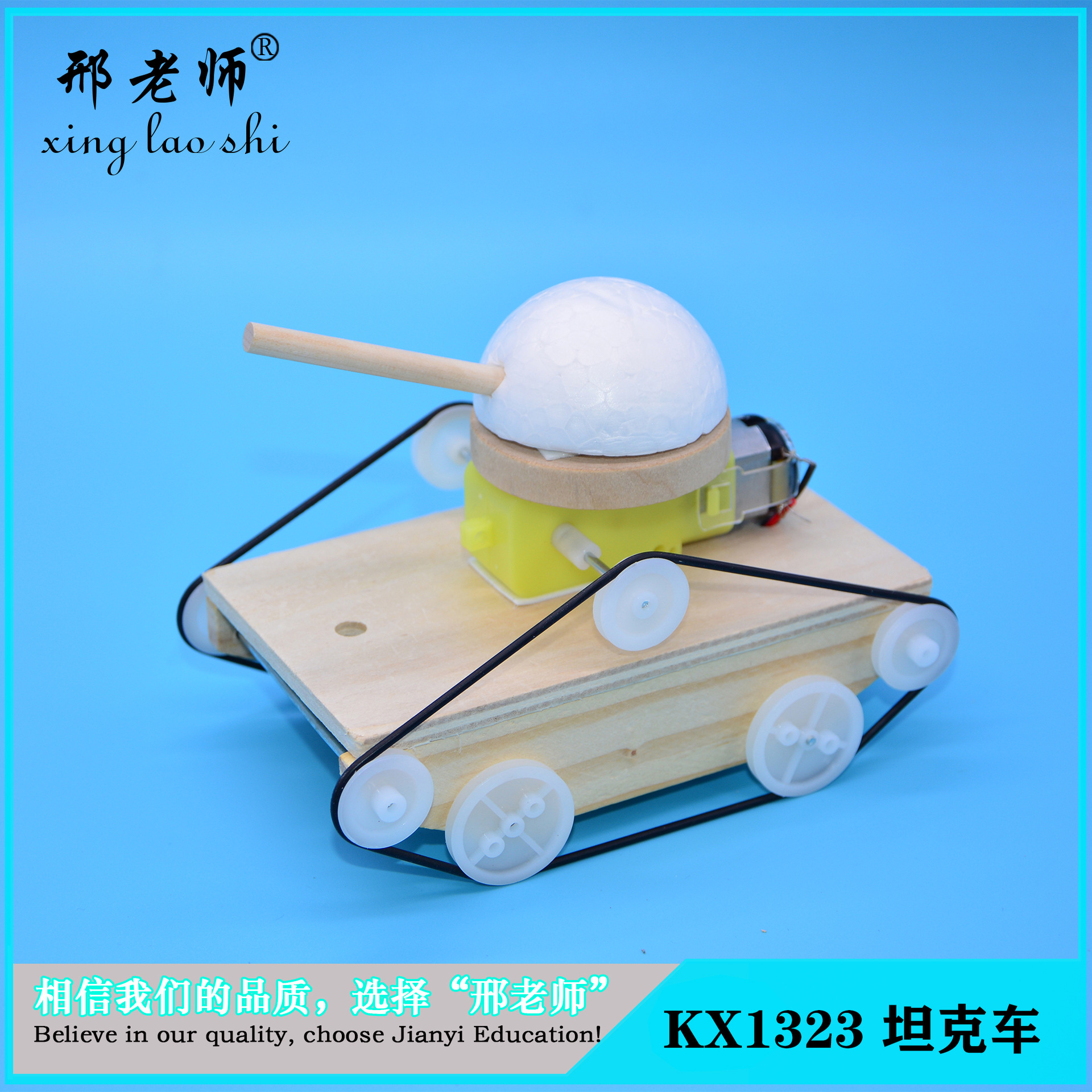
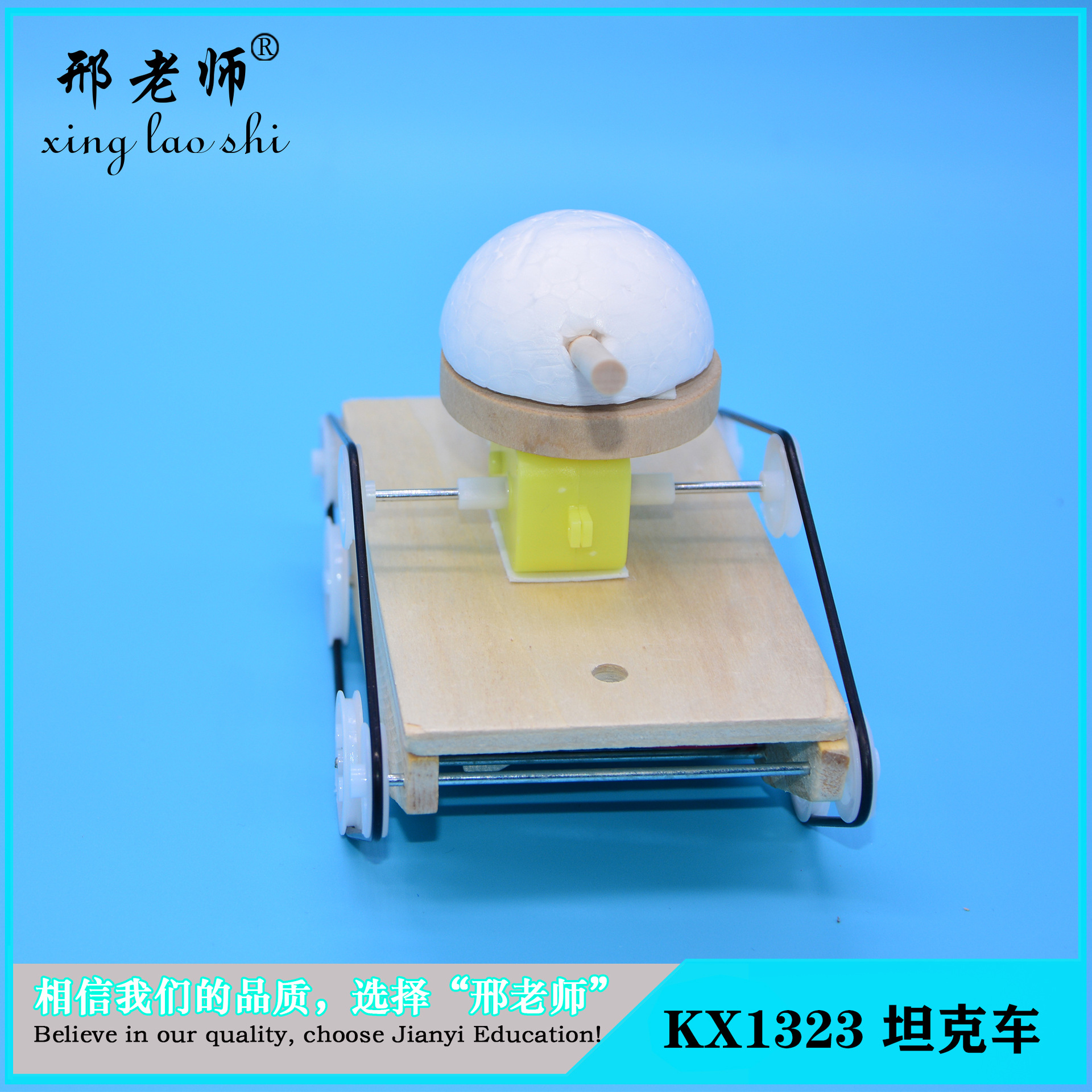
Working Principle:
After assembly, the motor drive wheel drives the auxiliary wheel through a pulley, thereby moving the tank model. The pulley transmission relies on friction; as the drive wheel rotates, it does positive work on the pulley, increasing its speed. At the auxiliary wheel, the belt exerts positive work on the auxiliary wheel due to friction, causing the auxiliary wheel to rotate as well.
Scientific Production:
1. Identify and prepare the materials required for the experiment.
2. Follow the instructions in the manual step by step for installation.
3. After installation, proceed with debugging.
Scientific Principles:
Working principle: Battery — current — the small motor drives the gears to rotate.
The principle of belt drive relies on friction to transmit motion. When the driving wheel rotates, the friction between the driving wheel and the belt does positive work, increasing the belt's speed. At the driven wheel, the friction between the belt and the driven wheel also does positive work, causing the driven wheel to rotate. Objects on the belt also move due to friction, which is similar to the mechanism of the belt drive.
Scientific Expansion:
Invention of the tank: During World War I, both warring parties were struggling to break the stalemate of trench warfare and defensive positions composed of trenches, barbed wire, and machine gun positions. There was an urgent need for a new weapon that combined firepower, mobility, and protection. E.D. Swinton, a British engineer,偶然 discovered that if a cannon or machine gun was installed on a tractor, wouldn’t it work? In 1915, the British government adopted Swinton’s idea and used automotive, tractor, artillery, and metallurgical technologies to prototype a tank vehicle. In 1916, the “Mark” I tank was produced. It had a diamond-shaped silhouette, rigid suspension, protruding gun mounts on both sides of the hull, tracks that ran over the top of the vehicle, and a pair of steering wheels at the rear. The tank could accommodate 8 crew members, with two variants: one equipped with 2 57mm guns and 4 machine guns, and the other with only 5 machine guns. On September 15, 1916, 60 Mark I tanks were deployed in the Battle of the Somme. To honor the inventor, the vehicle was named “Tank.” This name has been used ever since, and “tank” is the transliteration of this word. In 1918, France also developed the Renault tank, which also played a significant role in World War I.
Scientific Exploration:
1, What scientific facts did you learn by building small tanks?
2. What is the principle of belt drive?
3. What are some applications in life that utilize the belt drive principle?
Update time:


TOP


