
Search history
Clear allSearch by image
XDrag and drop an image here or upload an image
Max 5MB per image
UploadSign In | Join

Search history
Clear allSearch by image
XDrag and drop an image here or upload an image
Max 5MB per image
UploadSign In | Join
|
mixed wholesale
混批 |
CN¥ 0.0 |
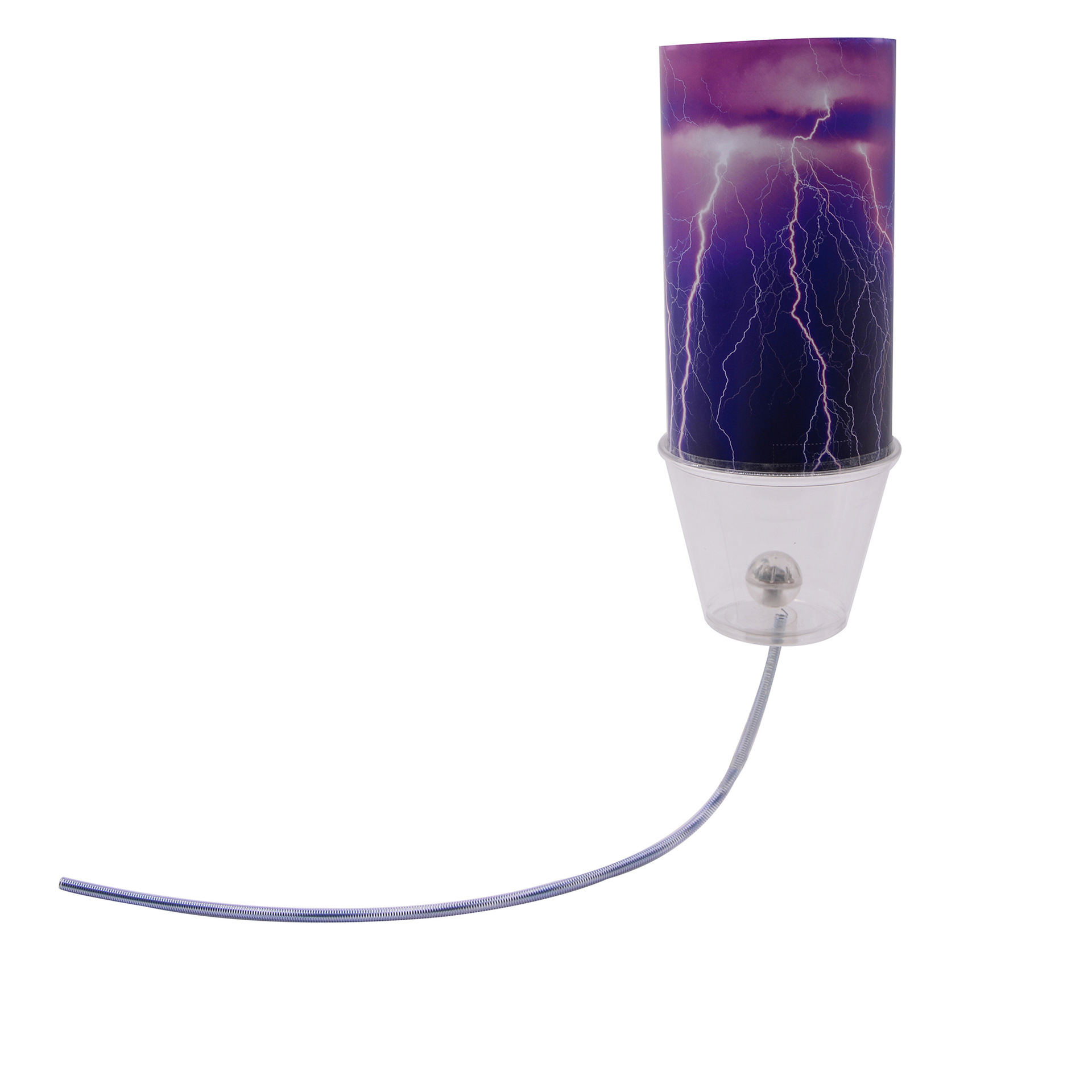
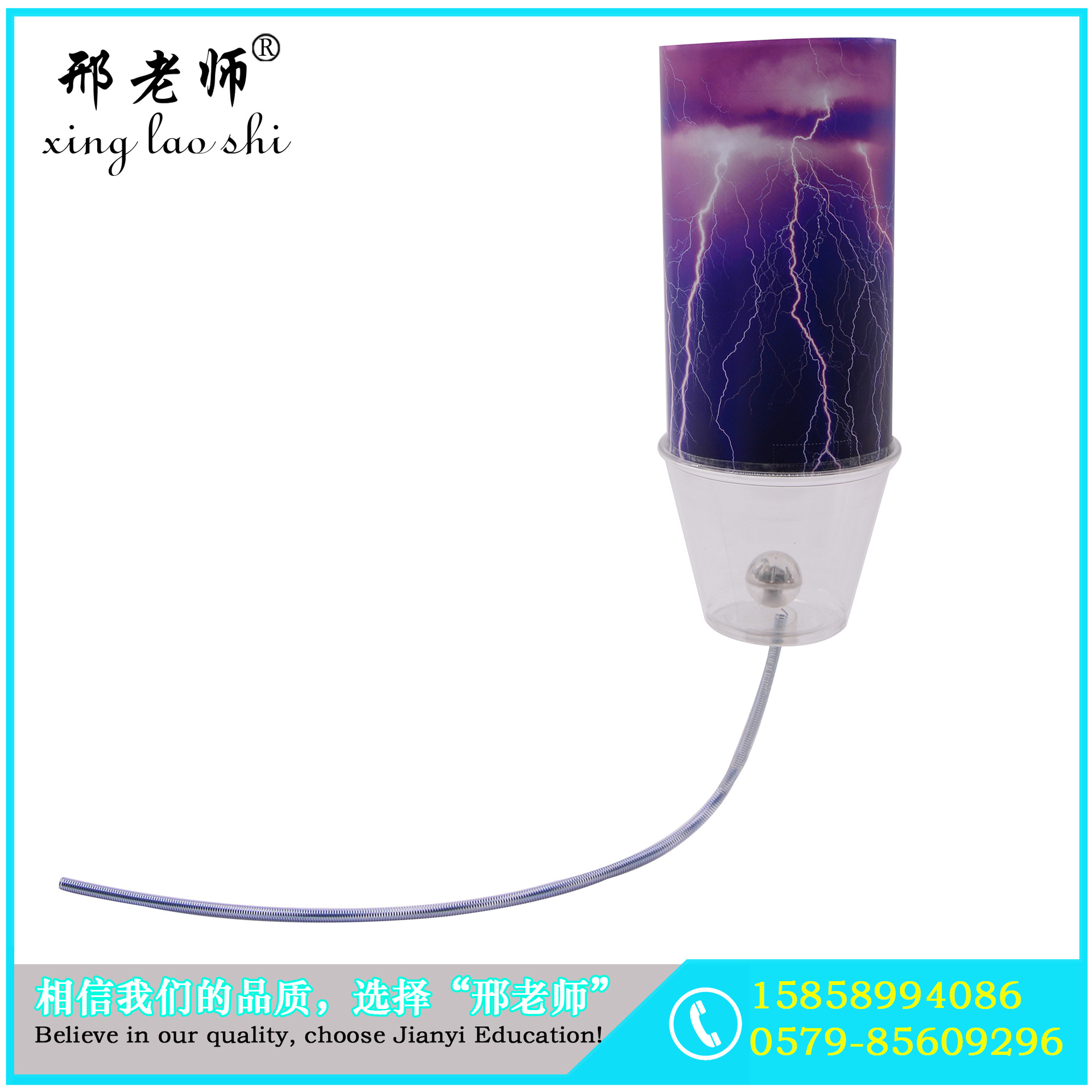
Product Name: KX1901 Thunder and Lightning
Model Number: KX1901
Size: 570*85*85 mm
Weight: Approximately 160g
Material: paper tube + cup + spring + electronic light + double-sided adhesive....
Packaging: 65 pcs
Box dimensions: 600*500*450mm
On a summer afternoon, suddenly dark clouds gathered, a lightning bolt flashed, followed by a loud thunderclap, and heavy rain started. Why is it that we see the lightning first, and then hear the thunder? Why does this only happen in summer, not in winter? Let's conduct an experiment to find out!






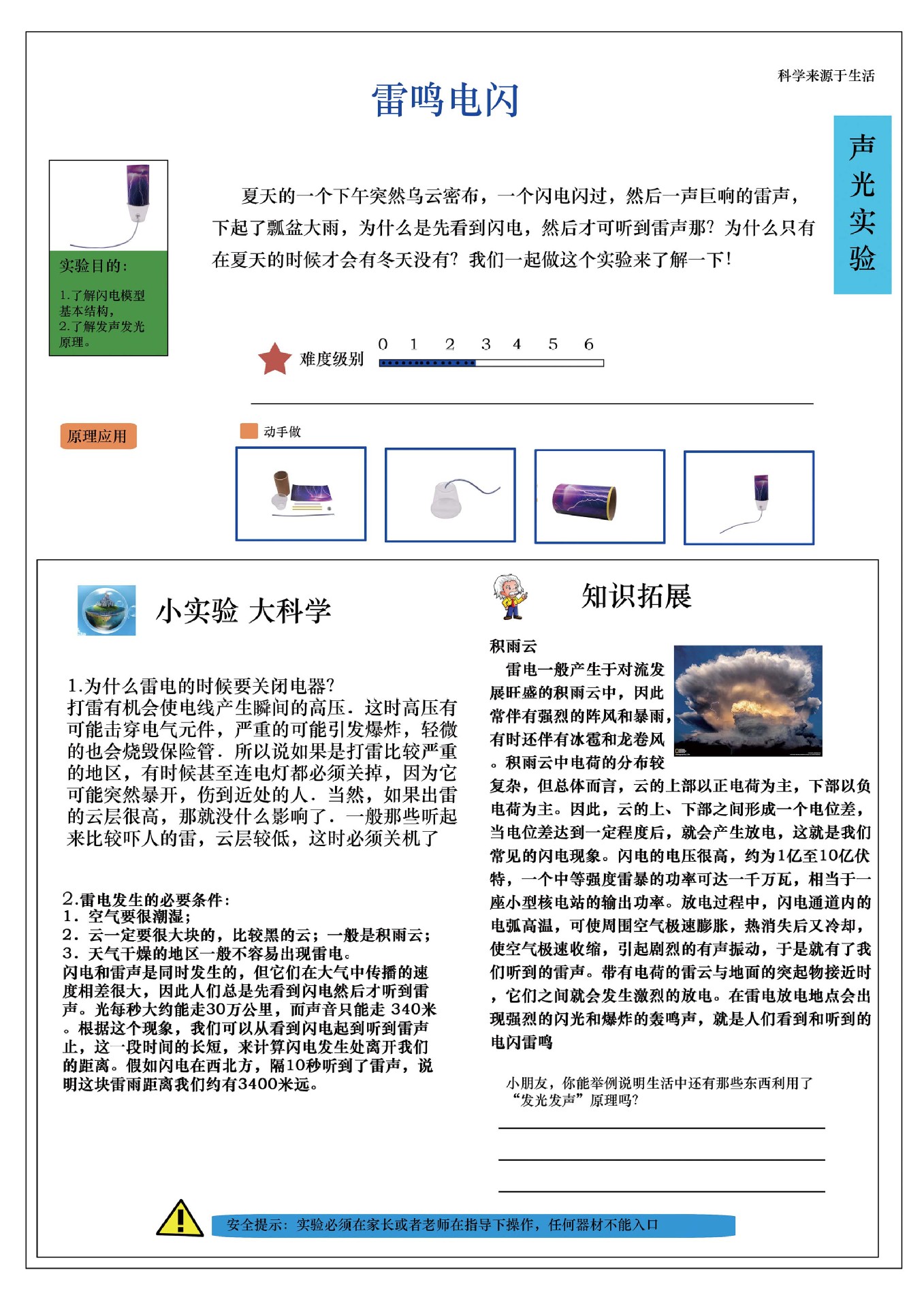

1. Why should electrical devices be turned off during thunderstorms? Thunderstorms can cause wires to generate instant high voltage. This high voltage may damage electrical components, and in severe cases, it could lead to explosions, while minor cases may burn out fuses. Therefore, in areas where thunderstorms are severe, sometimes even lights must be turned off, as they might suddenly spark and injure people nearby. Of course, if the cloud layer above the thunderstorm is very high, there will be no such risk. Generally, those thunderstorms that sound more threatening have a lower cloud layer, and in such cases, power sources must be turned off.
2. Necessary conditions for lightning to occur: 1. The air must be very humid; 2. Clouds must be large and dark—usually cumulonimbus clouds; 3. Lightning is less likely to occur in dry weather areas. Lightning and thunder occur simultaneously, but their speeds of propagation in the atmosphere differ greatly, which is why people usually see the lightning before hearing the thunder. Light travels at approximately 300,000 kilometers per second, while sound travels only at 340 meters per second. Based on this phenomenon, we can calculate the distance from us to the location of the lightning by measuring the duration from when we see the lightning to when we hear the thunder. If lightning occurs in the northwest and thunder is heard 10 seconds later, it indicates that the thunderstorm is about 3,400 meters away from us.
Knowledge Expansion:
Cumulonimbus clouds generate lightning typically in cumulonimbus clouds with vigorous convection activity. Therefore, they often bring strong wind gusts and heavy rain, and sometimes hail and tornadoes. The charge distribution within cumulonimbus clouds is complex, but generally, the upper part of the cloud is dominated by positive charges, while the lower part by negative charges. As a result, a potential difference is created between the upper and lower parts of the cloud. When this potential difference reaches a certain level, discharge occurs, which is the common lightning phenomenon we observe. The voltage of lightning is very high, ranging from 100 million to 1 billion volts. The power of a moderate-intensity storm can reach 10 million watts, equivalent to the output power of a small nuclear power plant. During the discharge process, the high temperature of the arc within the lightning channel causes the surrounding air to expand rapidly. After the heat dissipates and the air cools, it contracts rapidly, causing intense acoustic vibrations, and thus the thunder we hear. When a charged thundercloud approaches a protrusion on the ground, intense discharge occurs between them. At the location of lightning discharge, there is a bright flash and an explosive roar—this is what people see and hear as lightning.
Update time:


TOP


