
Search history
Clear allSearch by image
XDrag and drop an image here or upload an image
Max 5MB per image
UploadSign In | Join

Search history
Clear allSearch by image
XDrag and drop an image here or upload an image
Max 5MB per image
UploadSign In | Join
|
kx1310 fire-alarm
KX1310火灾报警器 |
CN¥ 0.0 |
LED energy-saving lights are electroluminescent, classified as cold light sources. They emit soft light with good color rendering, produce minimal heat, have low temperatures, and can last for over 100,000 hours. This makes them several times longer than ordinary incandescent bulbs, and generally do not damage IEDs.
Experimental Cognition:
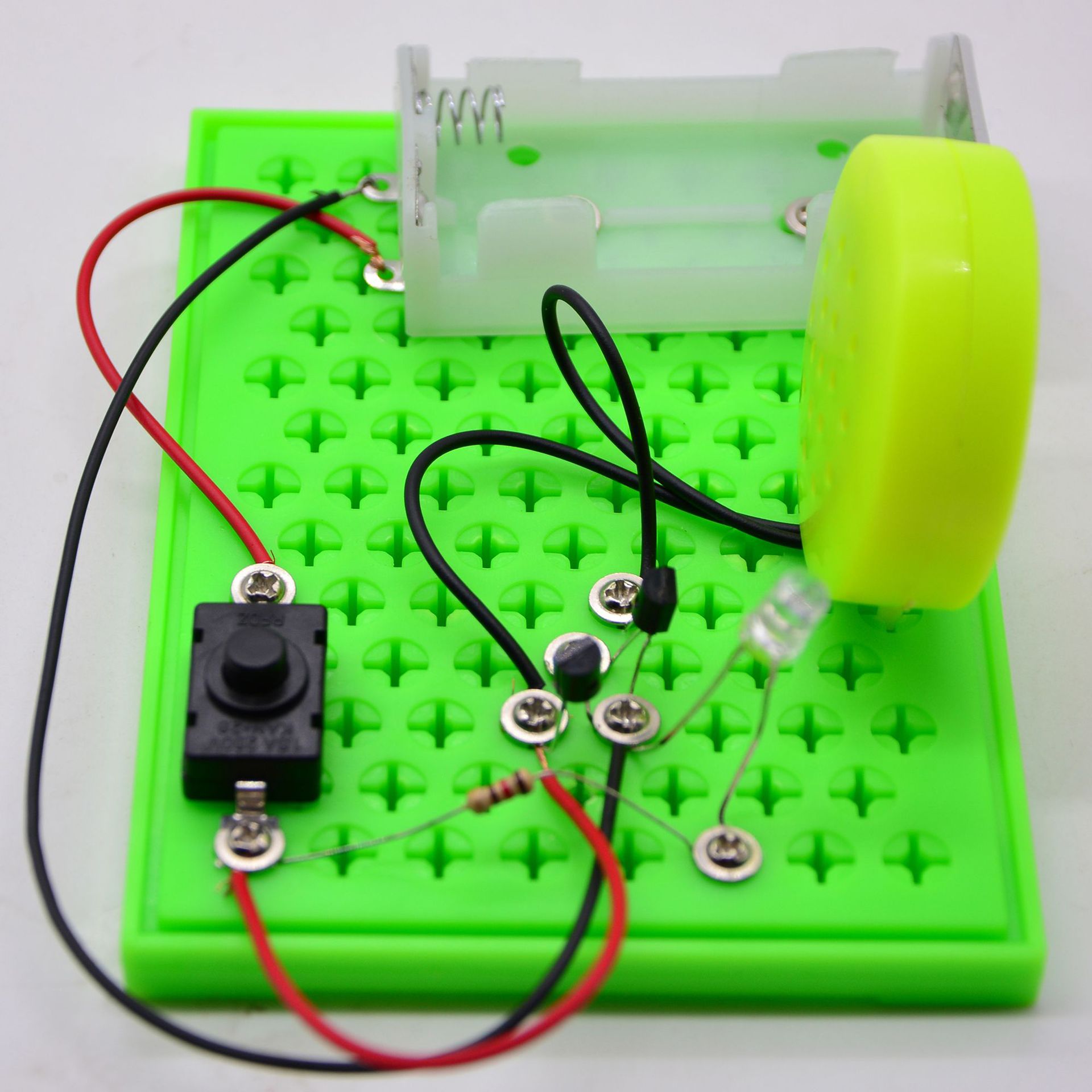
Battery case: As the name suggests, it is a case for securing and installing batteries, serving as a battery power output device
LED lights: LED (Light Emitting Diode), a solid-state semiconductor device that can directly convert electricity into light. The core of an LED is a semiconductor chip, one end of which is attached to a support, with the negative terminal at one end and the positive terminal of the power source at the other, enclosing the entire chip in epoxy resin. The semiconductor chip consists of three parts: one is P-type semiconductor where holes dominate, the other is N-type semiconductor where electrons predominate, with typically 1 to 5 quantum wells in between. When current passes through the chip via a wire, electrons and holes are pushed into the quantum wells, where they recombine with each other and emit energy in the form of photons—this is how LED lighting works. The wavelength and color of the light are determined by the material that forms the P-N junction.
Triode: When the triode is in the amplification region, the collector current and base current of the triode follow a fixed proportional relationship. The so-called amplification function of the triode is actually achieved by using this fixed relationship to control a larger current (collector current) through a small current (base current).
Resistance: The resistance that a conductor exhibits to electric current is called resistance! Factors that affect resistance include length, cross-section, area, material, and temperature. For general metal materials, it increases as the temperature rises.
IC: is a control IC specifically designed for single-cell battery operation. It integrates both charging control and drive control circuits within itself. The charging control section includes functions such as level detection, charging control, and protection against reverse battery current. The drive control section can perform tasks like level detection of rechargeable batteries (hereinafter referred to as batteries), generation of pulses, manual standby mode, and high peak current limitation. This circuit requires only one peripheral inductor to form a STEP-UP type switching power supply system, with both charging efficiency and drive efficiency exceeding 80%. It features high efficiency, low power consumption, a working voltage as low as 0.85V, and the ability to automatically perform charging and drive functions, making it particularly suitable for lighting solutions powered by single cells.
Experimental procedures:
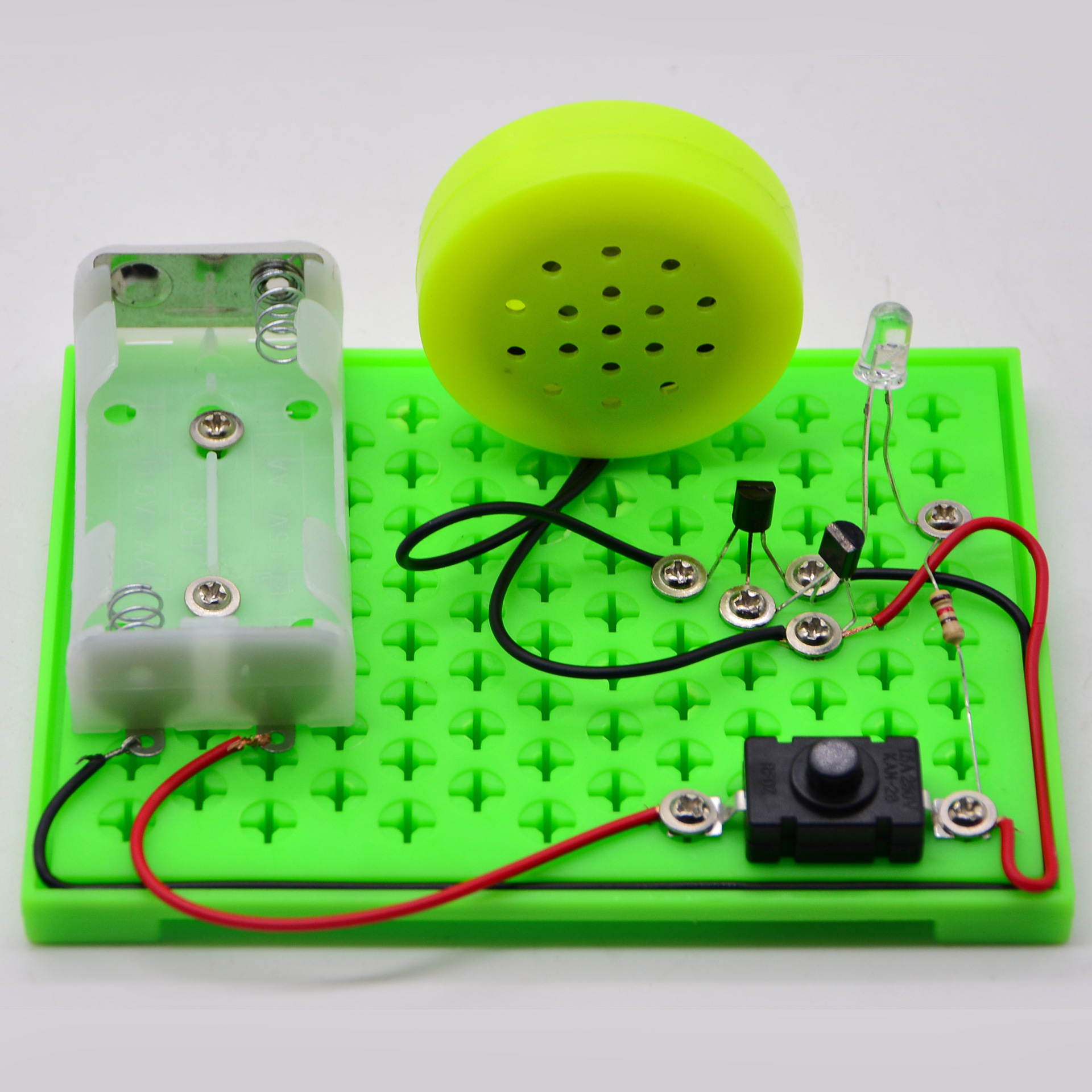
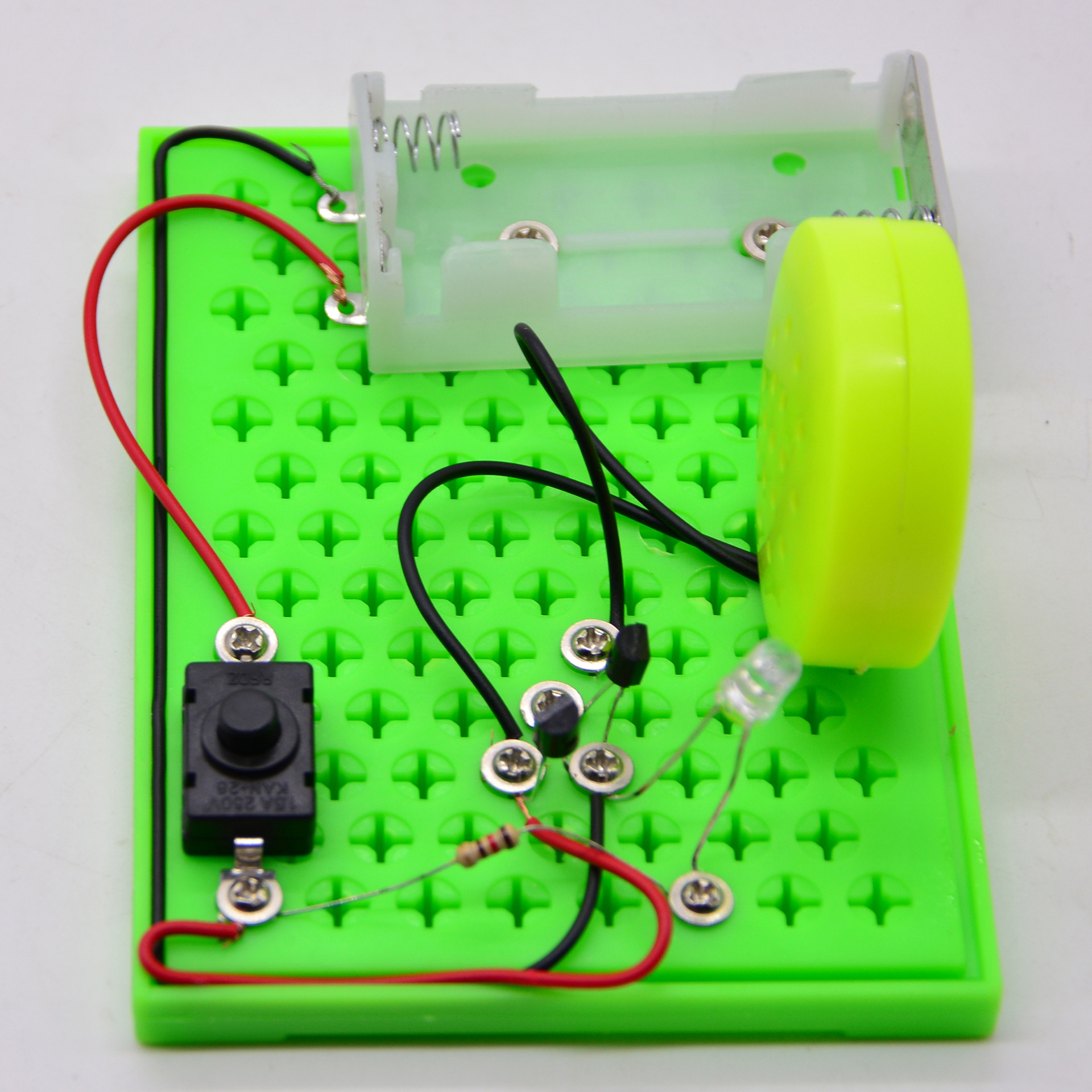
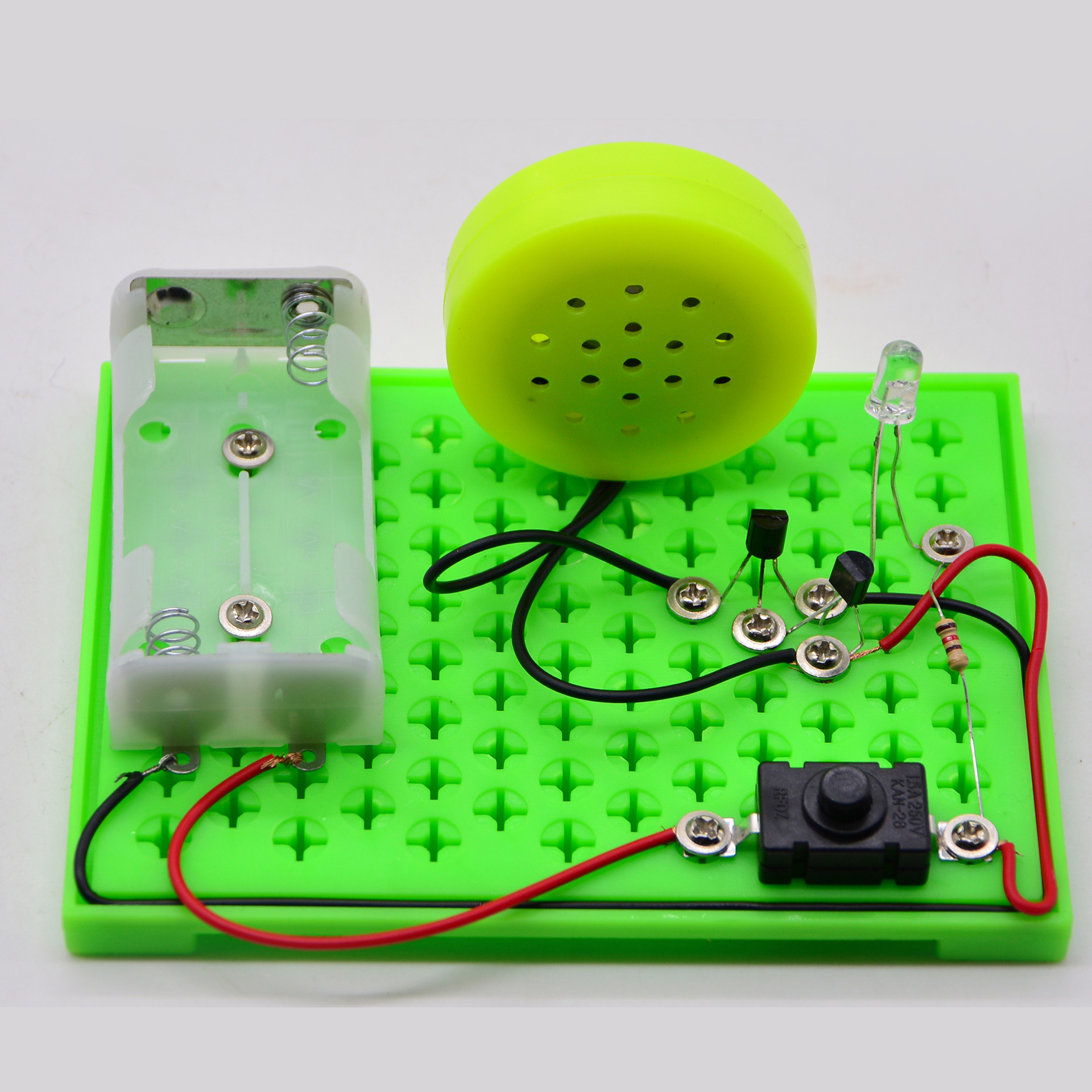
1. Experimental preparation: Identify experimental equipment: screw hole plate, speaker, IC, triode, LED light, resistor, wires, screwdriver, pliers.
Experiment Report:
Understanding the working principle of the simulation alarm, and creating one by yourself, helps you gain a deeper understanding of how the simulated siren works.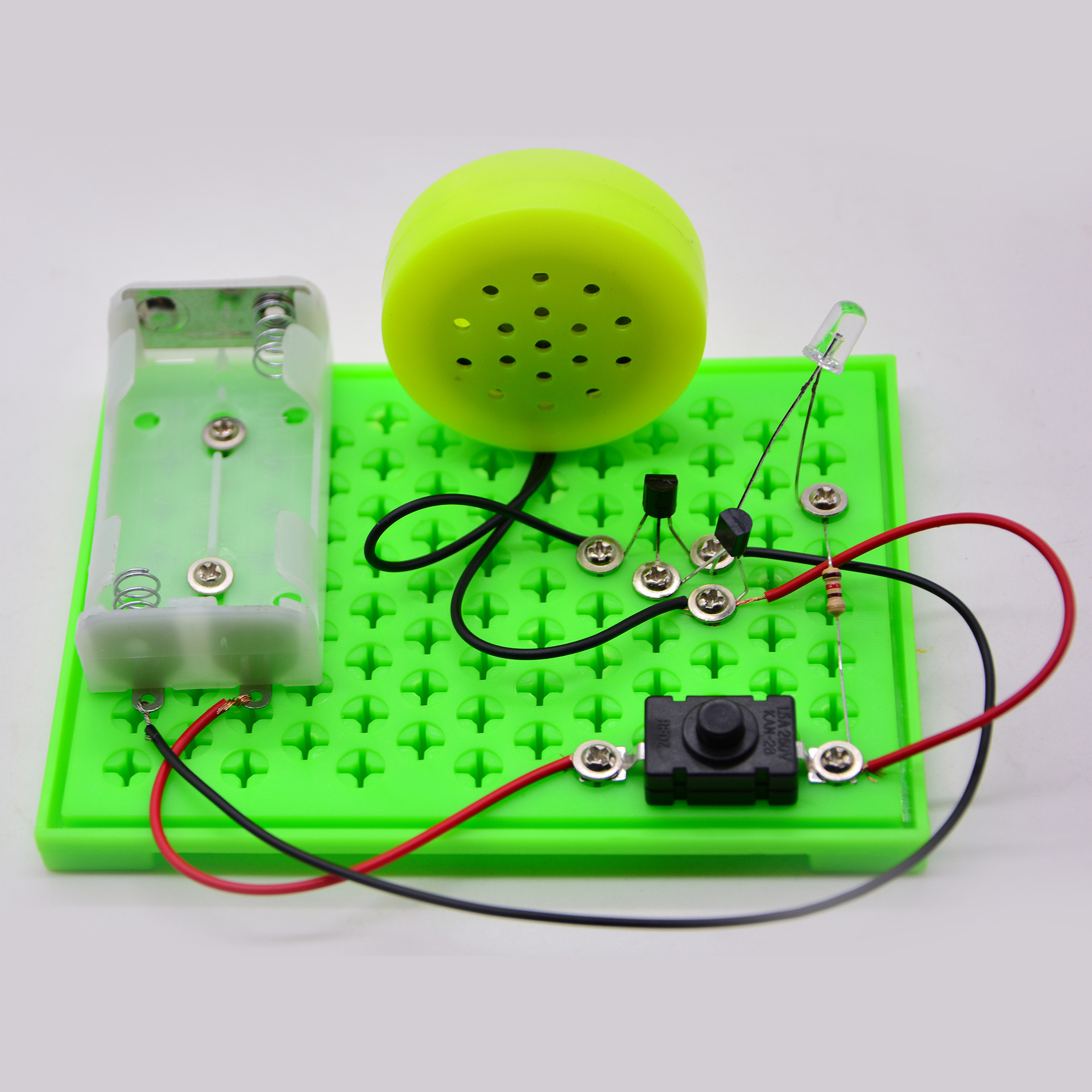
Update time:


TOP


