
Search history
Clear allSearch by image
XDrag and drop an image here or upload an image
Max 5MB per image
UploadSign In | Join

Search history
Clear allSearch by image
XDrag and drop an image here or upload an image
Max 5MB per image
UploadSign In | Join
|
mixed wholesale
混批 |
CN¥ 0.0 |
kaleidoscope
Scientific Insights:
A kaleidoscope is a toy we often play with. Just look into its holes, and beautiful "flower" patterns will appear. Moreover, every time the kaleidoscope spins, the patterns inside are different. As it continues to spin, the designs keep changing. Want to know why the patterns keep changing? Let’s go and explore the mystery together!
Experimental Objectives:
1Enjoy the fun of the process of creating a kaleidoscope by hand.
2, I feel the mystery of scientific changes.
Experimental Cognition:
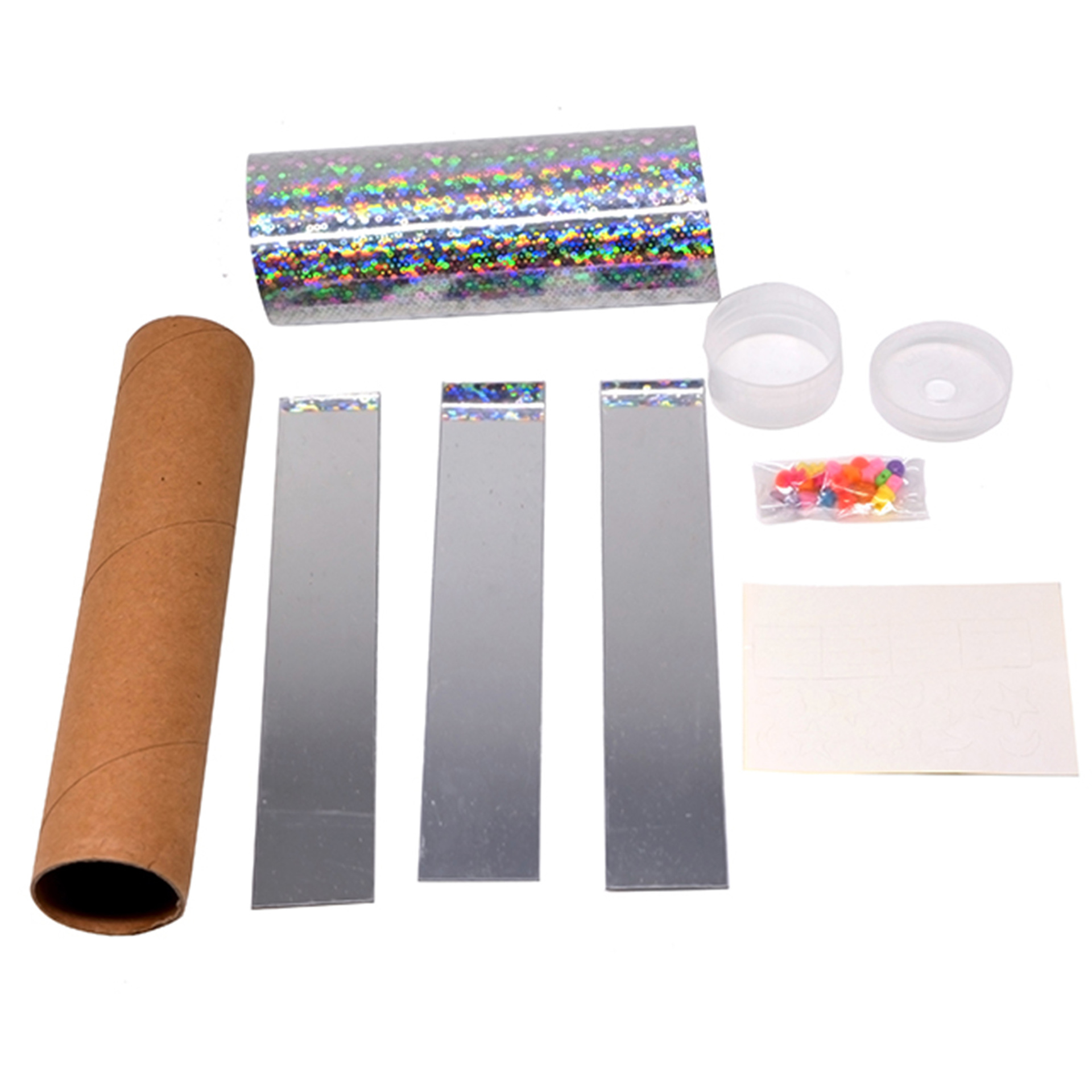
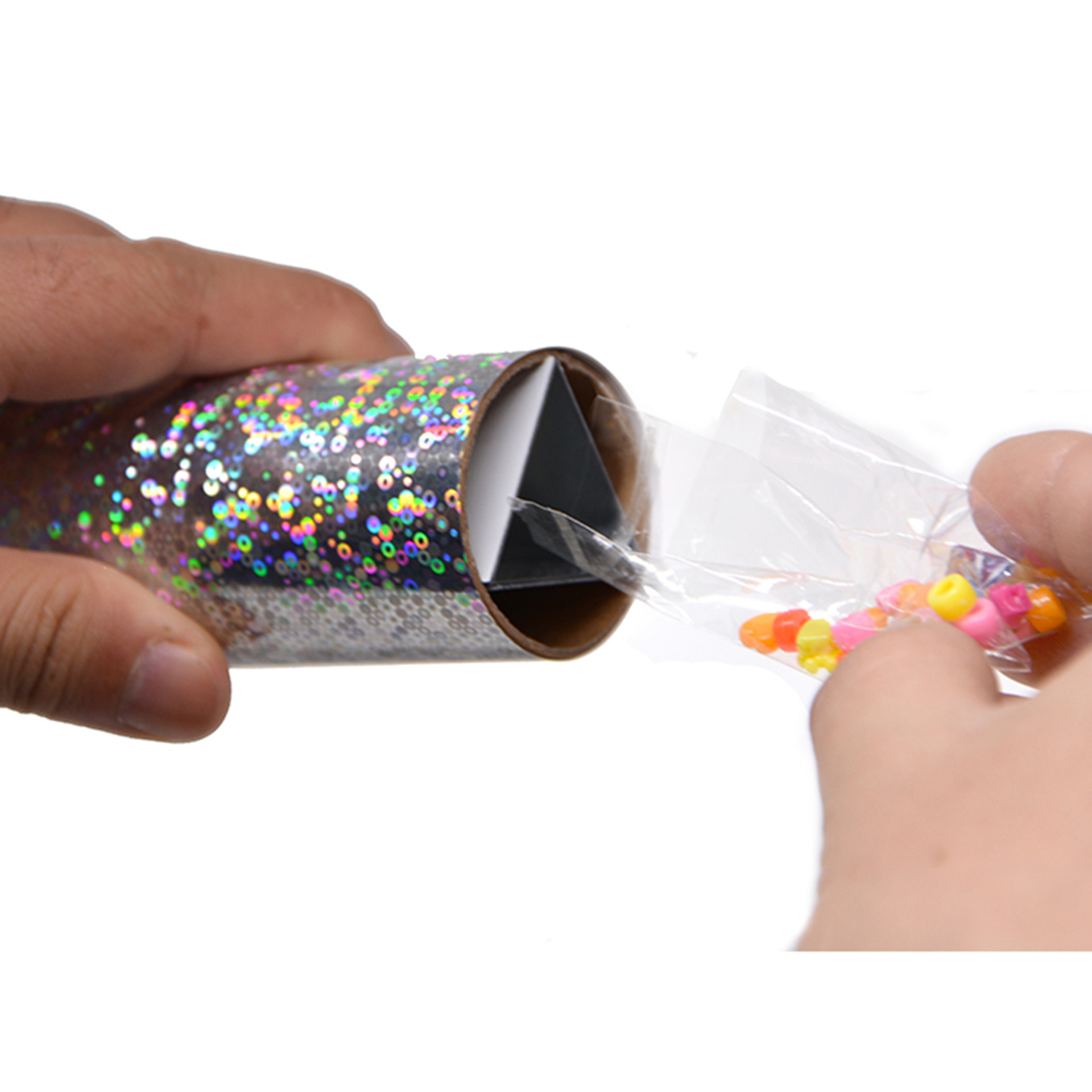
1,A kaleidoscope is an optical toy. A real object with bright colors is placed at one end of the cylinder, a prism is positioned in the middle of the cylinder, and the other end is sealed with perforated glass. Looking through the holes allows one to observe symmetrical and beautiful images.
2So how do the kaleidoscopic patterns come about? They are created through reflection in glass mirrors. It is a tri prism made up of three glass mirrors, with colored glass fragments placed at one end. Through the reflection by the three glass mirrors, symmetrical patterns appear, resembling a blooming flower.
3The principle of mirror reflection: Based on light reflection, when sunlight or light from a lamp hits a person, it is reflected onto the mirror surface. <t_This is diffuse reflection, which falls under mirror reflection> The mirror then reflects the light back into the person’s eyes, allowing us to see our virtual image in the mirror. <t>This is the actual reflection process by a mirror> The image in the mirror is formed at the intersection point where the extended rays of reflected light meet, so the image is a virtual image. The virtual image is the same size as the object, and the distance between them is equal; thus, both the image and the object are symmetrical with respect to the mirror surface.
Scientific Expansion:
A kaleidoscope is created using the principle of image formation by flat mirrors, producing images through light refraction. In 1816, the Scottish physicist Sir David Brewster invented the kaleidoscope. Brewster was primarily engaged in optical and spectral research; he had a strong interest in optical experiments since his childhood and spent most of his life dedicated to this field. While studying the properties of light with multiple mirrors, he observed scenes appearing after multiple reflections in several opposite mirrors. He then placed some paper in the cavity formed by the mirrors, and as a result, symmetrical patterns appeared—without changing the position of the paper, the patterns would change once. To ensure continuous changes in the patterns, he placed three angled mirrors in a cylinder and placed the paper between two layers of glass at the end of the cylinder. As the angles of the triangular mirrors changed, the number of images also varied; when the images overlapped, various patterns were formed. By continuously rotating the kaleidoscope, one could observe constantly changing patterns. Thus, he created a kaleidoscope that displayed different patterns simply by gentle rotation. The kaleidoscope achieved unexpected success overnight. This small device that produced beautiful patterns with just a turn was considered a “television set” at that time. What’s more interesting is that once a pattern disappeared, it would take several centuries for the same pattern to reappear. Therefore, every moment is worth appreciating, and every second is worth cherishing!
Scientific Exploration:
Light refraction, just like light reflection, occurs at the boundary between two media. In reflection, the light returns to the original medium, while in refraction, it enters another medium. Due to the different speeds of light propagation in these two different substances, its direction changes at the boundary between the media—this is what is known as light reflection. Note: At the boundary between two media, both refraction and reflection occur. The speed of light for reflected light is the same as that of incident light, whereas the speed of light for refracted light is different from that of incident light.
Experiment Report:
Based on the content learned in this section, describe the kaleidoscope using the principle of mirror reflection.

Update time:


TOP


