
Search history
Clear allSearch by image
XDrag and drop an image here or upload an image
Max 5MB per image
UploadSign In | Join

Search history
Clear allSearch by image
XDrag and drop an image here or upload an image
Max 5MB per image
UploadSign In | Join
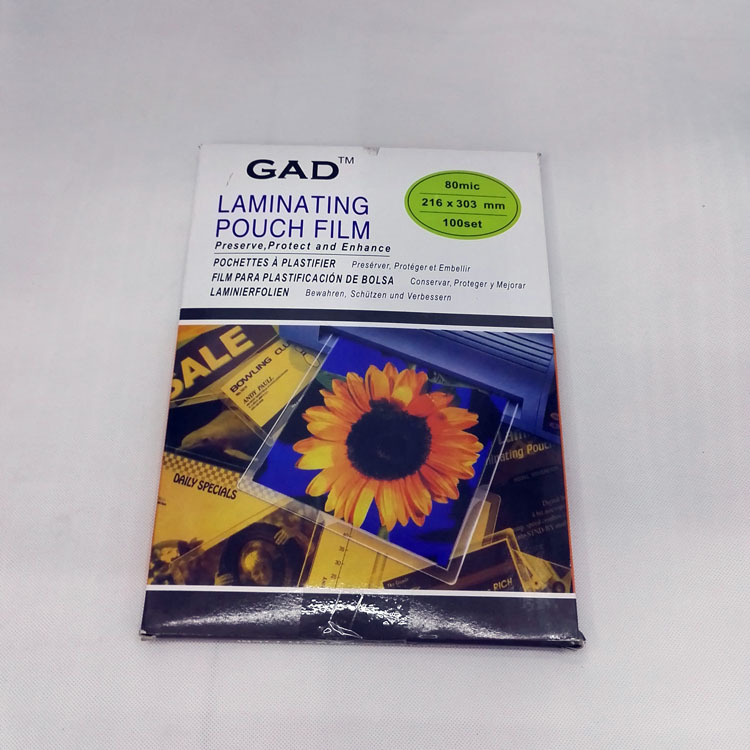
| a3 80mic | CN¥ 39.0 |
| a4 80mic | CN¥ 19.5 |
| a4 175mic | CN¥ 39.8 |
| a3 100mic | CN¥ 51.0 |
| a3 125mic | CN¥ 57.0 |
| a4 125mic | CN¥ 28.5 |
| a4 150mic | CN¥ 32.5 |
| a4 100mic | CN¥ 25.5 |
| a4 250mic | CN¥ 73.5 |
Yiwu YuManOffice Supplies Firm 15yr.
Contacts Fameda Z Chat
Mobile 13076754351
WeChat 13076754351
WhatsApp +8613076754351

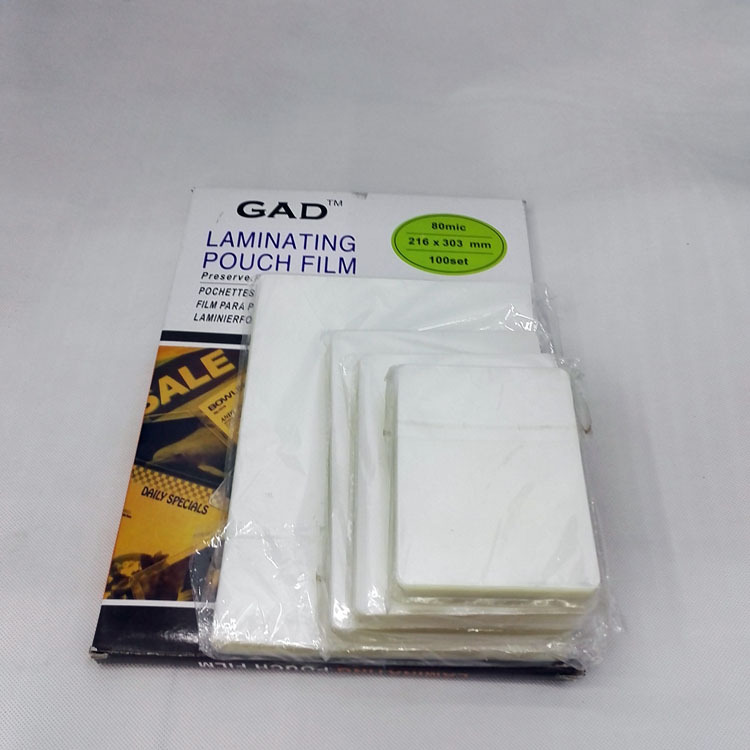
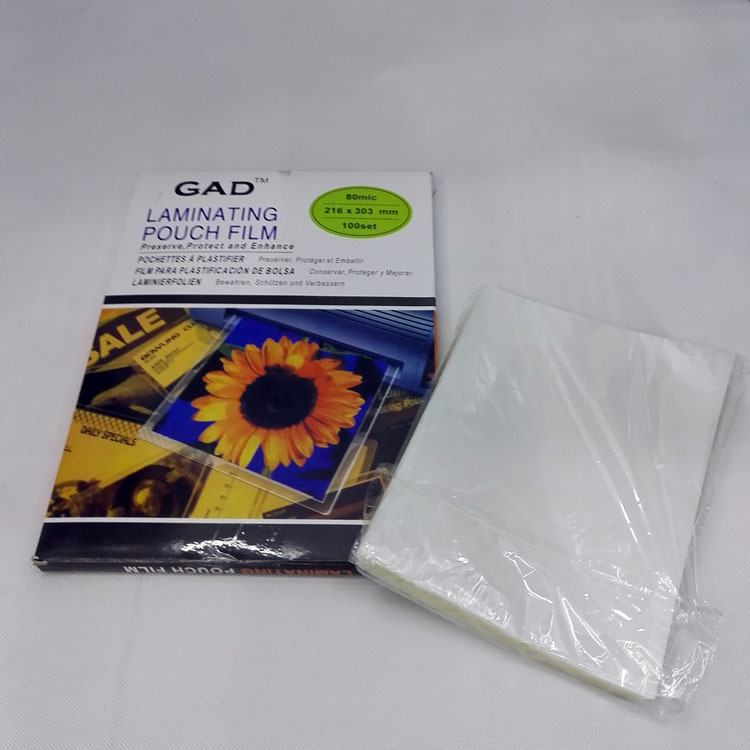
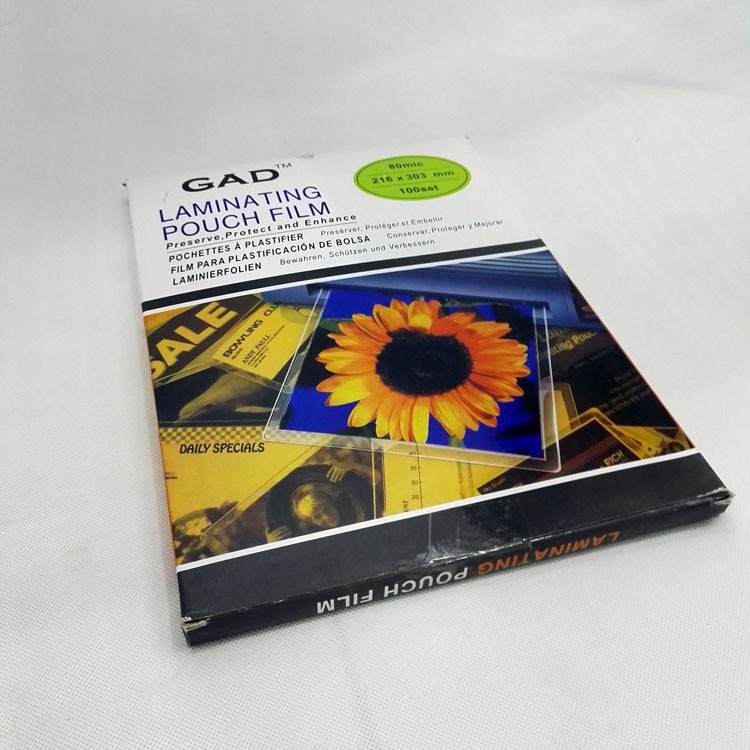
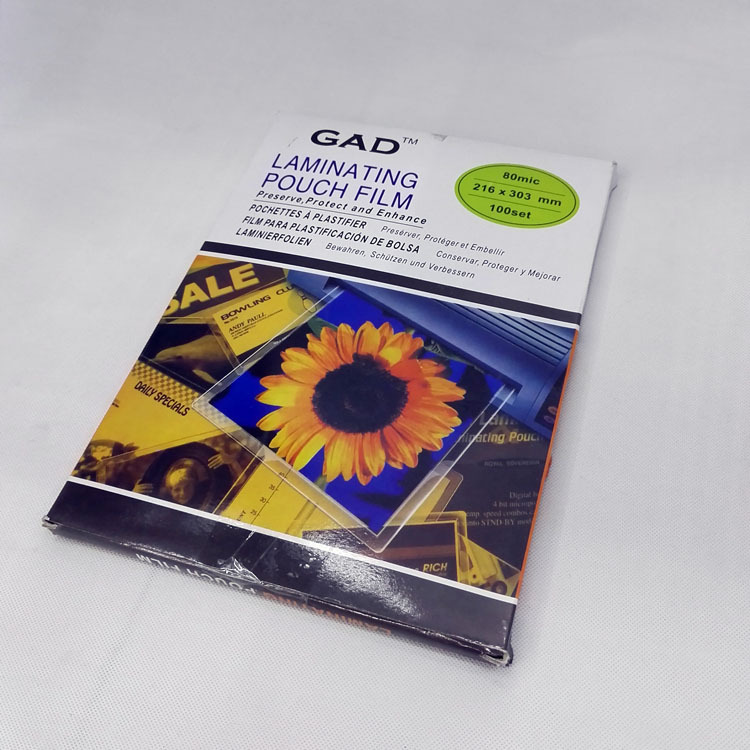
Post-processing, also known as printing and pasting or printing and adhesive film, refers to the process of using a lamination machine.On the surface of the printing product, a layer of 0.012~0.020" is applied.
A product processing technology that combines paper and plastic is formed by using a transparent plastic film with a thickness of mm. Generally speaking, the technology used depends on the type of work.
Art can be divided into two types: the immediate coating film and the pre-coated film, depending on the material of the film.The different types of film are divided into bright film and matte film.Two kinds.
The process of lamination.
1. First, cut the paper or photo you want to laminate to the size you want.
2. Press the material and seal it with plastic film. Pay attention to the edges.
3. Wait for the plastic sealing machineThe temperature should reach a certain degree for the plastic coating to begin.
4. After completion, the paper or photos are sealed, preventing water from entering, allowing for long-term preservation.


Update time:


TOP


