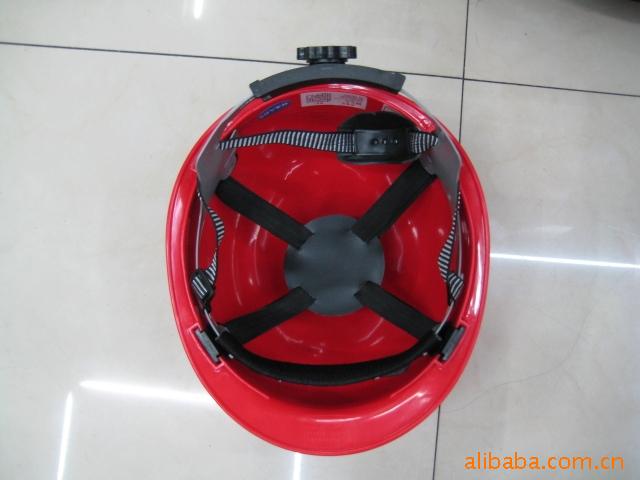
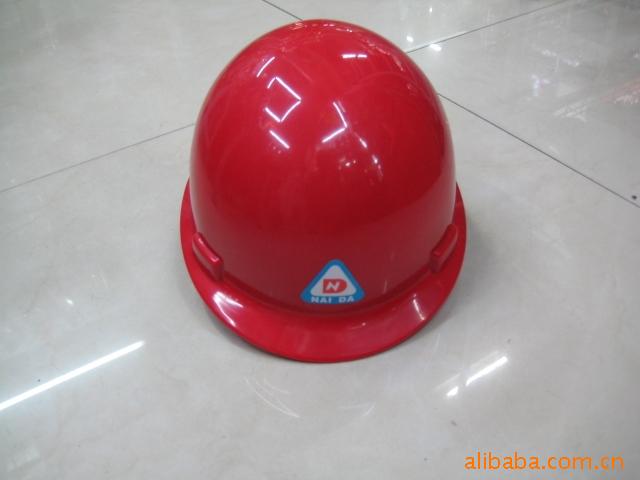
Safety helmets are protective devices used to prevent head injuries from impact objects. They are hats worn by workers during construction or mining operations to protect the head from falling objects. A safety helmet consists of a helmet shell, a liner, a chin strap, and a backband. The helmet shell is hemispherical in shape, sturdy, smooth, and somewhat elastic; the impact and piercing energy of the object is primarily absorbed by the shell. There is a certain space between the helmet shell and the liner, which can absorb and disperse instantaneous impact forces, thereby avoiding or reducing direct damage to the head. Impact absorption performance, puncture resistance, lateral rigidity, electrical insulation, and flame retardancy are essential technical requirements for safety helmets. When a worker's head is subjected to an impact from a falling object, the helmet shell and liner immediately distribute the impact force across the entire surface of the skull. Then, the elastic deformation, plastic deformation, and allowed structural failure of the cushioning structures in various parts of the helmet absorb most of the impact force, reducing the final impact force on the worker's head to below 4900N, thus protecting the worker's head.
The material of the helmet shell plays a crucial role in the overall impact resistance of the helmet. A helmet is a protective device used to prevent injuries to the head from impact objects. It consists of a helmet shell, a liner, a lower chin strap, and a rear band. The helmet shell is hemispherical in shape, sturdy, smooth, and somewhat elastic; the impact and piercing energy from objects is primarily absorbed by the shell. A certain space is maintained between the helmet shell and the liner, which can absorb and disperse instantaneous impact forces, thereby avoiding or reducing direct damage to the head. Impact absorption performance, puncture resistance, lateral rigidity, electrical insulation, and flame retardancy are essential technical requirements for helmets. Fiberglass reinforced plastic helmets are mainly used in high-temperature metallurgical work environments, oilfield drilling, forest logging, power lines, high-rise construction, and construction in cold regions. ABS plastic helmets are primarily used in mining, mechanical industries, and other indoor, room-temperature work environments with high impact strength.
ABS safety helmets refer to those made from ABS engineering plastic. Safety helmets with ABS material possess high impact resistance and puncture protection capabilities. They are suitable for industries such as power, chemical, petroleum, construction, forestry, ports, and metallurgy. They offer good overall performance, high impact strength, chemical stability, and excellent electrical insulation properties. ABS safety helmets have good fusion characteristics with 372 organic glass. They can be manufactured as dual-color plastic parts, with surface chrome plating or painting options. ABS safety helmets come in various grades including high impact resistance, high heat resistance, flame retardancy, reinforcement, and transparency. Their fluidity is slightly lower than that of HIPS but better than PMMA and PC.