Search history
Clear allSearch by image
XDrag and drop an image here or upload an image
Max 5MB per image
UploadSign In | Join

Search history
Clear allSearch by image
XDrag and drop an image here or upload an image
Max 5MB per image
UploadSign In | Join
|
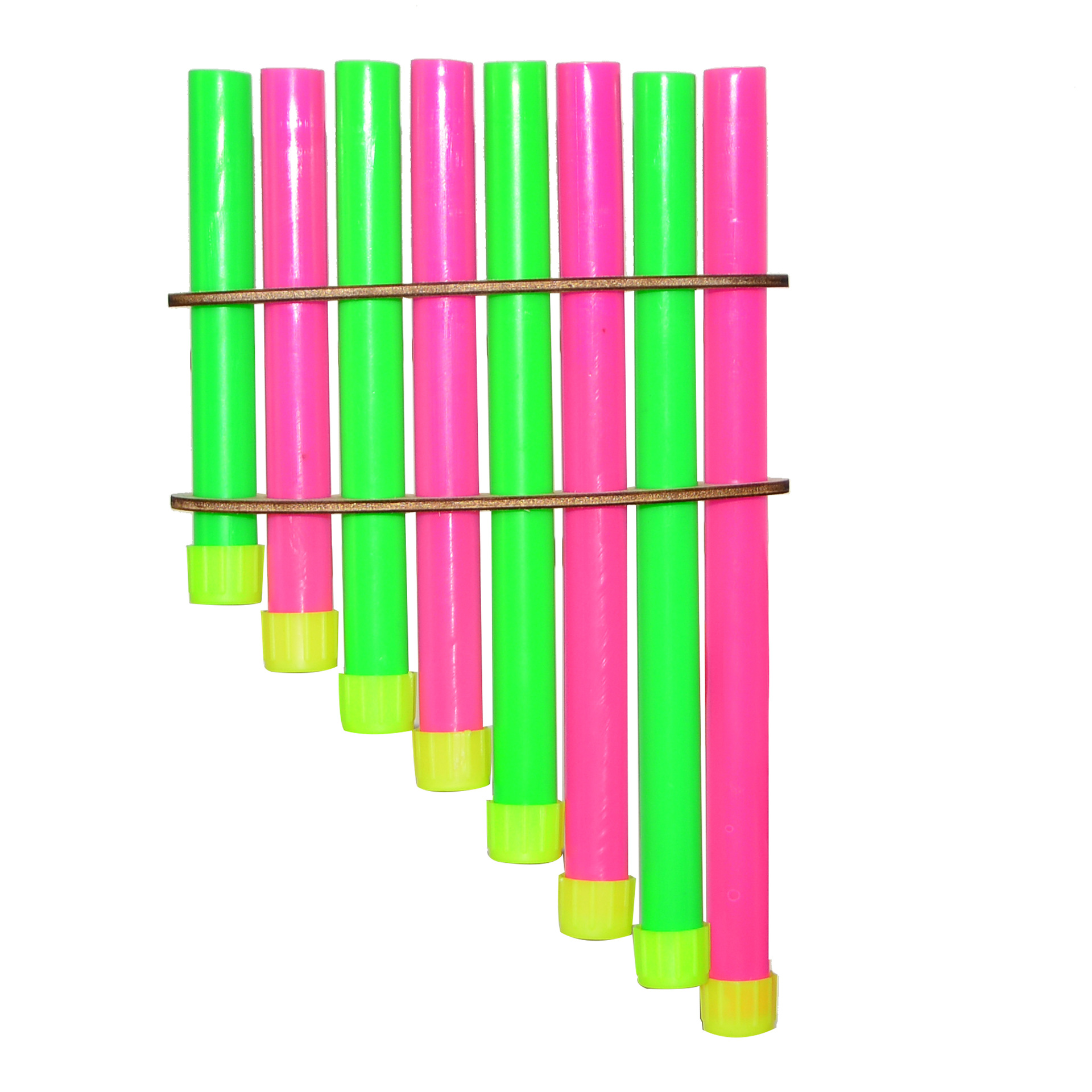
kx213 panpipe
KX213排箫 |
CN¥ 0.0 |
Flute
The pipa, also known as Yaxiao, Songxiao, Shunxiao, and Qinxiao, is a Han Chinese musical instrument that originated during the Western Zhou period in China. The earliest pipa in the world is the bone pipa from the early Western Zhou period over 3000 years ago. A pipa is composed of several pipes made of the same material, which are combined into a single instrument through bonding, tying, or framework fixation. Inside the pipes, beeswax orcork stopperBlocked: When playing, the airflow slides over the blowing opening and hits the inner tube on the opposite side. The airflow vibrates within the cavity of the sound tube, producing musical notes. Due to the different positions of the beeswax or cork plugs, the vibration cycles in the sound tube vary, resulting in different frequencies of airflow vibrations, and thus different musical notes. The panpipes instrument can be played solo or in ensemble.
The pipa is a Han Chinese musical instrument that can be played solo or in ensemble. It originated during the Western Zhou period in China. The pipa consists of several pipes made of the same material, combined into a single instrument, with beeswax or cork plugs inserted inside; when played, the inner cavity of the pipes vibrates to produce sound; different vibration frequencies result in various musical notes.
The panpipes are wind instruments composed of a series of tubes. The tubes are arranged in order from long to short or short to long, and connected side by side. The bottom of each tube is capped with a plug, forming individual blowing tubes. When played, air flows into the tubes, producing different pitches.
The sound of the panpipes is pure and beautiful, gentle, delicate, ethereal, and graceful.
The pipa is a musical instrument that can be played solo or in ensemble.
The flutes resemble phoenix wings and possess a distinct ethnic style. Over the centuries, the number of tubes and length varied, but they all feature a single phoenix wing shape; during the Qing Dynasty, it was changed to a double phoenix wing design.
In August 1978, two panpipes were unearthed from the Zenghou Yi Tomb in Suixian County, Hubei Province. They have a unique shape, resembling one of the wings of a phoenix, and each consists of 13 strings of varying lengths.
Flute (discovered from the Tomb of Marquis Yi of Zeng)
The identical thin bamboo tubes are arranged in sequence and bound together using three split thin bamboo tubes, with the surface decorated with colorful lacquer paintings. Although these two flutes have the same design, their lengths differ; they are a pair of "male and female flutes" – the male is slightly longer, while the female is slightly shorter. In ancient times, male and female flutes were often played together to create a harmonious ensemble, complementing each other like a duet between men and women.
Over the 1,600 years from the Spring and Autumn Period to the end of the Tang Dynasty, the number and length of the flutes varied. Through the transmission across generations and improvements by musical instrument craftsmen, it was not until the Qing Dynasty that the single phoenix-wing design, which became progressively shorter, was replaced by a symmetrical double phoenix-wing structure. Additionally, the tubes were arranged according to musical scales, and the bands around the flutes were changed from ropes tied with bamboo to a wooden support frame.
In the Beijing China Music Research Institute, a flute made during the Qing Dynasty (1736–1795) is preserved. It consists of 16 tubes, each engraved with musical notes.
Flute (made during the Qing Dynasty's Qianlong period)
Including the twelve-tone scale and the four-fold scale, the craftsmanship is extremely exquisite. On the wooden frame, two golden dragons soaring through the clouds are painted, reflecting a strong ethnic style.
The panpipes are ancient wind instruments in China, with beautiful designs and a distinct national style. In August 1956, during the Music Week held in Beijing, after extensive consultation, the Ministry of Culture and the Chinese Musicians Association decided to use the pattern of the panpipes as China's musical emblem—the musical logo—to represent China's long-standing culture and diverse national musical arts. Since then, the pattern of the panpipes has often been printed on commemorative medals and gifts given by the Chinese music community to foreign friends.





Update time:


TOP