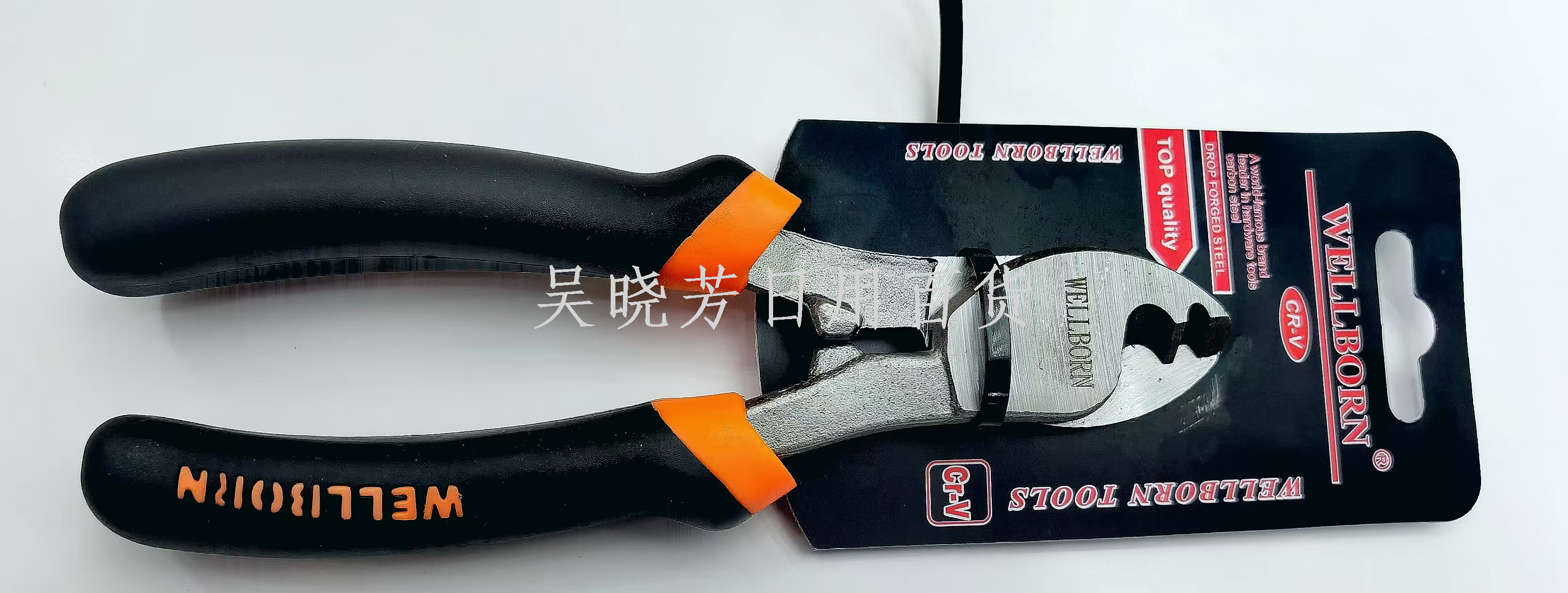
1. Clarify the core positioning
Cable cutters are specialized tools designed for cutting various types of cables and wires. They are different from ordinary scissors in that their core value lies in being able to handle insulated or different materials (such as copper, aluminum, etc.) efficiently and safely, avoiding issues such as incomplete cable fractures and rough cuts.
2. Emphasize Core Advantages
- Efficient and labor-saving: Most models (such as hydraulic and ratchet types) amplify the force through mechanical structures, allowing for easy cutting of large-diameter cables without the need for brute force.
- Straight cut: The blade is specially ground to ensure that the cable section cut is flat, reducing the risk of poor contact during subsequent connections.
- Safety Protection: Some models come with insulated handles (suitable for working on live wires) and anti-skid design, reducing the risk of electric shock or slipping during operation.
3. Scenario Coverage
- Professional field: Electrical engineering (cable laying, maintenance), communication wiring (optical fiber/network cable cutting), and decoration construction (wire preprocessing).
- Daily scenarios: home circuit renovation, waste cable disposal, small equipment wiring adjustment, etc.
4. Supplemental Selection Key
Choose the type based on your needs to make the introduction more practical:
- Small/Home Use: Prefer manual type, lightweight and easy to carry.
- Large diameter/high frequency operations: Recommended for hydraulic or pawl type, which is both labor-saving and efficient.
- Live-line working: Insulated handles with insulating certifications (e.g., VDE certification) must be selected to ensure safety.