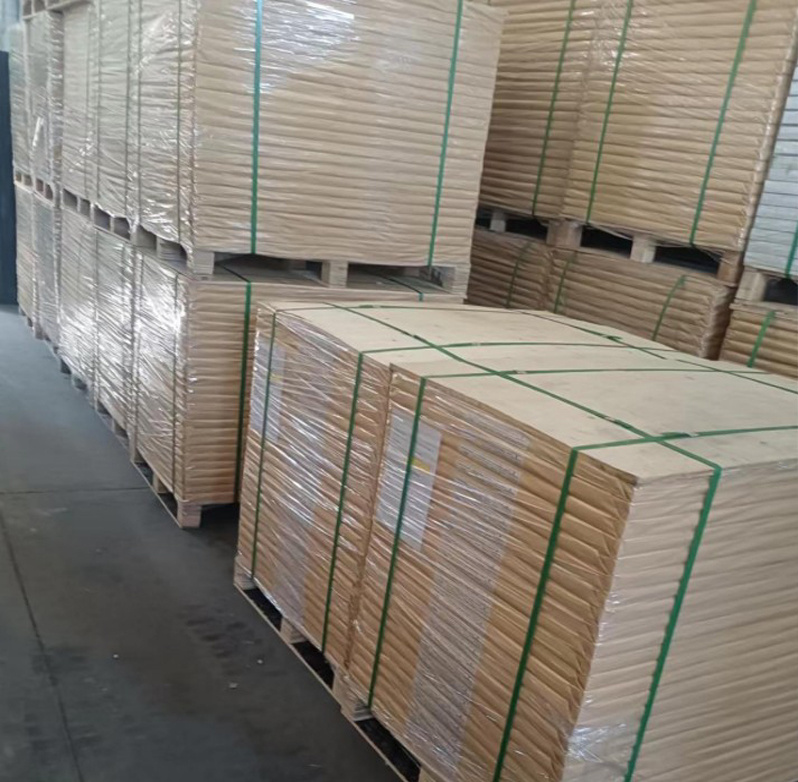
 Introduction to Carbon-Free Paper
There are specifications with precision and generosity, but there are also differences between upper paper, middle paper, and lower paper, with varying paper prices (see paper price classification).This paper appears no different from ordinary paper on the surface, but it can be used for copying, producing the same effect as blue copy paper, and does not stain fingers or clothing—making it more hygienic. Since no carbon material used in copying is employed during its production, it is named (carbon-free copy paper)., commonly known as carbon-free paper.
When using documents printed on carbonless paper, a small piece of cardboard is usually placed between the sheets to prevent excessive pressure during writing from causing the other sheets beneath to be smudged!
Carbon-free carbon copy paper is a type of paper that does not require wax coating for copying. The ability to copy without waxing is due to the application of chemical substances. Multiple pages of carbon-free paper can be stacked together and directly printed or written with a pen to produce multiple copies of a document. It is convenient and clean, and can also be made into punched holes for computer printing paper, enabling efficient and continuous printing and copying. The production of carbon-free paper raw material is very important.
Principle of carbon-free paper
Carbonless paper is divided into upper sheet, middle sheet, and lower sheet. On the underside of the upper and middle sheets, a certain chemical substance is applied, while on the topside of the middle and lower sheets, another chemical substance is applied. When combined in the order of upper, middle, and lower sheets, when subjected to the impact force of the printing needle or the pressure of the pen tip, the two different chemicals meet and create a visible mark, thereby achieving the purpose of duplication.
The previous page is called CB paper, which has CB coating only on its lower side and is referred to as the CB side; the next page is called CF paper, which has CF coating only on its upper side and is referred to as the CF side; the middle page is called CFB paper, with the upper side coated as the CF side and the lower side coated as the CB side. Carbon-free paper is very important during coloring. CB coating is a coating containing capsules, binders, and additives. The capsule size is only 3–7 цm, and the shell is made of resin, with a solvent oil containing colorless dye inside. When the capsule is damaged by external force, the dye oil will flow out. If the CB side is placed on the CF side at this time, the carbon-free copy paper will allow the dye oil to spread to the CF side, making the CF coating appear impressive. CF coating is also a coating containing colorants, binders, and additives, with colorants mainly being certain resins and activated clay.
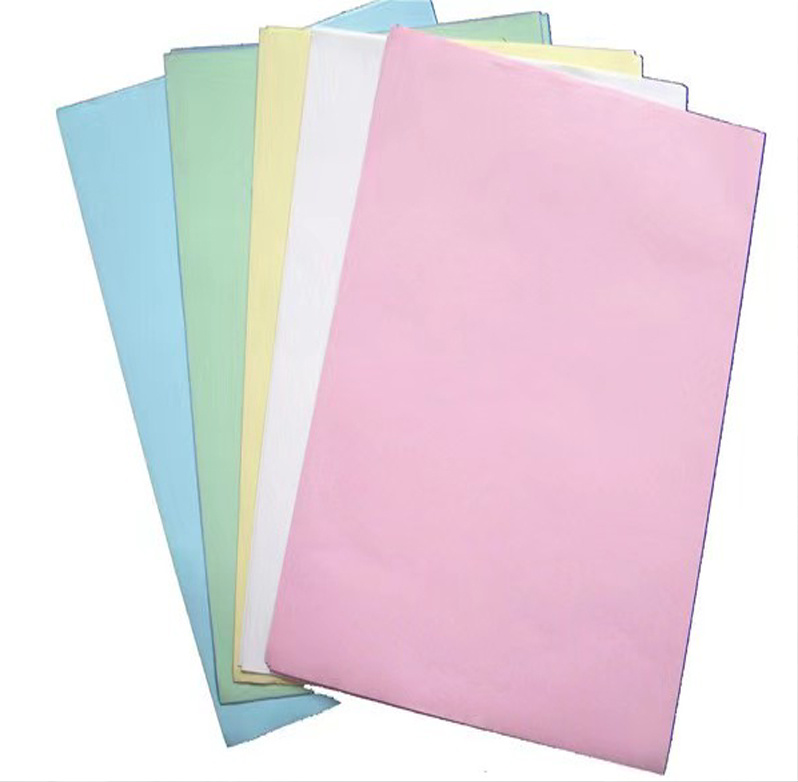
There are approximately five colors of carbonless paper; white, red, blue, green, and yellow—these colors are used to differentiate shipping labels!
Name of carbon-free paper
White: upper white / middle white / lower white
Red: upper red / middle red / lower red
Blue: Upper Blue/Medium Blue/Bottom Blue
Green: Upper Green/Medium Green/Lower Green
Yellow: upper yellow / middle yellow / lower yellow
It is precisely because of such diverse types of paper that carbon-free paper can achieve the effect of multiple copies. The maximum number of copies in the finished products made from carbon-free paper that I have seen so far is 7: top white, middle red, middle blue, middle green, middle yellow, middle red, bottom white. As long as there is sufficient force, each copy can be copied!