Search history
Clear allSearch by image
XDrag and drop an image here or upload an image
Max 5MB per image
UploadSign In | Join

Search history
Clear allSearch by image
XDrag and drop an image here or upload an image
Max 5MB per image
UploadSign In | Join
|
1.5mm aluminum foil self-adhesive surface
1.5mm铝箔面自粘 |
CN¥ 15.47 |
|
3mm enterprise standard
3mm 企标 |
CN¥ 14.28 |
|
3mm national standard
3mm 国标 |
CN¥ 17.85 |
|
4mm enterprise standard
4mm 企标 |
CN¥ 16.66 |
|
4mm national standard
4mm 国标 |
CN¥ 21.42 |
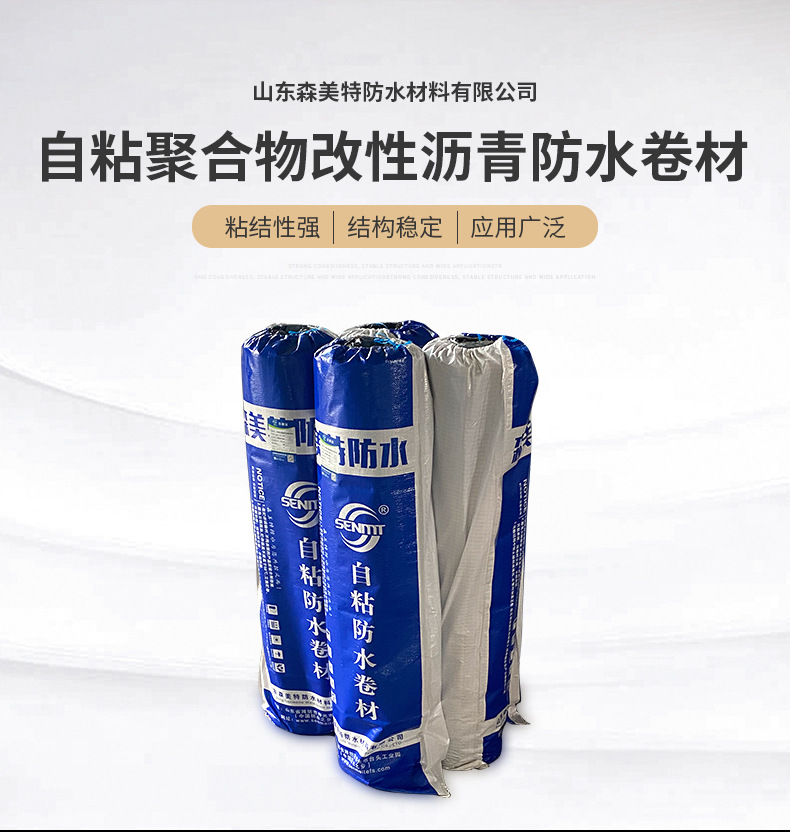
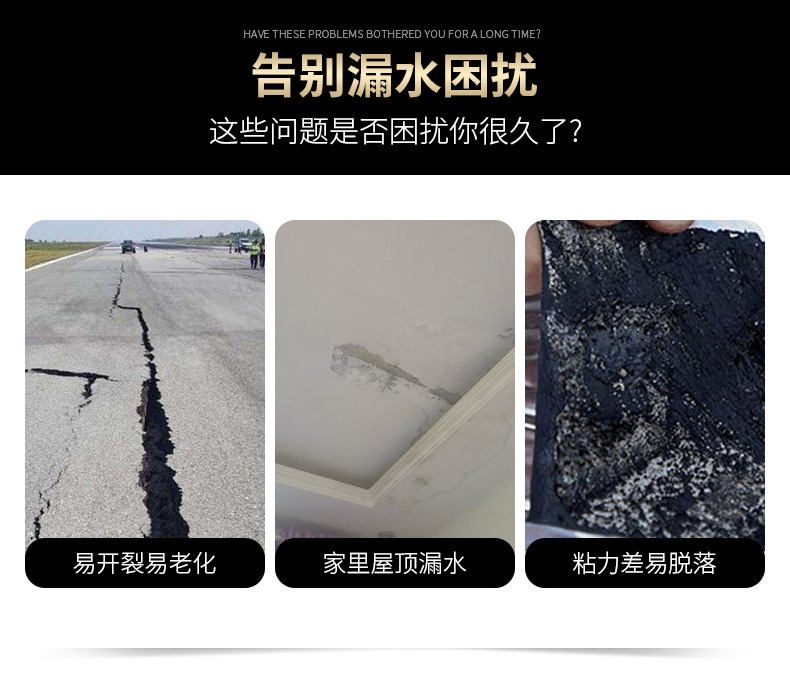
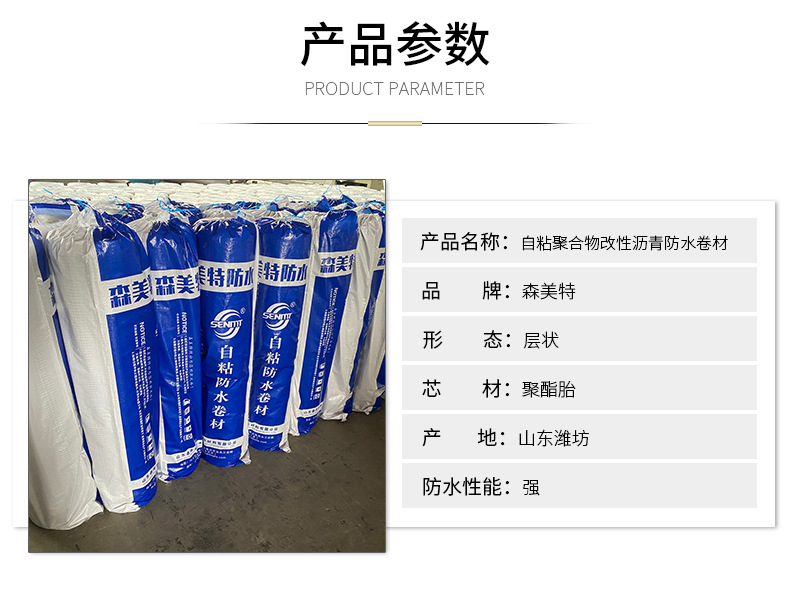
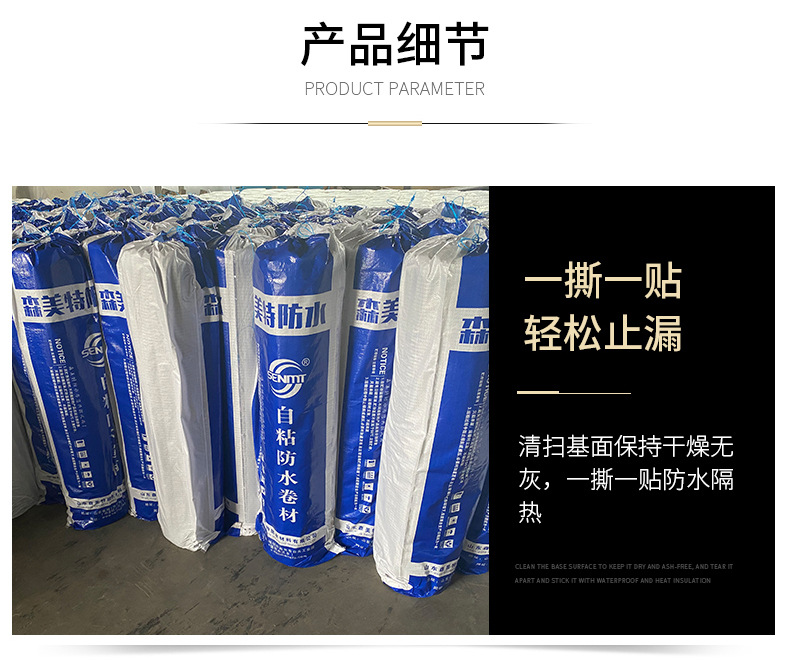

Product Features
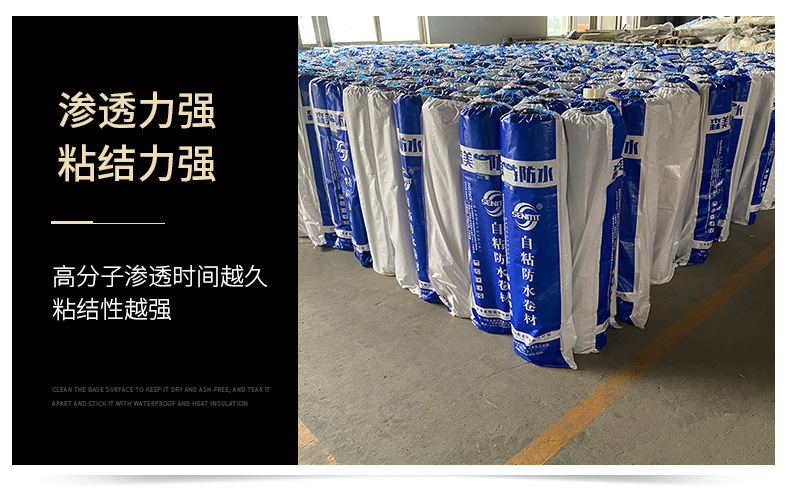
●Cold construction: no open flame, no adhesives●Good low-temperature performance;
● Good adhesion properties; excellent bonding with the base layer, preventing water leakage. It has a self-healing function, and the joint adhesion can last for the same lifespan as the membrane material.
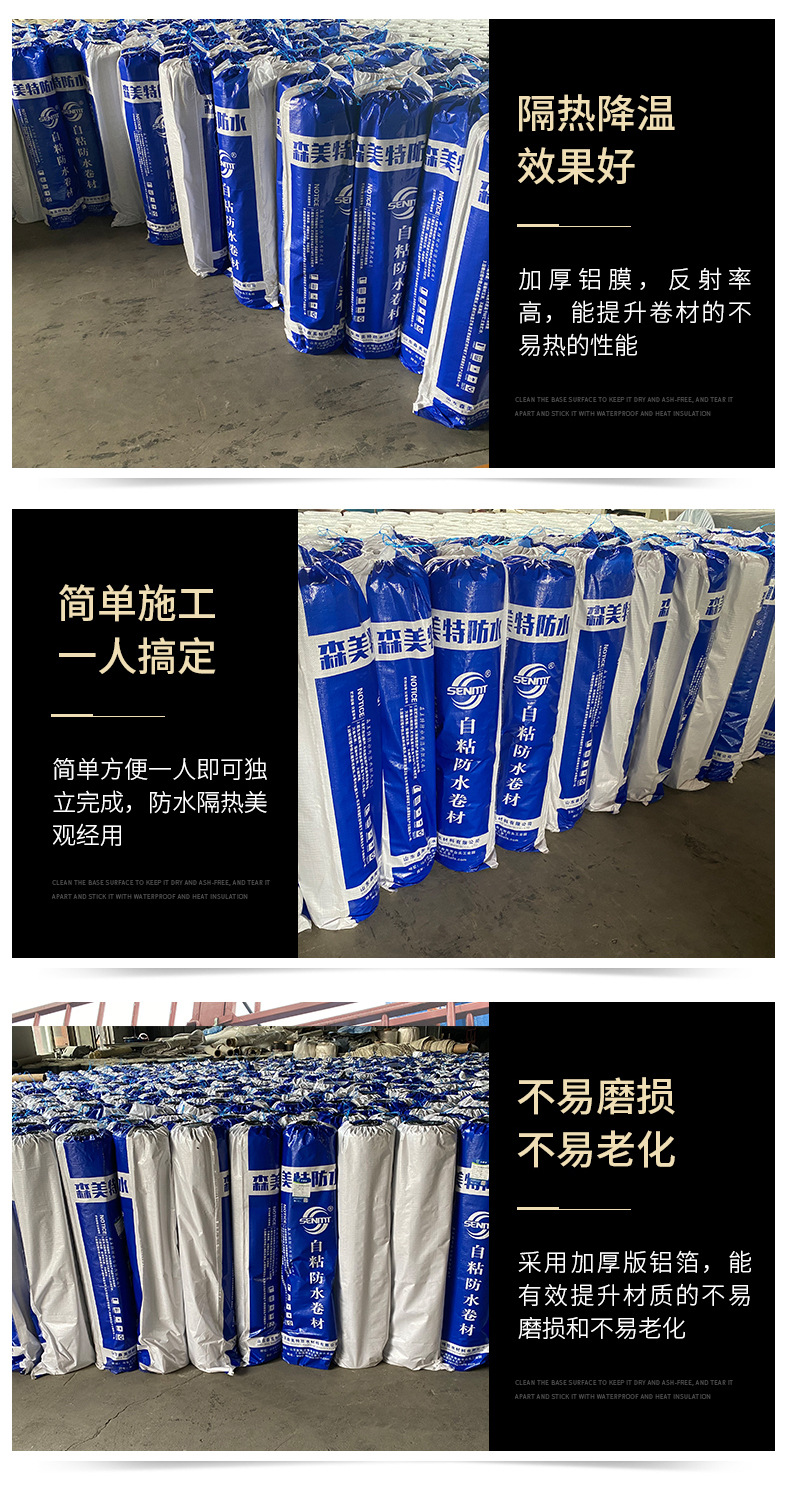
● High tensile strength, high elongation rate, puncture resistance, and excellent corrosion resistance; ● Wide-width sheet materials result in less construction loss and are easier to install.
Scope of Application
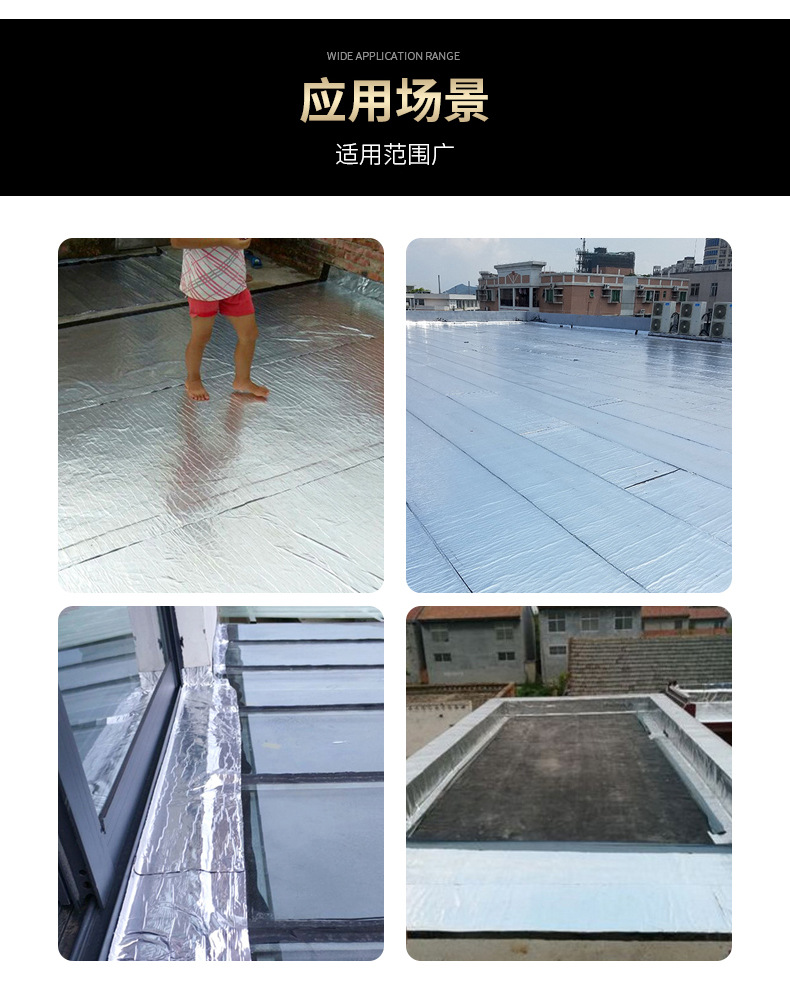
● Exposed roofs, waterproofing for underground projects; ● Water channels, swimming pools, and other related waterproofing;
● Waterproofing for subway projects using the open-cut method;
●Suitable for waterproof projects where open fire is not available.
● Its low-temperature performance is more suitable for use in cold regions.
Cold Adhesion Method Construction
●Process Flow:
Base layer cleaning → Application of base treatment agent → Detailed additional layer → Self-adhesive membrane laying on large surface → Ventilation and compaction (rolled with steel roller) → Overlap construction → Protective isolation layer installation
● Grassroots Cleanup
The base layer should facilitate the application and bonding of rolls, requiring compacting, flatness, a smooth surface, cleanliness, dryness, and absence of dust or oil stains. During cold bonding construction, the moisture content should not exceed 9%.
Application of primer: If the substrate is clean and free from dust, no primer may be required. No primer is also needed for wooden or iron roofs.
Construction of additional waterproof layer at detailed nodes: After the base treatment agent dries, treat the areas requiring an additional waterproof layer according to relevant standards or design requirements. For detailed areas where membrane sheets are difficult to apply, use a torch for assistance. In general areas, the additional membrane should be fully adhered to the base; in areas with high stress concentration, it should be laid loosely as per standards.
● Large-area self-adhesive membrane application
1. First, align the self-adhesive roll with the reference line and spread it fully. Then, lift one half of the roll (including the isolation paper) and fold it along the central line of the roll. Use a paper cutter to gently cut the isolation paper on the back of the roll, carefully tear off a section (about 500 mm), and align this section with the reference line for application and positioning. Next, spread the lifted half of the roll again in place. Hold the isolated paper removed and pull it backward with even force to slowly remove the isolation paper from the half roll, then apply and press the roll firmly. Repeat the process for the other half of the roll. During pulling and application, always ensure the integrity of the isolation paper; if any tearing or breaking is observed, stop immediately. Clean up any shortened remaining isolation paper before continuing with the work.
2. After applying the roll material, use a pressing roller to roll it from the middle toward both sides at any time to expel air, ensuring the roll is firmly attached to the base layer. Workers should avoid contaminating the surface of the already applied roll material to prevent affecting the jointing of the rolls.
3. The width of the roll overlap (both the long and short edges) must be no less than 100 mm. At the overlap area of the rolls, manual small pressure mixing is used to roll from the inside out to expel air, followed by sealing with a special sealing material; the sealing width must be no less than 10 mm.
4. The end of the roll material should be cut neatly, inserted into the designated groove, and sealed tightly with sealing material. During vertical construction, it must be secured with steel nails and sealed with specialized sealing material.
● Protective layer construction: After the waterproof layer is completed and passes inspection, a protective layer is applied using cement mortar or fine aggregate concrete.
"Moist Lamination" Self-Adhesive Membrane Construction Technique
(Suitable for concrete substrates with a moisture content greater than 9% in basement slabs, side walls, and roofs)
Process flow: Base surface cleaning and moistening → positioning and wire bonding → applying cement (sand) paste → adding a reinforcement layer at nodes → spreading self-adhesive membranes over the large area → paste lifting and air removal → lap bonding → application of protective layer
1. Base cleaning and moistening: Remove dust and debris from the base surface. The dry base should be pre-wet with water, but no residual water accumulation is allowed.
2. Plastering cement (sand) paste: Determine the thickness based on the levelness of the base layer. Pay attention to compaction and smoothing. At the corners, apply a curve of at least 50 mm in diameter, and ensure flatness throughout the entire application process.
3. Node additional layer enhancement: An additional layer should be applied at the nodes (such as corner joints, transitions, construction joints, post-cast strips, deformation joints, wall pipes, etc.).
4. Large-area self-adhesive membrane application: Remove the isolation film from the surface of the self-adhesive membrane, then apply it onto the base layer that has been coated with cement (sand) mortar; after the first membrane is applied, apply more cement (sand) mortar, then apply the second membrane, and so on.
5. Lifting the slurry and expelling air: Use a wooden trowel or rubber board to pat the surface of the concrete, lift the slurry, and remove the accumulated air from the lower surface of the self-adhesive concrete, ensuring a tight bond between the concrete and the cement mortar.
6. Overlap bonding: Based on the actual site conditions, either overlap bonding can be performed during the laying of the membranes, or overlap bonding can be done after the cement (sand) paste reaches sufficient strength; for adhesive bonding, remove the lower and upper separation films at the overlap area, then attach the upper membrane flatly onto the lower one, with the overlap width being no less than 100 mm.
7. Protective layer construction: After the waterproof layer is completed and passes inspection, a protective layer is applied using cement mortar or fine aggregate concrete.
Update time:


TOP