Search history
Clear allSearch by image
XDrag and drop an image here or upload an image
Max 5MB per image
UploadSign In | Join

Search history
Clear allSearch by image
XDrag and drop an image here or upload an image
Max 5MB per image
UploadSign In | Join
|
300 grams, enterprise standard
300克 企标 |
CN¥ 1.9 |
|
300 grams, national standard
300克 国标 |
CN¥ 3.21 |
|
400 grams, enterprise standard
400克 企标 |
CN¥ 2.38 |
|
400 grams, national standard
400克 国标 |
CN¥ 4.05 |
|
polyester 0.6mm enterprise standard
涤纶0.6mm企标 |
CN¥ 2.86 |
|
polyester 0.8mm national standard
涤纶0.8mm国标 |
CN¥ 6.19 |
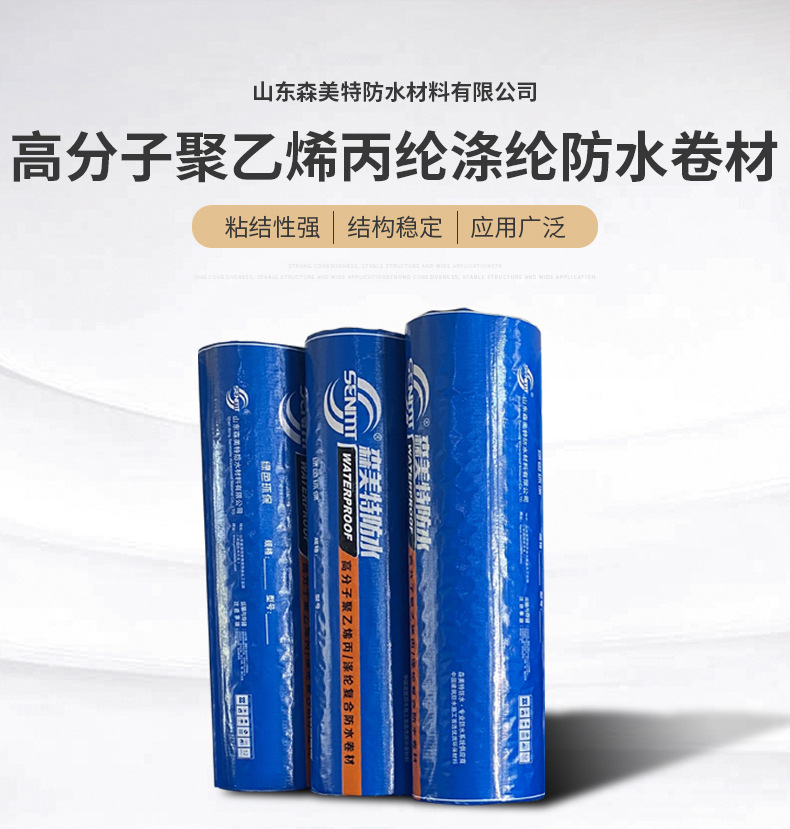
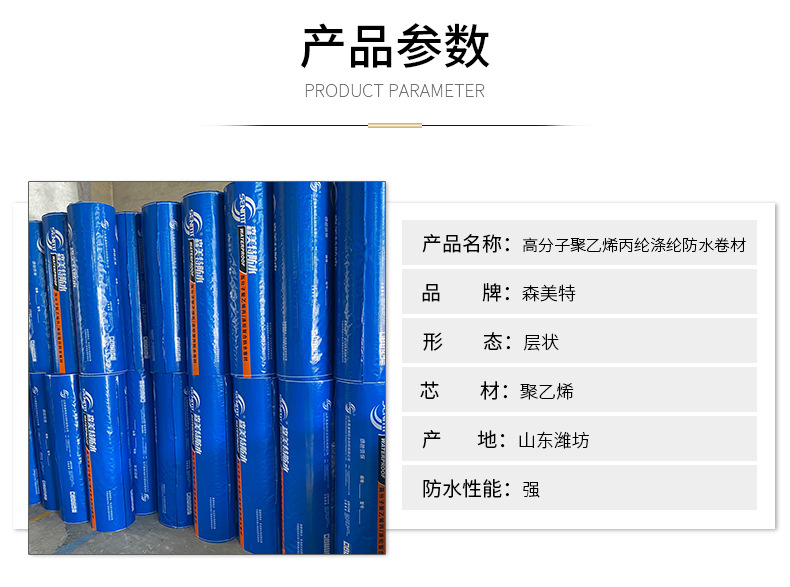
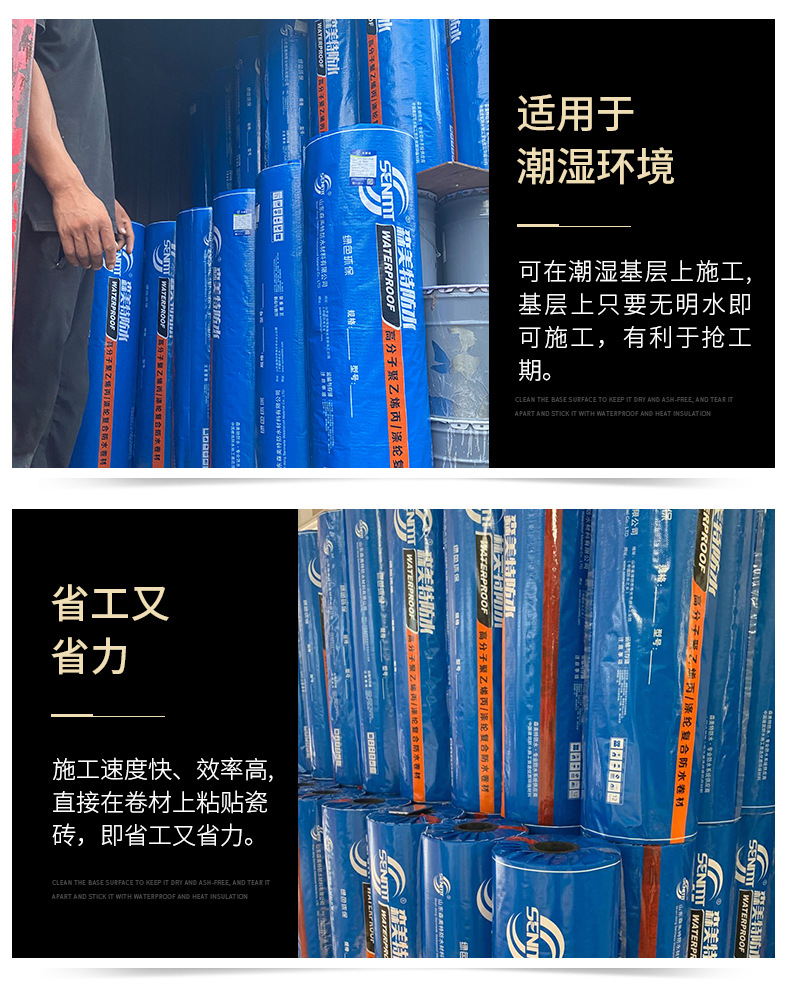
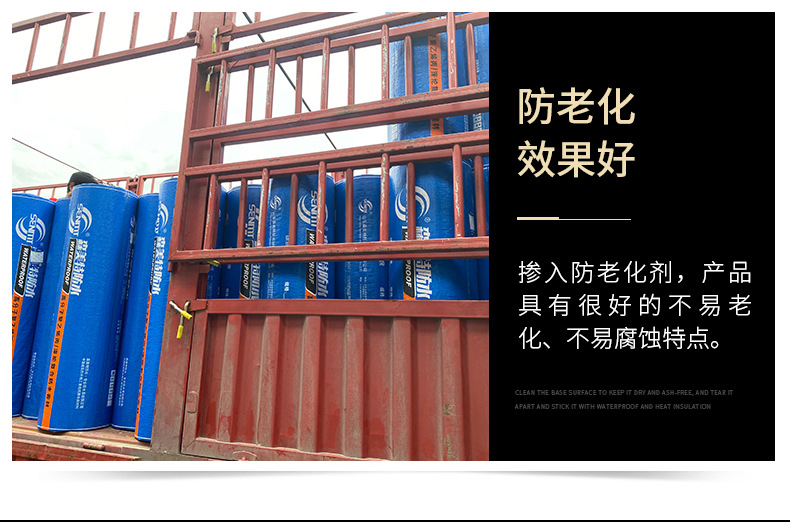

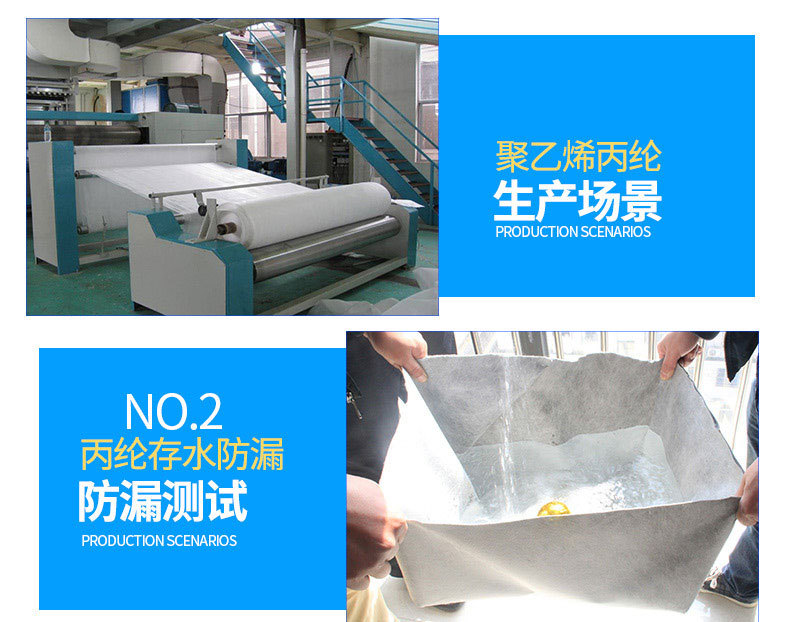
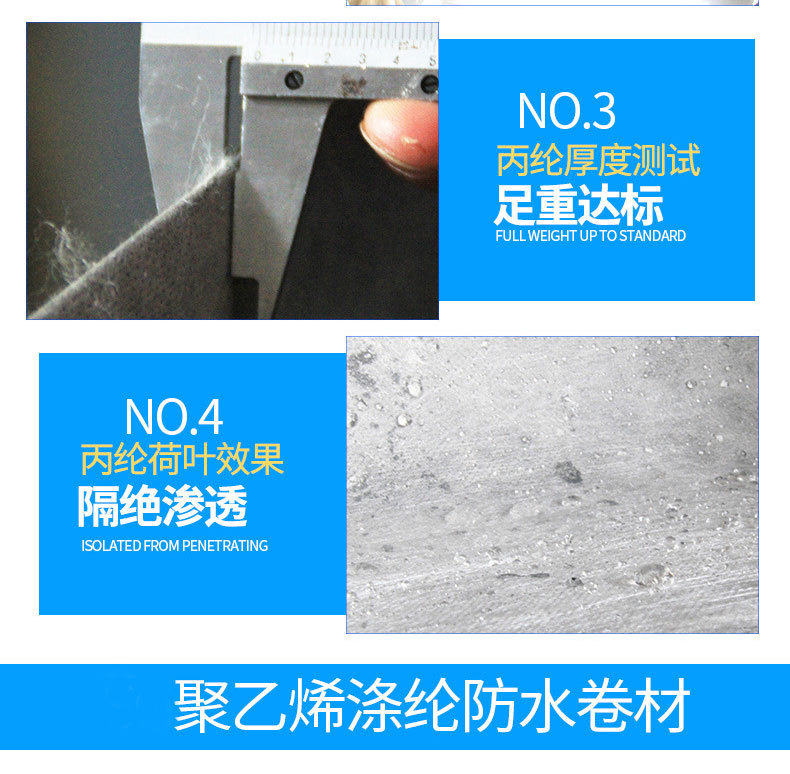
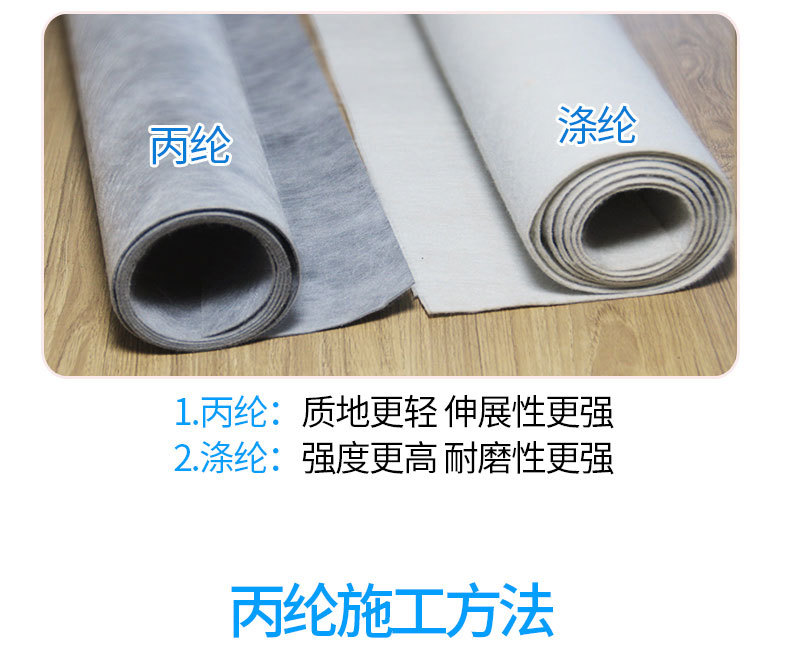
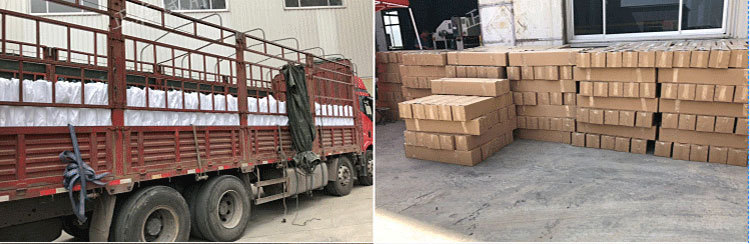
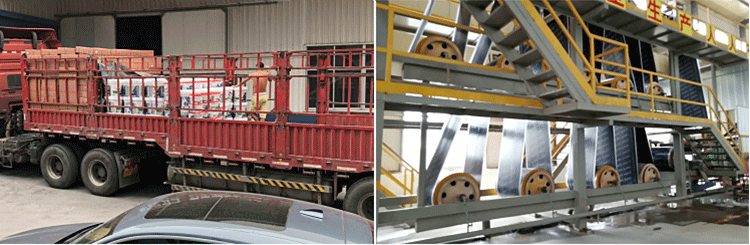
According to national standards, each roll of polypropylene has an error of approximately 1 kilogram; for the exact weight per batch, please consult the seller.
Construction procedure: Inspection and leveling layer, cleaning of base layer, preparation of cement adhesive, additional layer, base layer construction, protective layer, curing
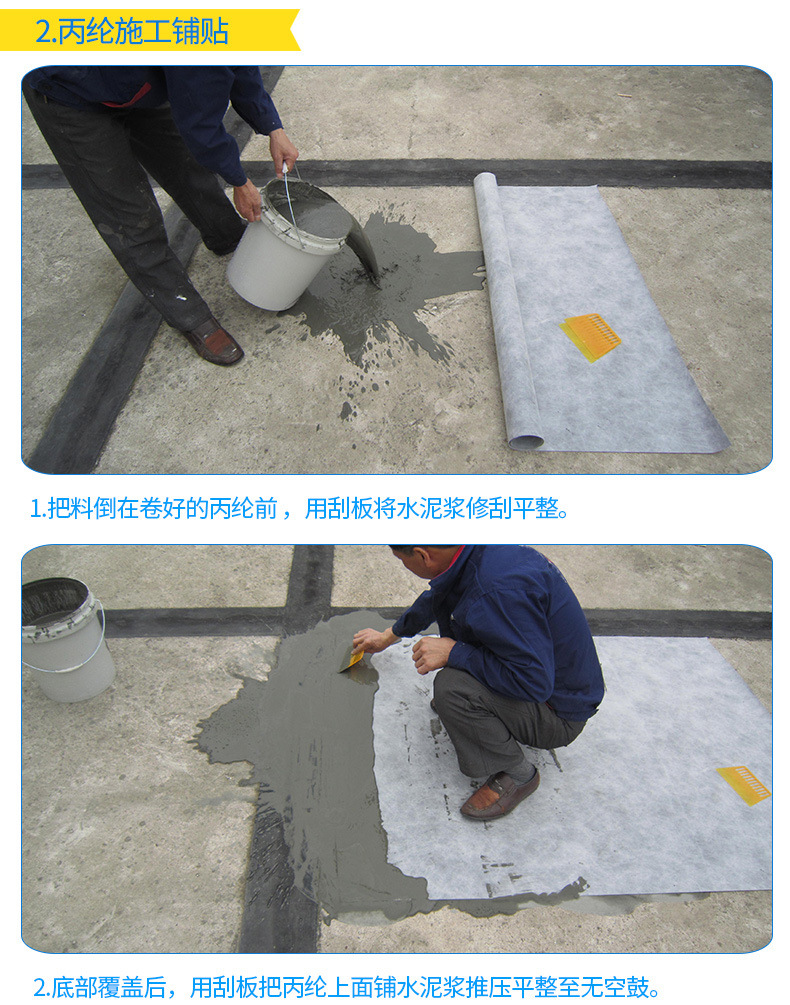
●Before bonding, first pre-roll the membrane, align it, then fold both ends over each other and roll up the membrane. Pour the prepared cement adhesive onto the base layer, use a scraper to spread it evenly, push the membrane forward for application, and promptly remove any air trapped inside the membrane with the scraper to eliminate excess adhesive. The bonding rate between the membrane and the leveling layer must be ≥85%.
●Seam construction:
(1) Roof waterproof joint construction: The vapor barrier, waterproof layer, and additional layer all use lap joints, bonded with cement adhesive, with a width of 10 cm. The joints between the additional layer and the waterproof layer are spaced more than 5 cm apart.
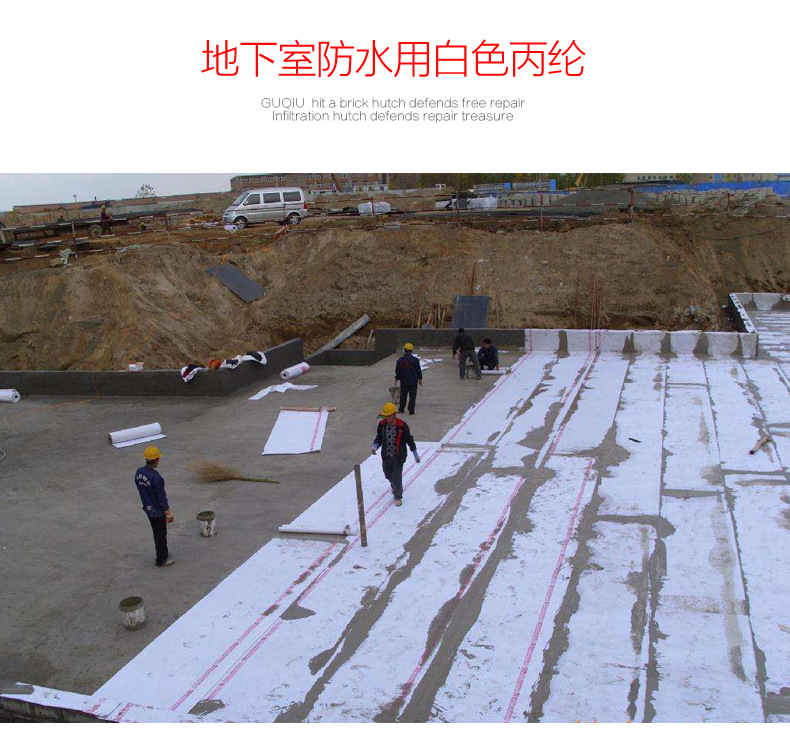
(2) Basement waterproof joint construction: A lap cover strip joint method with a thickness of 10–15 cm is used, and the cover strips are bonded using high-performance joint adhesive.
(3) The lap width of the waterproof membrane is 8–10 cm for the long side and 10–15 cm for the short side. The joints at adjacent short sides should be spaced by more than 100 cm, and the angle between the wall and the ground should have a gap of more than 30 cm.
● Protective Layer:
After the membrane is applied and bonded, a 2 cm thick 1:2.5 cement mortar protective layer must be applied over the waterproof layer. It should be applied in two layers, with the joints between the two layers must be spaced more than 20 cm apart. The protective layer must be smooth, and it should be cured by watering.
Adaptation range
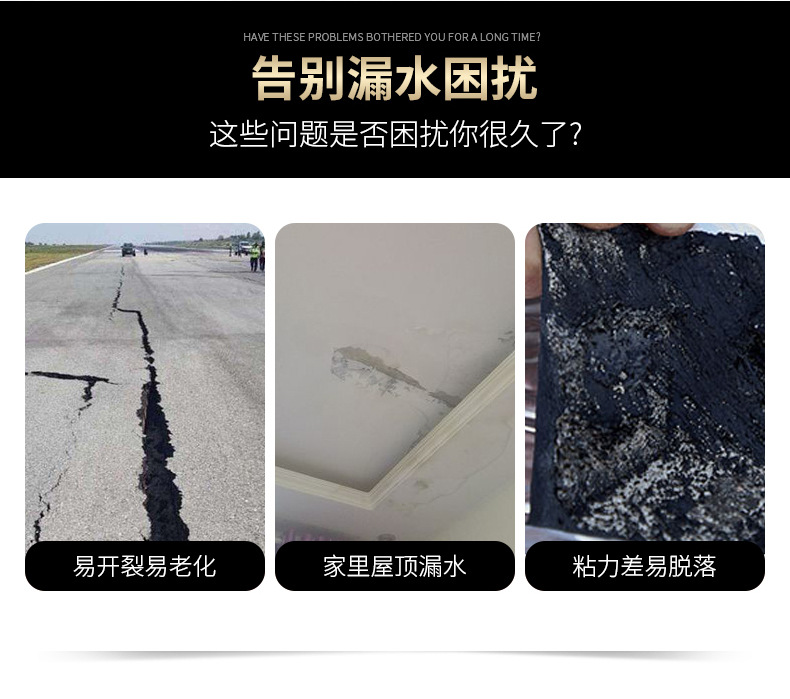
● Building Applications I: Roof Waterproofing: Special attention must be paid to the bonding area and bonding strength between the membrane and the leveling layer—these are key technologies for ensuring waterproof performance and long-term durability. Underground Waterproofing: The membrane should be designed for use under water pressure with a backing to prevent peeling. In non-backing conditions, the peeling strength of the membrane must be evaluated. Indoor Leakage Prevention: When applied to interior walls or floor waterproofing, after the membrane is attached, the bonding layer must harden before surface decoration begins. Before applying the interior wall decoration layer, a layer of cement paste containing 1.5% polyethylene polypropylene composite waterproof membrane-specific adhesive powder should be applied to the membrane. Floor Moisture Control: For floor moisture control, attention should be paid to the thickness of the floor surface layer to ensure stability. The vertical height of the membrane at the wall base should be no less than 200mm. Thermal Insulation and Gas Barrier: For thermal insulation and gas barrier applications, single-sided composite membranes can be used. Their attachment and laying are similar to those for roof waterproofing, and joints are sealed using double-sided composite membrane pads without a protective layer.
● Building applications: two-channel and reservoir anti-seepage; earth-rock dam anti-seepage
●Other applications can be used in; metal processing, chemical industry pollution prevention, seepage protection, pipeline waterproofing, mine waterproofing, road and bridge waterproofing, tunnels, and more.
Key Points of Design and Construction
(1) Roof waterproofing
Polymer waterproof rolls can be used in roof waterproofing projects in various configurations. When applying them for roof waterproofing, special attention must be paid to the bonding strength and bonding area between the roll and the leveling layer. These factors are crucial for ensuring a good waterproofing effect and long service life. There should be no visible voids in the bonding of polymer waterproof rolls, and the bonding area should be at least 85%.
(II) Underground waterproofing
Polymer waterproof rolls for underground waterproofing projects should generally be placed on the side exposed to water pressure. The basic structures are divided into external and internal types. During construction, it is necessary to prevent damage to the polymer waterproof rolls caused by welding or machinery.
(t_III) Leakage and Moisture Protection
When using polymer waterproof rolls for indoor anti-seepage and moisture protection, it is necessary to ensure that the bonding adhesive has fully cured before proceeding with surface finishing work. This applies especially when used for anti-seepage in bathrooms, kitchens, etc. The joints of polymer waterproof rolls are bonded using polyurethane adhesive.
(t_IV) Decoration Methods
When applying decorative materials to the surface of polymer waterproof rolls, it is necessary to wait until the bonding adhesive has fully cured before applying the surface layer material, in order to prevent the roll from peeling off. Before applying the surface layer material, cement adhesive should be applied on the roll. Wait until it is fully cured before attaching the surface layer.
(t_5) Selection of bonding adhesive
The polymer waterproof rolls are made using cement-specific matching adhesive, 805 adhesive (polyvinyl alcohol formaldehyde solution), or off-white adhesive (polyvinyl acetate emulsion) to form cement adhesive (abbreviated as cement adhesive), which is then applied completely over the substrate.
(t_6) Seamming Method
Width of lap joint for polymer waterproof rolls: 100 mm for long edges, 120 mm for short edges. The covering strip method is used, with a width of 100 mm. For underground waterproof joints, the lap joint method can be adopted, using polyurethane adhesive; or a lap joint with a covering strip method can be used, where cement adhesive is applied for the lap joint and followed by polyurethane adhesive for the covering strip. For roof vapor barrier joints, double-sided polymer waterproof rolls serve as padding, joined using cement adhesive. Joints in composite rolls can also be made using thermal fusion method.
Construction Method
(1) Construction Preparation
One construction team of 7 people: 1 person for cleaning the base layer, 3 people for preparing and transporting adhesive, 2 people for laying the membranes, and 1 person for handling complex areas.
(II) Construction Operation Procedures
Acceptance of the base layer (leveling layer): one cleaning of the base layer (leveling layer), one preparation of bonding adhesive, treatment of complex areas, application of high-performance waterproof membranes, inspection of the construction quality of the high-performance waterproof membranes, application of the protective layer, and final acceptance.
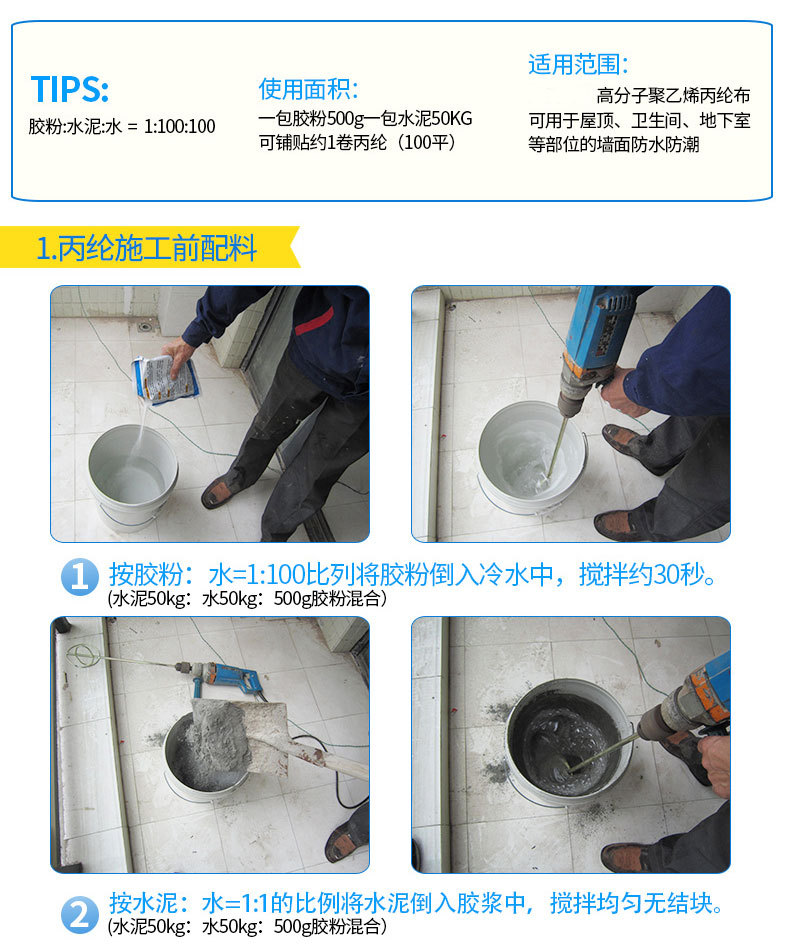
(t_III) Prepare the bonding adhesive as required
(t_IV) Construction of polymer waterproof membranes
Before the construction of polymer waterproof rolls, the leveling layer must be inspected and approved; then, the waterproof layer can be constructed when the moisture content is between 30% and 50%.
1. Treatment of complex areas
Before the waterproof layer construction, additional layers should be applied to complex areas as required by the drawings (roof protrusions, rainwater inlets, eaves gutters: underground waterproof corners, exposed corners, wall-penetrating pipes, etc.). The additional layers in complex areas are bonded using polymer waterproof membranes, cement adhesive, or polyurethane adhesive.
2. Laying of polymer waterproof membranes
During the application of polymer waterproof rolls, first place the polymer waterproof rolls 3 to 12 meters away from the application area (2–3 meters for underground projects) and align them correctly. Then fix them in the middle, roll one end of the roll to the fixed position for bonding, and after that end is bonded, roll the remaining end back to the already bonded position. Continue applying continuously until the entire roll is completed.
Application method: Apply the cement adhesive with a brush to the base layer (leveling layer) and the corresponding surface of the membrane at a thickness of approximately 1.0 mm, then attach the membrane. Simultaneously, use a scraper on the upper surface of the membrane to vent and compact the bonding interface, removing any excess adhesive.
The application of vertical polymer waterproof rolls must be done vertically, aligned from top to bottom, and compressed by allowing air to escape from below. It is required that the base layer and the rolls be coated with adhesive simultaneously, with a thickness of approximately 1.0 mm.
3. Seam construction
The adhesive application area at the joint must have a clean and dry substrate. When using cement adhesive for roof waterproofing joints, the joint and the membrane can be applied simultaneously; both bonding surfaces are coated with adhesive at the same time, with the joint fully bonded. The thickness of the adhesive layer is 1.0–1.6 mm. After the joint is compacted, an additional layer of cement adhesive is applied along the edge of the joint, with a thickness of 0.8–1.0 mm. The application width extends 30 mm towards both sides from the joint edge. No exposure of the underlying surface, wrinkles, warping, or voids are allowed at the joint. When using polyurethane adhesive for joints, it should be applied after the adhesive has cured. The specific procedure is: lift the upper membrane, apply the adhesive onto the lower membrane. The application must be continuous and uniform, with a thickness of approximately 1.0 mm. After application, compress and bond the joint. Care must be taken to prevent separation between the polymer waterproof membrane and the substrate.
When joining with waterproof cover strips underground, after the cement adhesive is compacted at the joint, there is no need to apply more cement adhesive at the joint edge. The excess cement adhesive does not require treatment; instead, once the cement adhesive has cured, remove the cement from the joint surface, and then apply polyurethane adhesive simultaneously at both the joint and the cover strip to attach it.
4. Construction of the roof vapor barrier
Before the vapor barrier layer installation, the requirements for the base layer and construction environment are different from those before the waterproof layer installation. The treatment of complex areas is the same as that for the complex areas of the roof waterproof layer. (5) Installation of the protective layer
When the polymer waterproof membranes are exposed, a protective layer must be applied to prevent accidental damage and UV exposure, thereby extending their service life. The primary method of protection is using cement materials: for accessible roofs and permanent structures, apply a 20 mm thick 1:5 cement mortar; for non-accessible roofs and non-permanent structures, apply two coats of cement adhesive approximately 1.0 mm thick.
Before the protective layer construction, the waterproof layer must have passed the inspection; the surface of the waterproof layer should be cleaned thoroughly; the rolls for the construction materials should be properly protected during transportation; construction workers must wear soft-soled shoes while working.
Other considerations
(i) The construction temperature for polymer waterproof rolls should be between 5°C and 25°C. Cement adhesive bonding is prohibited when the ambient temperature is 0°C or below, and polyurethane adhesive bonding cannot be used when the ambient temperature is -5°C or below.
(II) When using polyurethane adhesive, the use of solvents for dilution is prohibited to prevent the rolls from swelling and deforming.
(III) The bonding area for roof waterproofing polymer waterproof membranes must be over 85%, and for underground waterproofing, it must be over 90%; the bonding layer must be continuous.
(t_IV) Use polyurethane adhesive lap joints; when laying polymer waterproof membranes, do not apply cement adhesive at the lap areas to avoid affecting the bonding of the joints.
(t_5) After laying the polymer waterproof rolls, no hard particles or impurities should be present at the bottom of the rolls, to prevent damage to the composite material.
(t_6) After applying the cement adhesive, the polymer waterproof membrane should be attached immediately to prevent moisture from the adhesive from escaping and affecting the bonding quality.
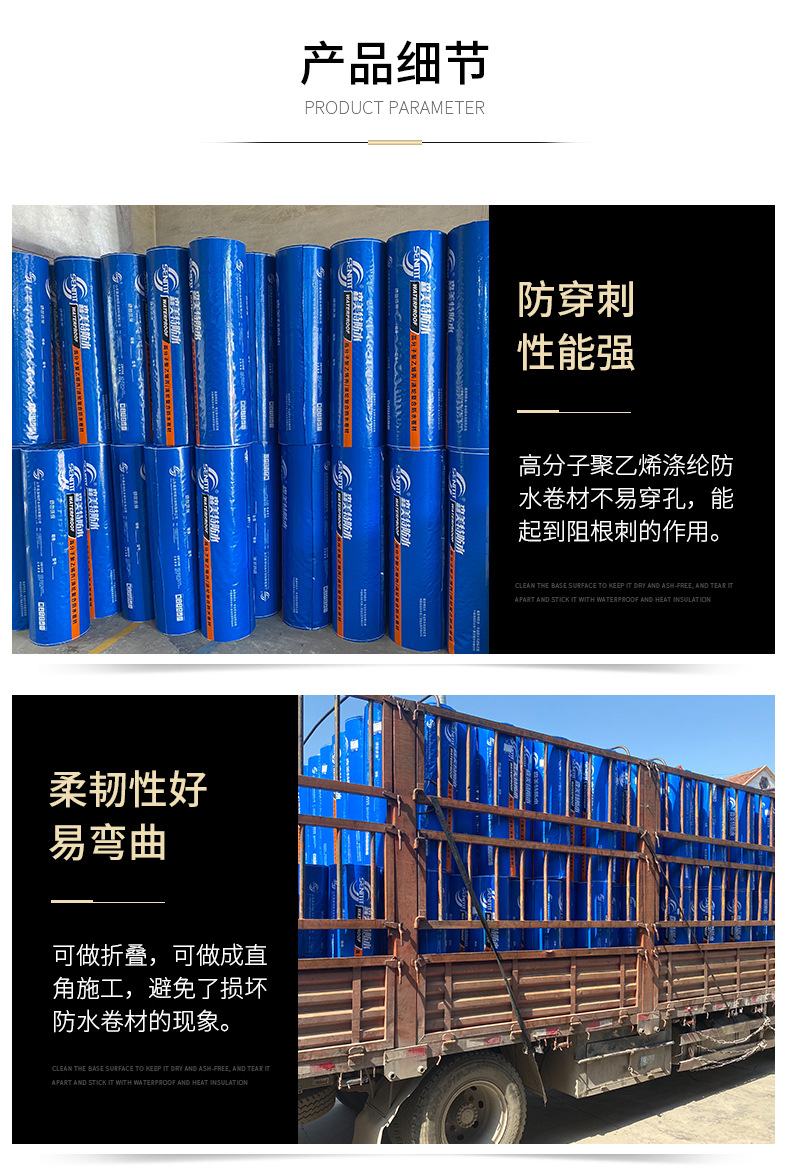
(t_7) Contact with chemical substances such as acid-base mineral oil and petrolatum that affect the properties of polyethylene should be avoided, as well as exposure to temperatures above 80°C to prevent deformation.
Update time:


TOP