Search history
Clear allSearch by image
XDrag and drop an image here or upload an image
Max 5MB per image
UploadSign In | Join

Search history
Clear allSearch by image
XDrag and drop an image here or upload an image
Max 5MB per image
UploadSign In | Join
XIN HONG Materials Co,.Ltd. 12yr.
Contacts Mr LI Chat
Mobile 18066212379
LBSbxg

WhatsApp wechat:LBSbxg
1. Basic Structure of the Electric Heating Tube
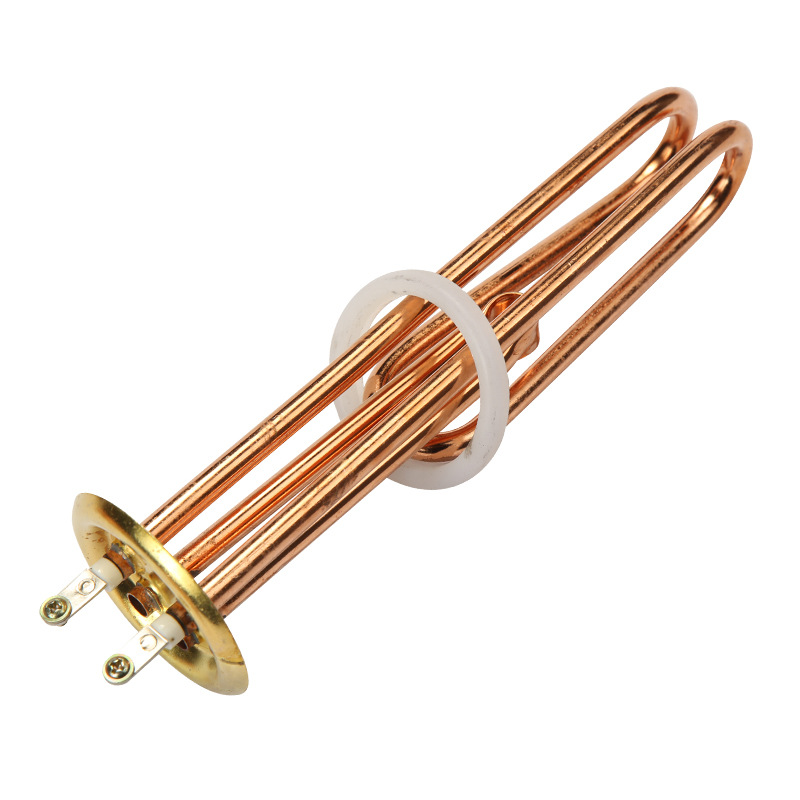
Stainless steel electric heating tubes feature a metal tube outer shell, with spiral electrothermal alloy wires (nickel-chromium, iron-chromium alloys) evenly distributed along the central axis inside the tube. The gaps are filled with compacted magnesium oxide sand, which provides excellent insulation and thermal conductivity. The ends of the tube are sealed with silicone or ceramic. These metal-coated electrothermal components can heat air, metal molds, and various liquids. Depending on the usage conditions, safety requirements, and installation needs, the heating tubes may also include sealing structures, terminal components, flanges, temperature control or fuses, and other structural elements.
2. Performance of the electric heating tube:
Stainless steel electric heating tubes consist of a metal tube containing electric heating elements, with the gaps filled tightly with crystalline magnesium oxide powder that has excellent heat resistance, thermal conductivity, and insulation properties. They are produced through additional processing steps. These tubes feature a simple structure, high mechanical strength, high thermal efficiency, and easy installation. They are widely used in various tanks such as nitrate tanks, water tanks, oil tanks, acid-base tanks, fusible metal melting furnaces, air heating furnaces, drying furnaces, drying chambers, and hot pressing molds.
III. Usage of electric heating tubes:
Stainless steel electric heating tubes are electrical components that convert electrical energy into heat energy. They are easy to use and install, non-polluting, and are used in various heating applications. The service life of stainless steel electric heating tubes is very long; the typical designed service life is over 10,000 hours.
4. Calculation of the resistance of electric heating tubes
Example: 220V1.500W electric heating tube
P = 1500 watts (power) U = 220 volts (voltage) Find: I (current)
I = P/U = 1500/220 ≈ 6.82 amperes
Ohm's Law: Find R (resistance)
R=U/I=220/6.82≈32.27 euros
5. Precautions for using the electric heating tube
1. The components should be stored in a dry environment. If the insulation resistance drops below 1 megohm due to long-term storage, they can be dried in an oven at around 200°C for several hours (or subjected to low-voltage treatment for several hours), thereby restoring the insulation resistance.
2. If carbon deposits are found on the surface of the tube, they must be completely removed before use, to avoid reducing efficiency or even damaging the components.
3. When melting solid oils such as asphalt and paraffin, reduce the voltage; once melted, increase to the rated voltage to prevent power concentration that may shorten the component’s service life.
Update time:


TOP