Search history
Clear allSearch by image
XDrag and drop an image here or upload an image
Max 5MB per image
UploadSign In | Join

Search history
Clear allSearch by image
XDrag and drop an image here or upload an image
Max 5MB per image
UploadSign In | Join
XIN HONG Materials Co,.Ltd. 12yr.
Contacts Mr LI Chat
Mobile 18066212379
LBSbxg

WhatsApp wechat:LBSbxg

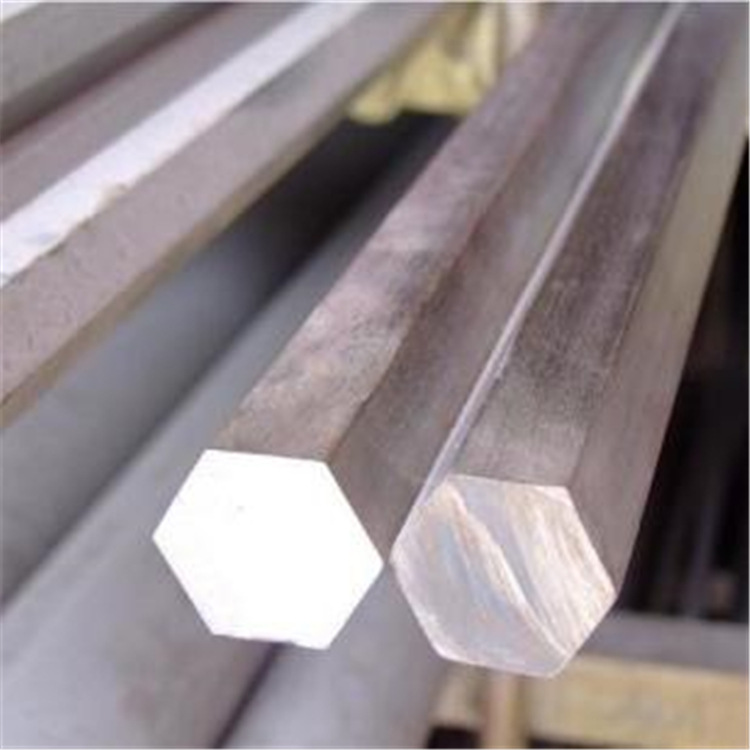
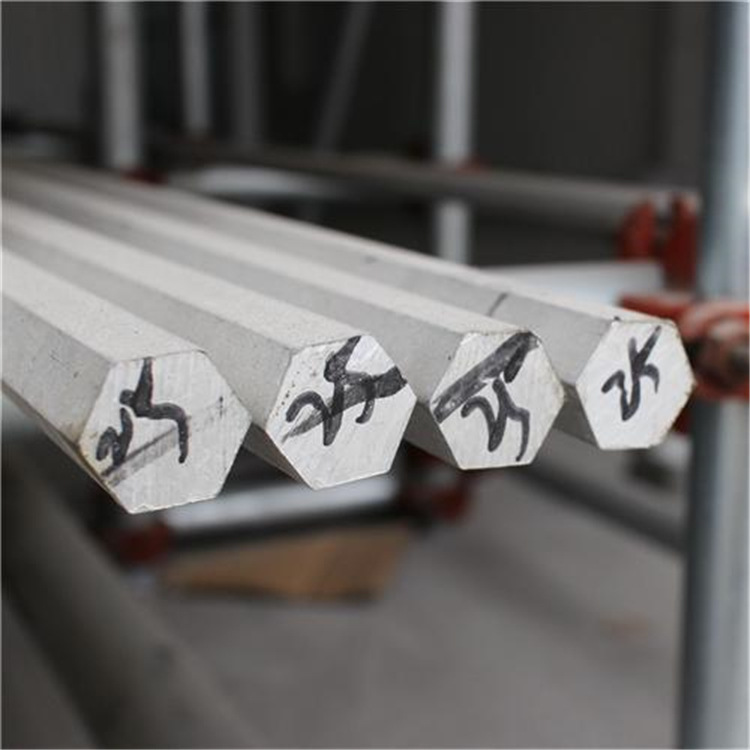
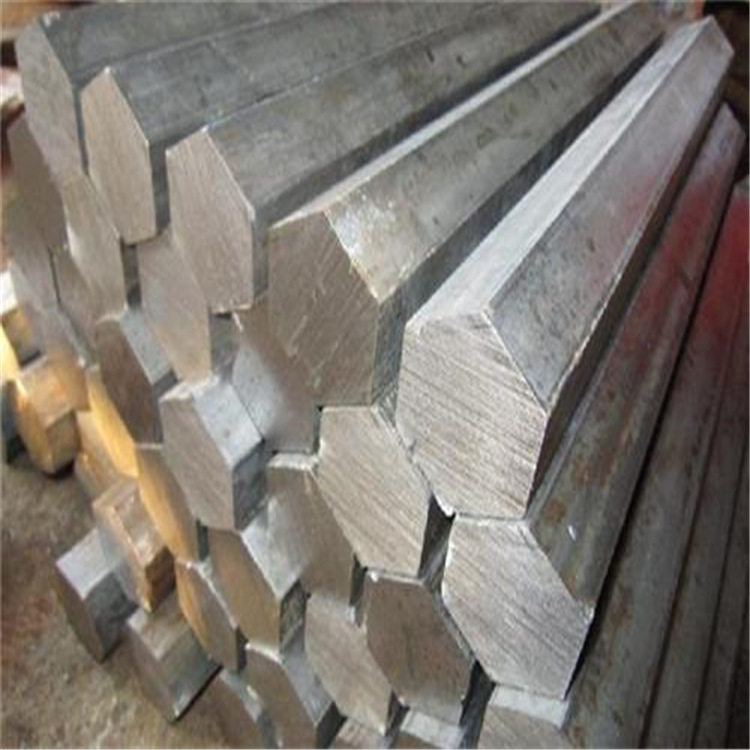
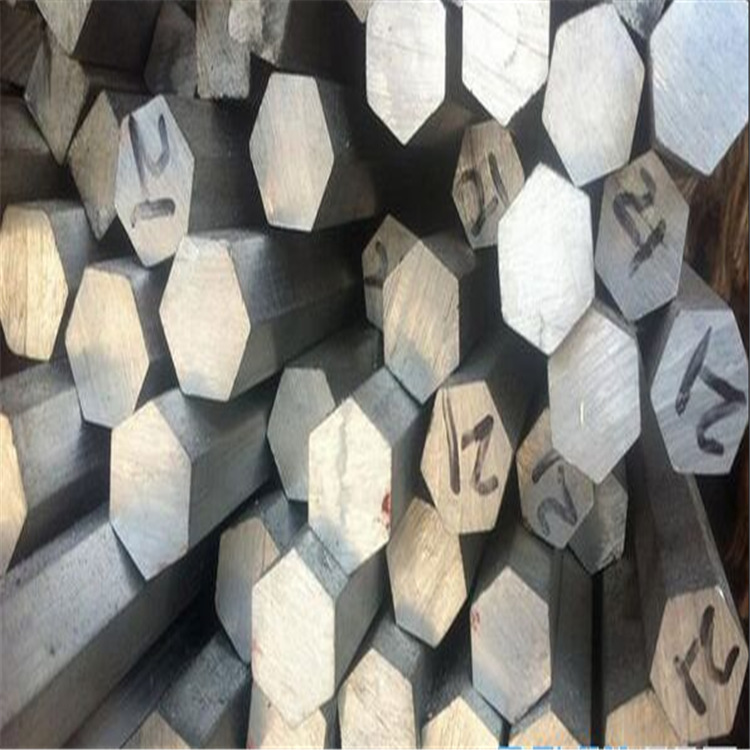
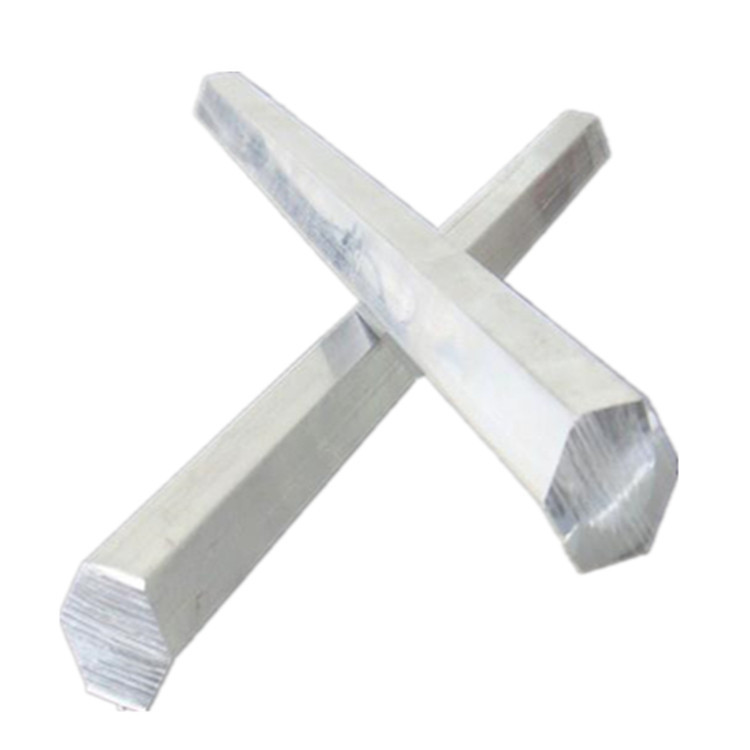
6661-T651 is a major alloy of 6661 aluminum alloy. It is a high-quality aluminum alloy product produced via heat treatment and pre-stretching processes. Although its strength cannot compare with those in the 2XXX or 7XXX series, it possesses many magnesium and silicon alloy properties, including excellent machinability, superior welding characteristics, electroplating ability, good corrosion resistance, high toughness, no deformation after processing, dense and defect-free material, easy polishing, easy coating application, and excellent oxidation performance. Typical applications: 1. Plate and strip applications are widely used in decoration, packaging, construction, transportation, electronics, aerospace, defense, and other industries. 2. Aluminum materials for aerospace use are employed in manufacturing aircraft skins, fuselage frames, beams, rotors, propellers, fuel tanks, wall panels, and landing gear pillars, as well as rocket forging rings and spacecraft wall panels. 3. Aluminum materials for transportation use serve as structural components for cars, subway vehicles, railway coaches, and high-speed passenger trains; also include vehicle doors, windows, shelves, car engine parts, air conditioners, radiators, body panels, wheel hubs, and materials for ships. 4. Aluminum materials for packaging: All-aluminum cans are primarily supplied in thin sheets and foils as metal packaging materials, forming cans, lids, bottles, barrels, and packaging foils. They are widely used for packaging beverages, food, cosmetics, pharmaceuticals, cigarettes, industrial products, etc. 5. Aluminum materials for printing: Mainly used to produce PS plates. Aluminum-based PS plates are a new material in the printing industry, used for automated plate making and printing. 6. Aluminum materials for architectural decoration: Due to their good corrosion resistance, sufficient strength, excellent processability, and welding properties, they are mainly used in building frameworks, doors and windows, ceilings, decorative surfaces, etc. Examples include various architectural doors and windows, curtain walls, aluminum profiles for curtain walls, aluminum curtain wall panels, profiled panels, patterned panels, and colored coated aluminum panels. 7. Aluminum materials for electronic and household appliances: Used in various areas such as busbars, wiring, conductors, electrical components, refrigerators, air conditioners, and cables. Specifications: round bars, square bars. Representative applications include aerospace mounting devices, electrical device mounting, and communication fields.
1. 6061 Aluminum Alloy Elements
The main alloying elements of 6061 aluminum alloy are magnesium and silicon, forming a Mg2Si phase. If a certain amount of manganese and chromium are present, they can counteract the negative effects of iron; occasionally, small amounts of copper or zinc are also added to enhance the alloy’s strength without significantly reducing its corrosion resistance. There is also a small amount of copper in the conductive material to offset the adverse effects of titanium and iron on electrical conductivity. Zirconium or titanium helps refine the grains and control recrystallization structure. To improve machinability, lead and bismuth can be added. The Mg2Si phase dissolves in aluminum, giving the alloy the ability to undergo artificial aging hardening. The main alloying elements in 6061 aluminum alloy are magnesium and silicon, offering moderate strength, good corrosion resistance, weldability, and favorable oxidation properties.
2. Characteristics of Magnesium Alumina 6061
Magnesium-aluminum 6061-T6 51 is a major alloy of the 6 series, and it is a high-quality aluminum alloy product produced through heat treatment and pre-stretching processes; Magnesium-aluminum 6061 features excellent machinability, good corrosion resistance, high toughness, no deformation after processing, easy coloring, and excellent oxidation properties.
Primary applications: Widely used in various industrial structural components that require high strength and corrosion resistance, such as in the production of trucks, tower buildings, ships, trams, and railway vehicles.
III. Typical applications include aerospace mounting devices, electrical device mounting systems, and communication fields. It is also widely used in automated machinery components, precision machining, mold manufacturing, electronics and precision instruments, SMT, PC board soldering fixtures, and more.
Aluminum alloy basic state code:
F Free Processing State: Suitable for products that require special processing hardening and heat treatment conditions during molding; mechanical properties of these products are not specified (uncommon)
O Annealing status applies to processed products that achieve the lowest strength after full annealing (occasionally).
H Work hardening state is applicable to products whose strength is enhanced through work hardening. After work hardening, the product may or may not undergo additional heat treatment that reduces strength (typically for non-heat treatment strengthened materials).
W Solid solution heat treatment state – an unstable condition, applicable only to alloys that have undergone solid solution heat treatment and undergo natural aging at room temperature. This state code merely indicates that the product is in the natural aging phase (not common).
T Heat treatment condition (different from F, O, H conditions) applies to products that have undergone heat treatment and have reached stability either through or without processing hardening. After the T code, one or more Arabic digits must be included (typically for heat-treated strengthened materials). The condition codes for common non-heat treated strengthened aluminum alloys usually consist of the letter H followed by two digits.
As per 1100 H14. Below is a brief introduction to the meaning of these status codes.
Generally, two digits follow the letter H: the first digit indicates the hardening treatment method. The first digit after H can be: 1, 2, 3, 4
i.e., H1* H1* indicates a simple work hardening treatment
H2* H2* indicates work hardening and incomplete annealing
H3* H3* indicates work hardening and stabilization treatment
H4* H4* indicates work hardening and painting treatment
The second digit indicates the degree of hardening achieved by the material.
The second digit after H is: 1, 2, 3, 4, 5, 6, 7, 8, 9
Hardness between H*1 0 and 2
H*2 1/4 hard
Hardness between H*3 2 and 4
H*4 1/2 hard; hardness between H*5 4 and 6
H*6 3/4 hardness; H*7 hardness between 6 and 8
H*8 Full hard state H*9 Super hard state
(Matches after H with three numbers are rare; only a few exist. H111 indicates that appropriate work hardening was performed after final annealing. H112 indicates products suitable for thermal processing molding. H116 indicates products made from 5*** alloys with a magnesium content of ≥4.0%.)</t_XXXXXXXX>
The status codes used for commonly encountered heat-treated strengthened aluminum alloys usually consist of the letter T followed by one or more Arabic digits to indicate specific variations. A digit ranging from 0 to 10 is added after T to denote the detailed condition (referred to as TX status). The digits following T indicate the heat treatment process for the product. T0 refers to a state where the alloy undergoes solution treatment, followed by natural aging, and then cold working. This applies to products whose strength is enhanced through cold working.
T1 is cooled through a high-temperature forming process, followed by natural aging to a basically stable state. It is suitable for products that have been cooled after the high-temperature forming process and no further cold processing is performed (straightening and leveling are possible, but do not affect the mechanical property limits).
T2 is cooled during the high-temperature molding process, and undergoes cold processing followed by natural aging to reach a basically stable state. It is suitable for products that require cold processing, or straightening and leveling after cooling from the high-temperature molding process in order to enhance strength.
After solution heat treatment, cold working is performed, followed by natural aging until a basically stable state is achieved. This method is suitable for products that require cold working, straightening, or leveling after solution heat treatment to enhance strength.
T4 after solution treatment, followed by natural aging to a basically stable state. Suitable for products that have undergone solution treatment and no further cold processing (straightening and leveling are possible, but do not affect mechanical property limits), then subjected to natural aging.
T5 is in a state where it is cooled after the high-temperature molding process, followed by artificial aging. It is suitable for products that are cooled after the high-temperature molding process but do not undergo cold processing (straightening or leveling is possible, without affecting mechanical property limits), and then undergo artificial aging.
T6 is a state achieved after solution heat treatment followed by artificial aging. It is suitable for products that have undergone solution heat treatment but no further cold processing (straightening and leveling are possible, but it does not affect the mechanical property limits), followed by artificial aging.
T7 is in a state after artificial aging following solution heat treatment. It is suitable for products that, after solution heat treatment, undergo artificial aging to achieve certain important properties, where the strength crosses the highest peak point on the aging curve.
T8 alloy after solution treatment and heat treatment, subjected to cold working, followed by artificial aging. Suitable for products that have undergone cold working or straightening/leveling to enhance strength.
T9: Solution treatment followed by artificial aging, then cold processing. Suitable for products whose strength is enhanced through cold processing.
T10 is in a state where it is cooled after the high-temperature forming process, subjected to cold processing, and then undergoes artificial aging. It is suitable for products that have undergone cold processing or straightening/leveling to enhance their strength. States T and TXXX (except stress-relief states) are denoted by adding a single Arabic digit (referred to as TXX state) or two Arabic digits (referred to as TXXX state) after the TX state code, indicating a state where specific processing has significantly altered product properties such as mechanical properties and corrosion resistance.
T42 is applicable to products that have undergone solution heat treatment in either O or F state, and have reached sufficient stability through natural aging. It also applies to products where the mechanical properties have reached T42 status after heat treatment by the buyer for any state of processing.
T62 is applicable to products that have undergone solution heat treatment from the O or F state and then artificial aging, as well as products where the mechanical properties have reached the T62 state after heat treatment of processed products by the buyer in any state.
T73 is applicable to products that have undergone solution treatment and aging to achieve the specified mechanical properties and stress-corrosion resistance specifications. The definitions for T74 and T73 states are identical. The tensile strength in this state is higher than that in T73, but lower than that in T76.
T76 has the same status definition as T73. The tensile strength in this state is higher than that of T73 and T74, while the resistance to stress corrosion cracking is lower than those of T73 and T74; however, its resistance to spalling corrosion remains good.
T7X2 is suitable for products that have undergone solution treatment at either O or F condition, followed by artificial aging, with mechanical properties and corrosion resistance reaching those of the T7X state. T81 is suitable for products that have undergone solution treatment, then received cold working deformation of approximately 1% to enhance strength, followed by artificial aging. T87 is suitable for products that have undergone solution treatment, then received cold working deformation of approximately 7% to enhance strength, followed by artificial aging. Stress relief condition: The "51", "5100", "5111", "52", or "54" after the above TX or TXX or TXXX condition codes indicates a product state code that has undergone stress relief treatment.
TX51 TXX51 TXXX51 Are applicable to thick plates that undergo solution heat treatment or stretching after cooling from a high-temperature forming process, as well as rolled or cold finished bars and die forgings, forging rings, or rolled rings. These products do not undergo straightening after stretching. The permanent deformation of thick plates is 1.5%–3%; for rolled or cold finished bars, it is 1%–3%; for die forgings, forging rings, or rolled rings, it is 1%–5%. The permanent deformation of extruded bars, shapes, and tubes is 1%–3%; for drawn tubes, it is 1.5%–3%.
TX511 TXX511 TXXX511 Suitable for extruded rods, shapes, and pipes that undergo solution heat treatment or stretching after cooling from a high-temperature molding process, in accordance with specified quantities. After stretching, these products can be slightly straightened to meet standard tolerances.
TX52 TXX52 TXXX52 is suitable for solution heat treatment or stress relief through compression after cooling from a high-temperature molding process, resulting in products with a permanent deformation of 1%–5%.
TX54 TXX54 TXXX54 – Suitable for die forgings that eliminate stress through cold shaping within the final forging mold. T6, solution treatment (quenching), artificial aging
T62 is treated with annealing or F-state solution treatment, followed by artificial aging
T61 is a special heat treatment condition where its strength must be lower than that of T6.

Unit: %
Copper Cu: 0.15~0.4
Manganese Mn: 0.15
Magnesium Mg: 0.8~1.2
Zinc Zn :0.25
Chromium Cr: 0.04~0.35
Titanium Ti: 0.15
Silicon Si: 0.4~0.8
Iron Fe: 0.7
Aluminum Al: Remainder

The ultimate tensile strength of 6061 is above 205 MPa
Compressive yield strength: 55.2 MPa
Elasticity coefficient: 68.9 GPa
Bending limit strength: 228 MPa
Bending Yield Strength: 103 MPa

Quality philosophy: Quality is the starting point of value and dignity
Customer first, quality for reputation, development through integrity, professionalism and focus, continuous improvement in production philosophy: Pursuing technical specialization and product diversity
Research and development philosophy: Customer needs and market demands are the fundamental driving force for R&D.
Talent philosophy: Talent is the core competitive advantage for development
Development Policy
Core Values
Integrity — the foundation of a company’s existence
Innovation—the source of business development
Responsibility — The Virtue of Self-Cultivation for Enterprises
Win-win – The way for businesses to survive
Update time:


TOP