Search history
Clear allSearch by image
XDrag and drop an image here or upload an image
Max 5MB per image
UploadSign In | Join

Search history
Clear allSearch by image
XDrag and drop an image here or upload an image
Max 5MB per image
UploadSign In | Join
XIN HONG Materials Co,.Ltd. 12yr.
Contacts Mr LI Chat
Mobile 18066212379
LBSbxg

WhatsApp wechat:LBSbxg
Determination of 2.1Mg2Si Quantity
2.1.1 The role of Mg2Si phase in alloys: In alloys, Mg2Si can dissolve or precipitate with changes in temperature and exist in different forms: (1) Dispersed Mg2Si particles precipitated in the dispersed β'' solid solution are an unstable phase that grow as temperature increases. (2) The transitional phase β' is an intermediate metastable phase formed by the growth of β'', which also grows with increasing temperature. (3) The precipitable phase β is a stable phase formed by the growth of β' phase, often accumulating at grain boundaries and dendritic boundaries. The Mg2Si phase that can enhance strength occurs when it is in the β'' dispersed phase state; the process of converting the β phase into the β'' phase is a strengthening process, while the reverse is a softening process.
2.1.2 Selection of Mg2Si Content: The heat treatment strengthening effect of 6063 aluminum alloy increases with the increase in Mg2Si content. When the Mg2Si content is within the range of 0.71%–1.03%, its tensile strength increases approximately linearly with the amount of Mg2Si, but the deformation resistance also rises, making processing more difficult. However, when the Mg2Si content is less than 0.72%, for products with a small extrusion coefficient (less than or equal to 30), the tensile strength may not meet the standard requirements. When the Mg2Si content exceeds 0.9%, the plasticity of the alloy tends to decrease. According to the GB/T 3237.1–2000 standard, the σb of 6063 aluminum alloy profiles in T5 condition must be ≥160 MPa, and for T6 condition, σb must be ≥205 MPa. Practice has shown that the maximum tensile strength of this alloy can reach 260 MPa. However, there are many factors affecting mass production, and it is impossible to ensure all products meet such high standards. Considering all aspects, the profile should have high strength to ensure compliance with standard requirements, while also being easy to extrude, which helps improve production efficiency. When designing the alloy strength, for profiles delivered in T5 condition, 200 MPa is taken as the design value. As shown in Figure 1, when the tensile strength is around 200 MPa, the Mg2Si content is approximately 0.8%. For profiles in T6 condition, we set the design tensile strength at 230 MPa, resulting in an Mg2Si content of 0.95%.
2.1.3 Determination of Mg Content Once the amount of Mg2Si is determined, the Mg content can be calculated using the following formula: Mg% = (1.73 × Mg2Si%) / 2.73
2.1.4 Determination of Si Content The Si content must meet the requirement that all Mg forms Mg2Si. Since the ratio of relative atomic masses of Mg to Si in Mg2Si is Mg/Si = 1.73, the basic Si amount is SiBase = Mg / 1.73. However, practice has shown that when blending according to SiBase, the produced alloy often has a low tensile strength and fails to meet standards. This is clearly due to an insufficient amount of Mg2Si in the alloy. The reason is that impurity elements such as Fe and Mn in the alloy take up Si; for example, Fe can form ALFeSi compounds with Si. Therefore, there must be excess Si in the alloy to compensate for the loss of Si. The presence of excess Si also helps improve the tensile strength. The increase in tensile strength of the alloy is the sum of contributions from Mg2Si and excess Si. When the Fe content in the alloy is high, Si can further reduce the adverse effects of Fe. However, since Si reduces the ductility and corrosion resistance of the alloy, the amount of excess Si should be properly controlled. Based on practical experience, our factory believes that the amount of excess Si is best within the range of 0.09% to 0.13%. The Si content in the alloy should be: Si% = (SiBase + Excess Si) %
Silicon Si: 0.20–0.6
Iron Fe: 0.35
Copper Cu: 0.10
Manganese Mn: 0.10
Magnesium Mg: 0.45-0.9
Chromium Cr: 0.10
Zinc Zn: 0.10
Titanium Ti:0.10
Aluminum Al: Remainder
Others:
Single: 0.05 Total: 0.15

Mechanical Properties:
Tensile strength σb (MPa): ≥205
Extended stress σp0.2 (MPa): ≥ 170
Stretch ratio δ5 (%): ≥7
Note: Longitudinal mechanical properties of bars at room temperature
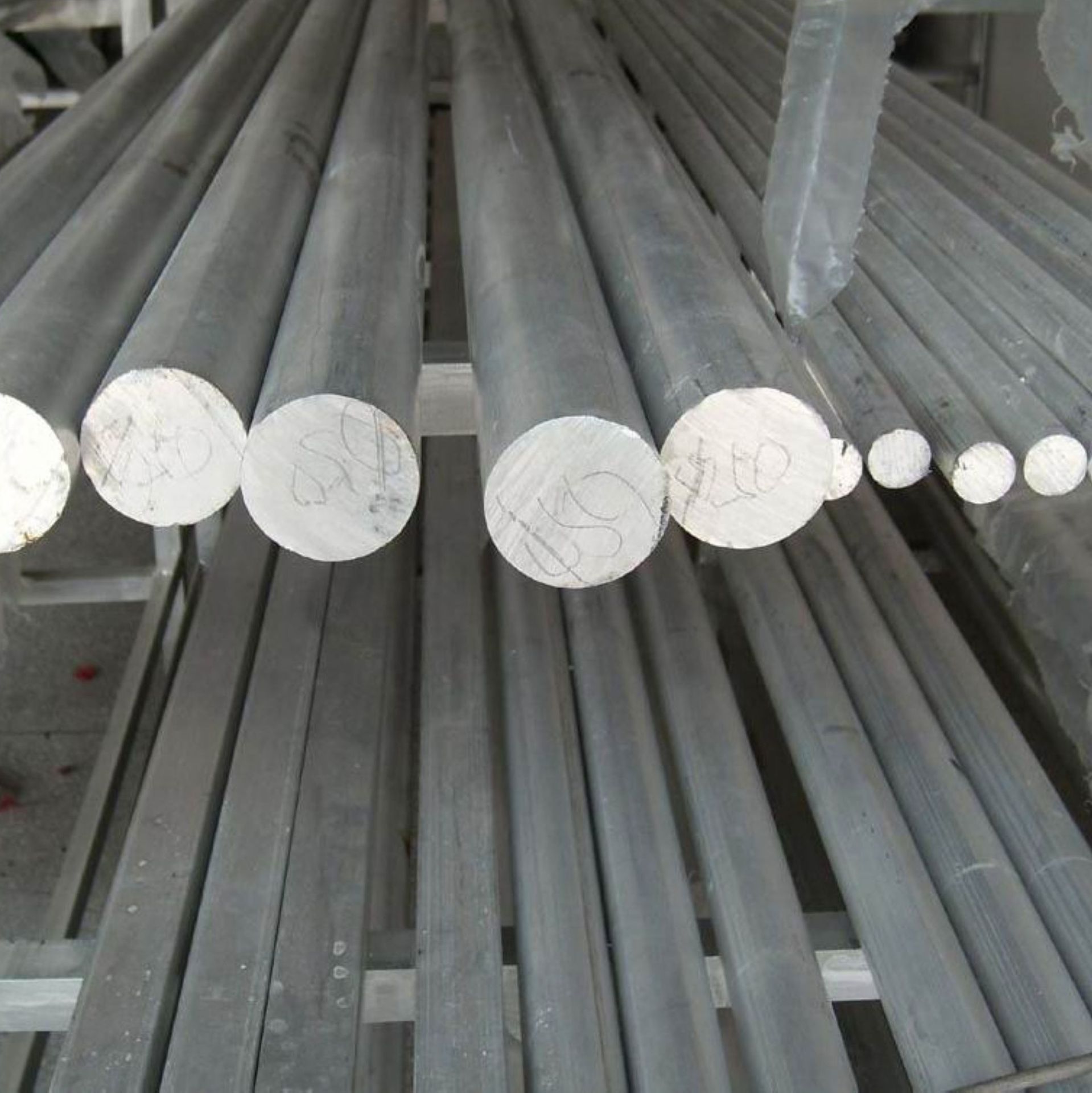
Sample size: diameter ≤ 12.5
Welcome new and existing customers to call for inquiries
Quality philosophy: Quality is the starting point of value and dignity
Customer first, quality for reputation, development through integrity, professionalism and focus, continuous improvement in production philosophy: Pursuing technical specialization and product diversity
Research and development philosophy: Customer needs and market demands are the fundamental driving force for R&D.
Talent philosophy: Talent is the core competitive advantage for development
Development Policy
Core Values
Integrity — the foundation of a company’s existence
Innovation—the source of business development
Responsibility — The Virtue of Self-Cultivation for Enterprises
Win-win – The way for businesses to survive
Update time:


TOP