Search history
Clear allSearch by image
XDrag and drop an image here or upload an image
Max 5MB per image
UploadSign In | Join

Search history
Clear allSearch by image
XDrag and drop an image here or upload an image
Max 5MB per image
UploadSign In | Join
XIN HONG Materials Co,.Ltd. 12yr.
Contacts Mr LI Chat
Mobile 18066212379
LBSbxg

WhatsApp wechat:LBSbxg
Our company sells various types of copper materials, including copper wires, copper rods, copper strips, copper sheets/rolls, copper pipes/straight pipes/disk pipes/square pipes, copper bars, copper busbars, as well as bronze, manganese brass, brass, purple (red) copper, phosphoric copper, green-brass, tin brass, aluminum bronze, phosphorus-deoxidized copper, oxygen-free copper, lead brass, silver brass, silicon brass, etc. We have well-organized personnel and equipment, along with strong technical capabilities. The materials include: brass H9 60 (C2 100) brass pipes, H9 0 (C2 200) brass pipes, H8 0 (C2 400) brass pipes, H7 0 (C2 600) brass pipes, H6 8 (C2 680) brass pipes, H6 5 (2700) brass pipes, H6 3 (C2 720 brass pipes), H6 2 (C2 800) brass pipes, HPb5 9-1, HPb5 9-2, C3 64, purple copper T1 purple copper pipes, T2 purple copper pipes, T3 purple copper pipes, TU2 purple copper pipes, TP2 degreased copper pipes, phosphoric bronze C5 240, C5 210, C5 191, C1 220, C1 400, C1 11, aluminum bronze QAL9-4, QAH9-2, QAL10-4-4, QALT7, QAL9-5-1-1, pure purple copper C1 200, C1 100. We also produce purple copper foil and brass foil. The company strictly adheres to national standards such as GB/T1 3296-91, GB/T1 4975-2002, GB/T1 492000, A312, as well as domestic and international specifications. Our products are widely used in industries such as petroleum, smelting, food, electricity, papermaking, water conservancy, chemical engineering, chemical fibers, pharmaceuticals, aerospace construction, transportation, and winemaking. Copper materials: copper wires, copper rods include: H96 (C2100), H90 (C2200), H80 (C2400), H70 (C2600), H68 (C2680), H65 (2700), 2800), HP59-1 brass rods, H62 brass plates, C1100 red copper plates, T3 red copper plates… T8 red copper plates, phosphor bronze C512, C5210, C5191, C1220, C1040, C111, brass strips C2680, C2200, C2720, C2600, C2620, pure red copper C1020, C1100, brass strips, C1210, C1220, red copper foil, brass foil. GB grades include O, 1/2H, 1/4H, 3/4H, H, EH, SH. Specialized production of brass pipes with diameters from 2 to 219 (H62, H65, H68, H70, H85), red copper pipes (T2, TP2, TU2), aluminum pipes (1060, 6063), tin-brass pipes (HSN70-1A), aluminum-brass pipes (HAL77-2), nickel-white copper pipes (B10, BFE10-1-1), tin-bronze pipes (QSN6.5-0.1, QSN4-0.3), electric furnace coils, air-conditioning coils, plastic-coated copper pipes, red rods, red copper busbars, various copper water pipes and accessories. Also providing copper doors, copper handrails and other copper-based materials, large-section copper rods, large-section copper pipes, large-section copper alloys, large-scale copper alloys, large cross-sectional copper alloys, large-diameter copper pipes, large-diameter copper rods, large copper plates, large cross-sectional copper plates, copper-to-copper welding, copper alloy welding, copper material welding, copper material bending, copper alloy bending, deep processing of copper materials, deep processing of copper alloys. Red copper pipes: Application areas include air-conditioning pipes, refrigerator pipes, engine oil pipes, water supply pipelines, and various mechanical supporting materials. Specialized production includes red copper pipes, precision red copper pipes, precision copper pipes, capillary copper pipes, ring copper pipes, square copper pipes, special-shaped copper pipes, etc.
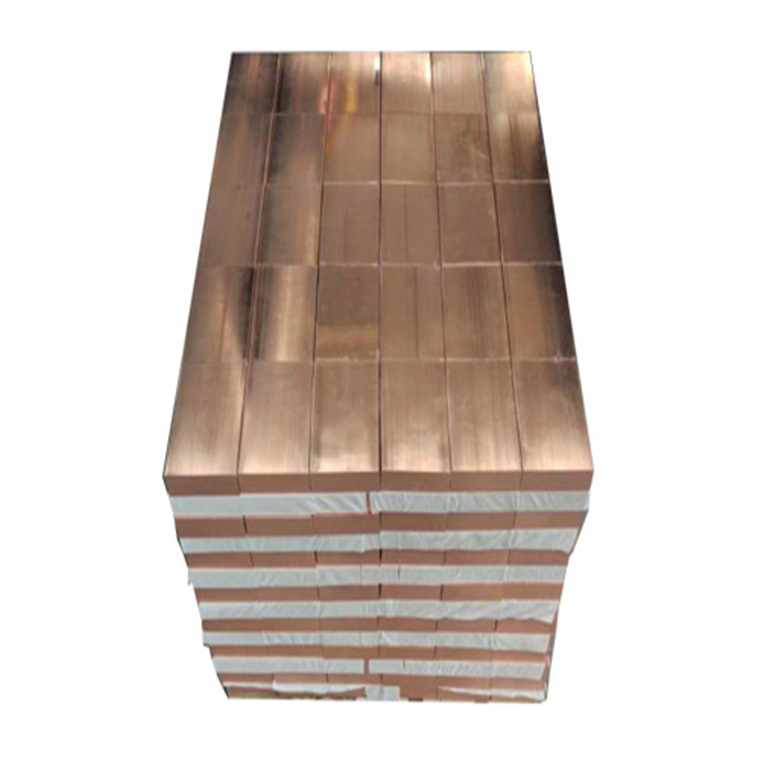
Copper strip materials: H62, H65, H68, H63, H70, H80, H90, C2600, C2680, C2700, C5210, C5191, C51000, QBe2.0, C1100, T2, etc. Specifications: Thickness: 0.01–2.0 mm, Width: 4–600 mm. Hardness: O, 1/2H, 3/4H, H, EH, SH, etc.
Copper plate materials: H62, H65, H68, H70, H80, H90, C2600, C2680, C2700, C5210, C5191, C51000, QBe2.0, C1100, T2, etc. Specifications: Thickness: 0.2–100 mm, Width: 305–1000 mm, Length: 1200–2000 mm. Hardness: O, 1/2H, 3/4H, H, EH, SH, etc.

Bronze with tin as the primary alloying element. The tin content typically ranges from 3 to 1.4%, and it is mainly used for manufacturing elastic components and wear-resistant parts. Deformed tin bronze has a tin content no more than 8%, and sometimes elements such as phosphorus, lead, and zinc are added. Phosphorus serves as an excellent deoxidizer and also improves fluidity and wear resistance. Adding lead to tin bronze enhances machinability and wear resistance, while adding zinc improves casting properties. This alloy possesses high mechanical properties, anti-friction performance, and corrosion resistance. It is easy to machine, has good brazing and welding properties, a low shrinkage coefficient, and is non-magnetic. Bronze bushings, shaft sleeves, and antiferromagnetic components can be prepared using wire flame spraying or arc spraying. Available dimensions include Ф1.6mm and Ф2.3mm. It has high strength, corrosion resistance, and excellent casting properties, and has been widely used in various industrial sectors for a long time.
In addition to containing 3%–14% tin, tin bronze often also includes elements such as phosphorus, zinc, and lead. It is the earliest alloy used by humans, with a history of approximately 4000 years. It is corrosion-resistant and wear-resistant, possesses good mechanical and process properties, can be welded and brazed easily, and does not produce sparks during impact. It is divided into processed tin bronze and cast tin bronze. Tin bronze used for pressure processing has a tin content below 6%–7%, while cast tin bronze has a tin content of 10%–14%. Common grades include QSn4-3, QSn4.4-2.5, QSn7-O.2, ZQSn10, ZQSn5-2-5, ZQSN6-6-3, etc. Tin bronze is the non-ferrous metal alloy with the lowest casting shrinkage rate, making it suitable for producing castings with complex shapes, clear contours, and low airtightness requirements. Tin bronze is highly resistant to corrosion in atmospheric, seawater, fresh water, and steam, and is widely usedSteam BoilerParts for marine vessels. Phosphorus-tin bronze possesses excellent mechanical properties and can be used as wear-resistant and elastic parts for high-precision machine tools. Lead-tin bronze is commonly used as wear-resistant parts.Sliding bearingZinc-tin bronze can be used for highly airtight castings.
The solidification range of tin bronze is large, and dendritic segregation is severe; it is difficult to form concentrated shrinkage cavities during solidification, and volume contraction is minimal; reverse segregation of tin occurs easily in cast ingots, and in severe cases, white spots (8-phase precipitation) can be seen on the surface of the ingot, or even tin-rich particles may appear, commonly known as tinsweat. Improving the casting method and process conditions can reduce the degree of reverse segregation; in liquid alloy, tin easily forms hard and brittle inclusions such as SnO2. Adequate deoxidation during melting is necessary to prevent a decrease in the mechanical properties of the alloy due to these inclusions; it has little sensitivity to overheating and gases, allowing for good welding and brazing capabilities; no sparks occur during impact, it is non-magnetic, cold-resistant, and possesses extremely high wear resistance.
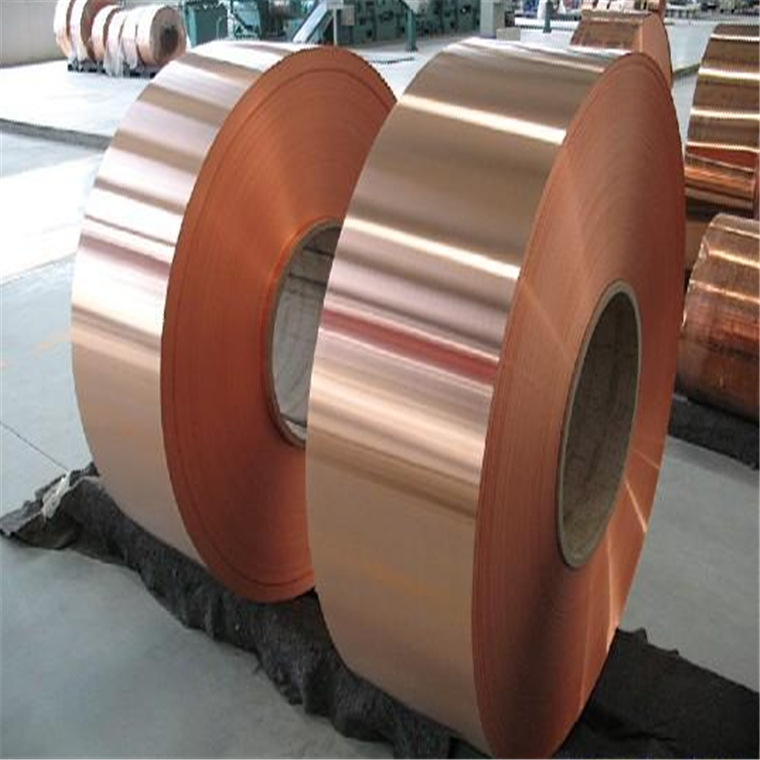
Industrial tin bronze is an important copper alloy used in industry. To improve its casting, mechanical, and wear resistance properties, as well as to reduce the use of tin, alloy elements such as phosphorus, zinc, and lead are added to tin bronze. Therefore, tin bronze can be divided intoTin Phosphorus Bronze, tin-zinc bronze and tin-zinc-lead categories.
Why is the grade labeled QSn6.5-0.1? Many people might wonder about this. In fact, it is named based on the different contents of tin and phosphorus in the bronze. For example,
The theoretical composition is: 6.5% tin (Sn), 0.1% zinc (Zn) plus other impurities, with copper (Cu) serving as the remainder.
Similarly, for both QSn4-0.3 and QSn7-0.2, the content is determined based on the same criteria. However, there is always a certain margin of error during the actual melting process, and each grade has specific standard ranges according to national standards:
Grade: QSn6.5-0.1 Standard: GB/T 4323-1992
Chemical composition: Copper Cu: remainder, Tin Sn: 6.0~7.0, Lead Pb: ≤0.02, Phosphorus P: 0.10~0.25, Aluminum Al: ≤0.002
Fe: ≤0.05, Si: ≤0.002, Sb: ≤0.002, Bi: ≤0.002. Note: ≤0.1 (impurities)
Grade: QSn6.5-0.4 Standard: GB/T 18308-1992
Chemical composition: Sn: 6.0–7.0, Al: 0.02, Zn: 0.3, Fe: 0.2, Pb: 0.2, Ni: 0.2, P: 0.26–0.40
Cu: Remainder, impurities: 0.1
Grade: QSn7-0.2 Standard: GB/T 2059-2000
Chemical composition: Copper Cu: remainder, Tin Sn: 6.0~8.0, Lead Pb: ≤0.02, Phosphorus P: 0.10~0.25
Aluminum Al: ≤0.01, Iron Fe: ≤0.05, Silicon Si: ≤0.02, Antimony Sb: ≤0.002, Bismuth Bi: ≤0.002, Note: ≤0.15 (impurities)
Zinc dissolves significantly in copper-tin alloy, and in deformed tin bronze, the amount of zinc added is generally no more than 4%. Zinc improves the fluidity of the alloy, narrows the crystallization temperature range, and reduces back segregation.
The tin-zinc bronze grade listed in the current Chinese national standard is QSn4-3. It possesses excellent elasticity, wear resistance, and antimagnetism. It can be processed under both cold and hot conditions using pressure techniques, is easy to weld and braze, has good machinability, and exhibits good corrosion resistance in atmospheric, fresh, and seawater environments. It is used in various elastic components, pipe fittings, chemical equipment, wear-resistant parts, and antimagnetic parts.

Mechanical Properties:
The thermal treatment state of the materials varies, and their mechanical properties also differ. Please refer to the table below:
| Code Number | Status | Thickness /mm |
Tensile strength (<t_XXXXXXXX>) MPa |
Extension Rate (%) | Vickers Hardness HV |
|
T2, T3 TU1, TU2 TP1, TP2 |
M (Soft) | ≥0.2 | ≥195 | ≥30 | ≤70 |
| Y4(1/4 hard) | 215~275 | ≥25 | 60~90 | ||
| Y2 (semi-hard) | 245~345 | ≥8 | 80~110 | ||
| Y (Hard) | 295~380 | ≥3 | 90~102 | ||
| T (Extremely hard) | ≥35 | - |
≥1110
|

Welcome new and existing customers to call for inquiries
Quality philosophy: Quality is the starting point of value and dignity
Customer first, quality for reputation, development through integrity, professionalism and focus, continuous improvement in production philosophy: Pursuing technical specialization and product diversity
Research and development philosophy: Customer needs and market demands are the fundamental driving force for R&D.
Talent philosophy: Talent is the core competitive advantage for development
Development Policy
Core Values
Integrity — the foundation of a company’s existence
Innovation—the source of business development
Responsibility — The Virtue of Self-Cultivation for Enterprises
Update time:


TOP