
Search history
Clear allSearch by image
XDrag and drop an image here or upload an image
Max 5MB per image
UploadSign In | Join

Search history
Clear allSearch by image
XDrag and drop an image here or upload an image
Max 5MB per image
UploadSign In | Join
X Email Mobile
| Number | Unit-price | Total | |||
| I want to buy: | × | 24.0 | = | 0 |


A new item has been added to your Shopping Cart. You now have items in your Shopping Cart.
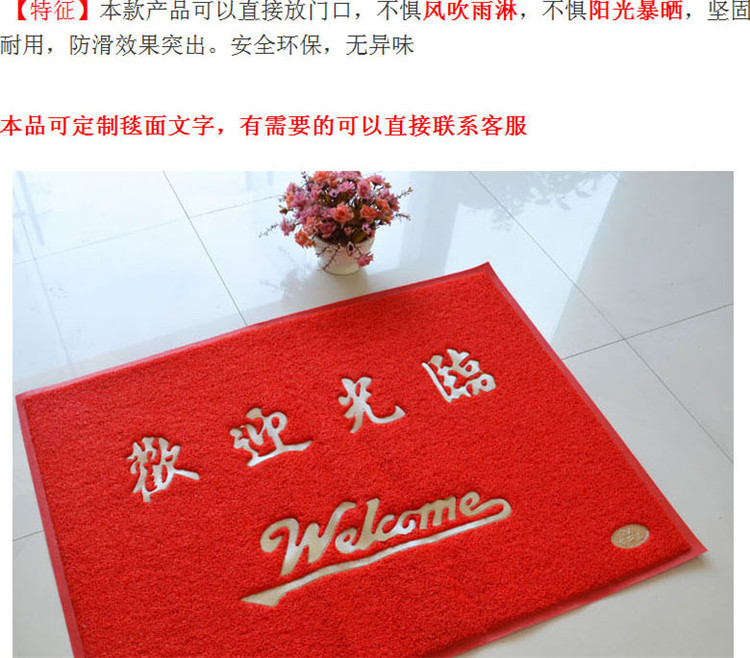
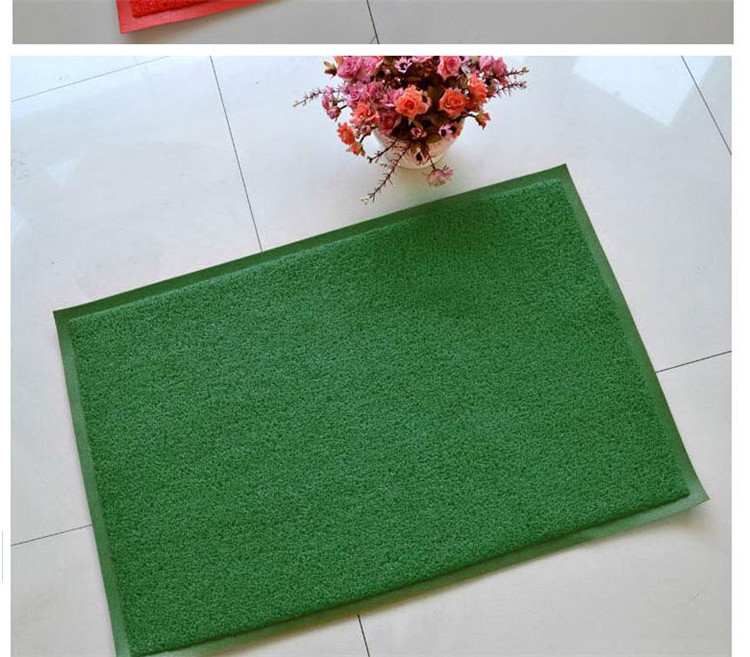
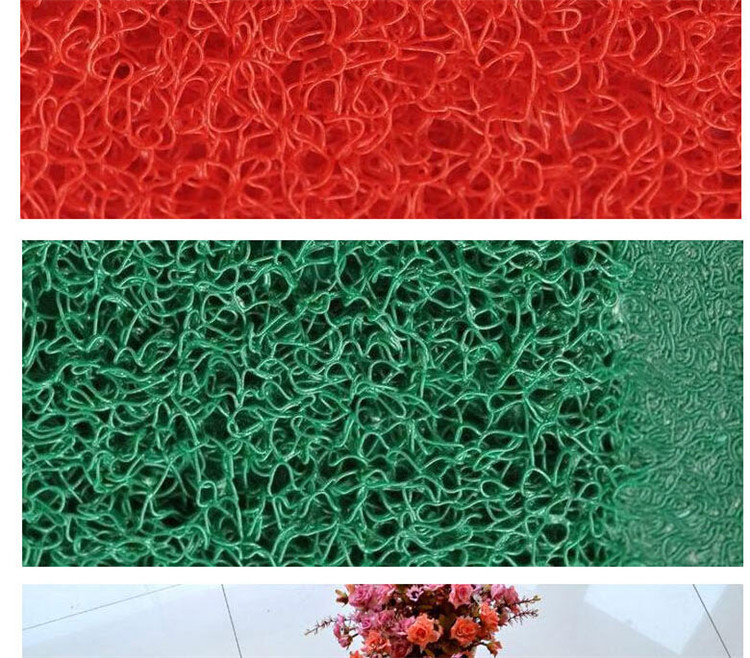
| Material: PVC environmental protection material | Fabric main component: PVC | Fabric main component content: 70% |
| Fabric secondary component: PVC | Fabric secondary component content: 5% | Brand: Independent Brand |
| Supply Category: Finished Goods | Product Code: 071302 | Style: Chinese Classical |
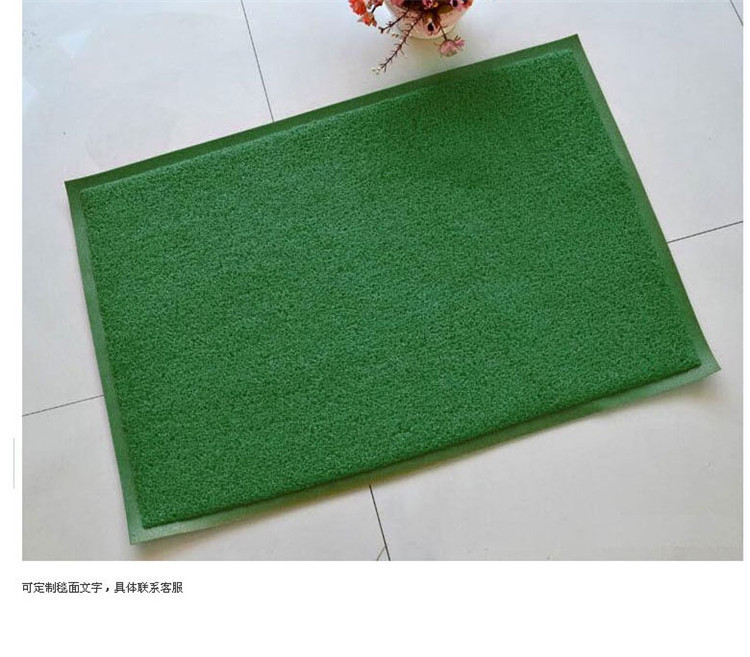
| Shape: Rectangular | Applicable Scenarios: Dining Room | Corridor | Living Room | Meeting Room | Entrance Hall | Study | Bathroom | Hall | Bedroom | Kitchen | 工艺: 机器织造 |
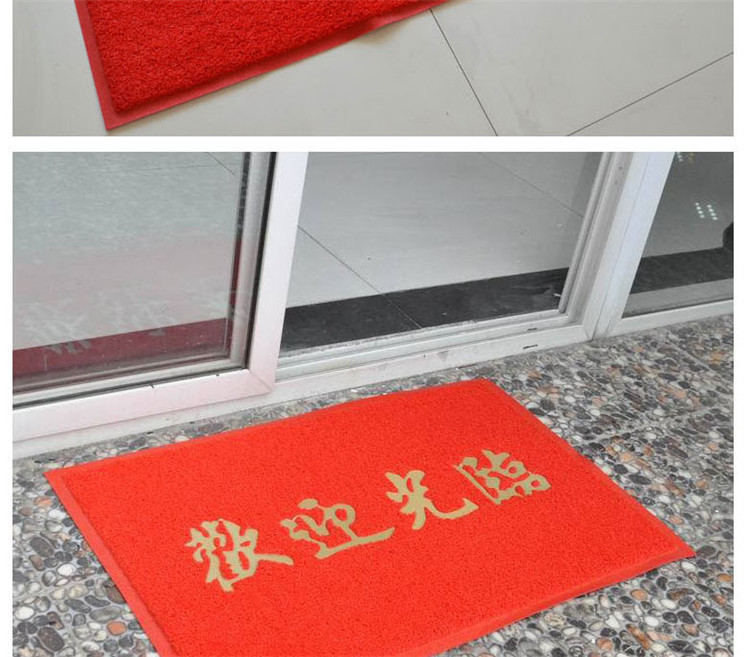
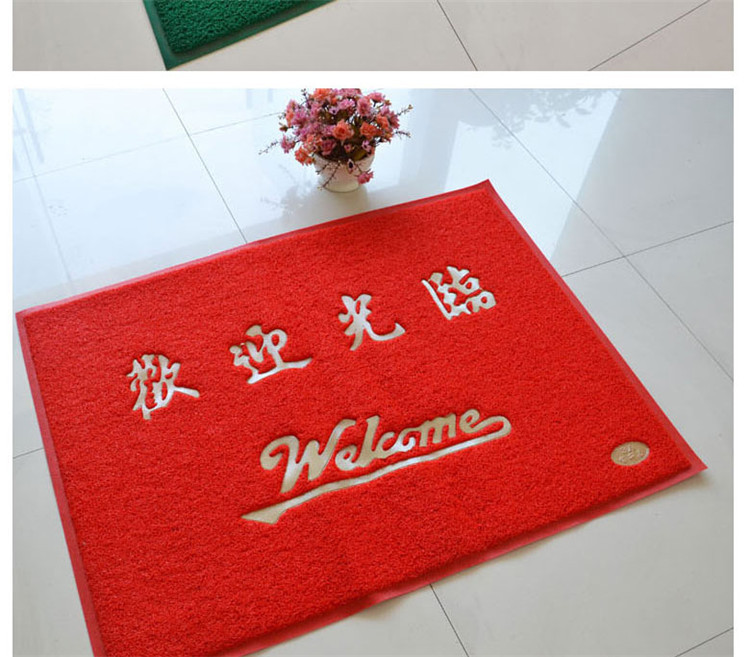
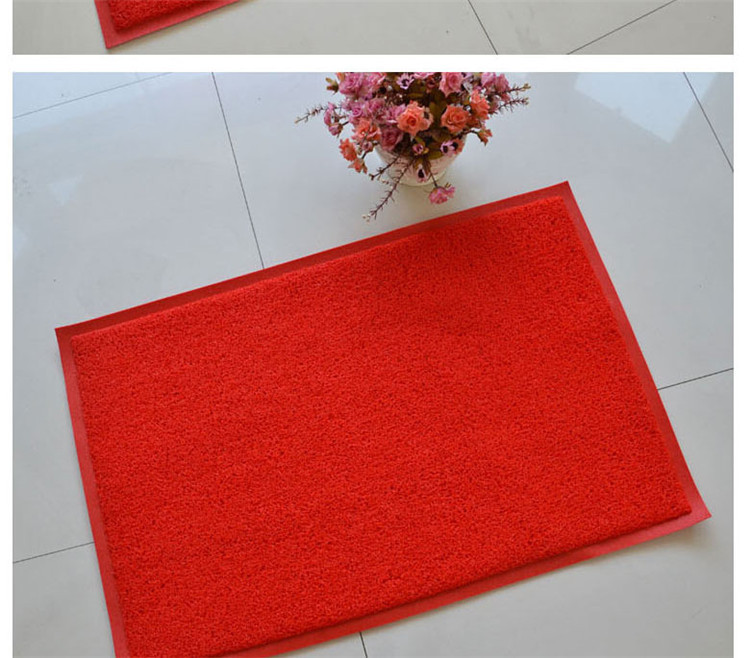
| Add a logo: Yes | Customized Processing: Yes | Color: Red Safe Passage | Red Welcome | Red No Text | Green Safe Passage | Green Welcome | Green No Text |
|
|
|





Carpets are a famous traditional Chinese handicraft. Chinese carpets have a history of over 2,000 years, with hand-made carpets being particularly famous. There are records of carpets dating back over 3,000 years, with references in the poems of the Tang Dynasty poet Bai Juyi in his poem "Red Silk Carpet," where he wrote, "The ground does not know the cold of the people, taking away a little of their clothes to cover the ground." There are also physical evidence of carpets dating back over 2,000 years. According to historical documents, the variety of carpets increased from the Tang and Song dynasties to the Ming and Qing dynasties. The carpets are often made from cotton, wool, linen, and paper ropes. The woven carpets produced in China use extremely strong warp threads and weft threads to form a base, and then the colorful thick woolen weft threads are inserted into the warp threads to create a fluffy surface, which is then woven through shearing and brushing processes. The front of the carpet is dense with standing fluff, with a firm and elastic texture. In particular, the carpets produced in Hotan, Xinjiang, are especially valuable and known as the "Eastern Carpet." The carpets produced there not only have good quality but also have a large output. A carpet weighing 1,250 kilograms woven for the Xinjiang Hall of the Great Hall of the People is praised as the "King of Carpets." In 1966, a cotton carpet was unearthed in Lanxi, Zhejiang Province, which was 2 meters long.51 meters in length and 118 meters in width, this plain weave cotton carpet has a double face of fur and is flat and thick. It has been identified as being made of cotton fiber. This is the earliest known cotton carpet to date. It shows that the weaving technology of the time had reached a high level. Currently, the Xinjiang carpet industry has gradually promoted a new hot-setting process, which has improved the quality of the carpets. The carpets with more than 540 and 720 knots, which are meticulously crafted, have high artistic value. This art originated in the pastoral areas of the northwest plateau, where the local ethnic minorities, to meet the needs of nomadic life, used abundant local wool to twist yarn and weave colorful kneeling mats, wall hangings, and carpets. Due to the joint creation of the Uighur, Mongolian, and Tibetan peoples and through the Silk Road exchanges with the Middle East, a unique ancient Chinese carpet art gradually emerged.


Update time:


TOP


